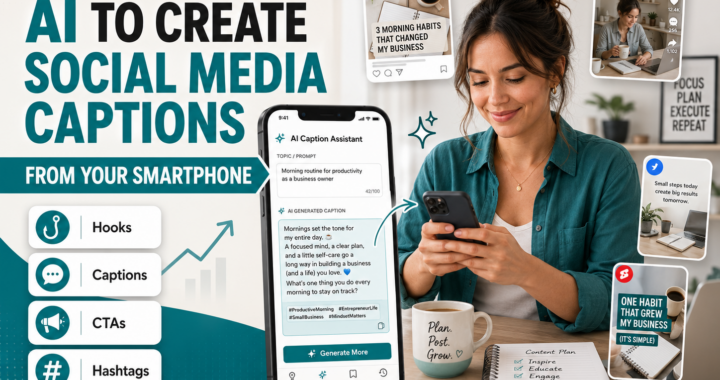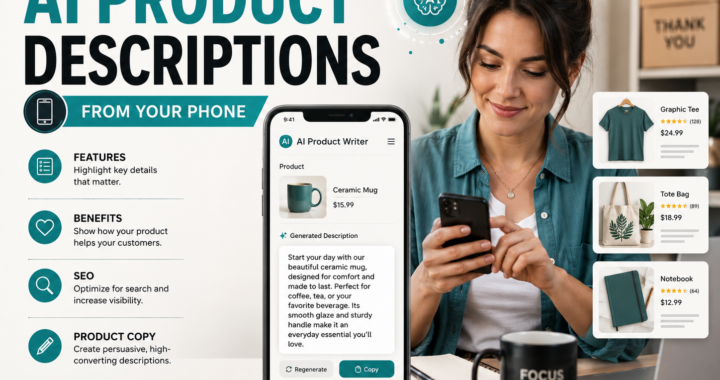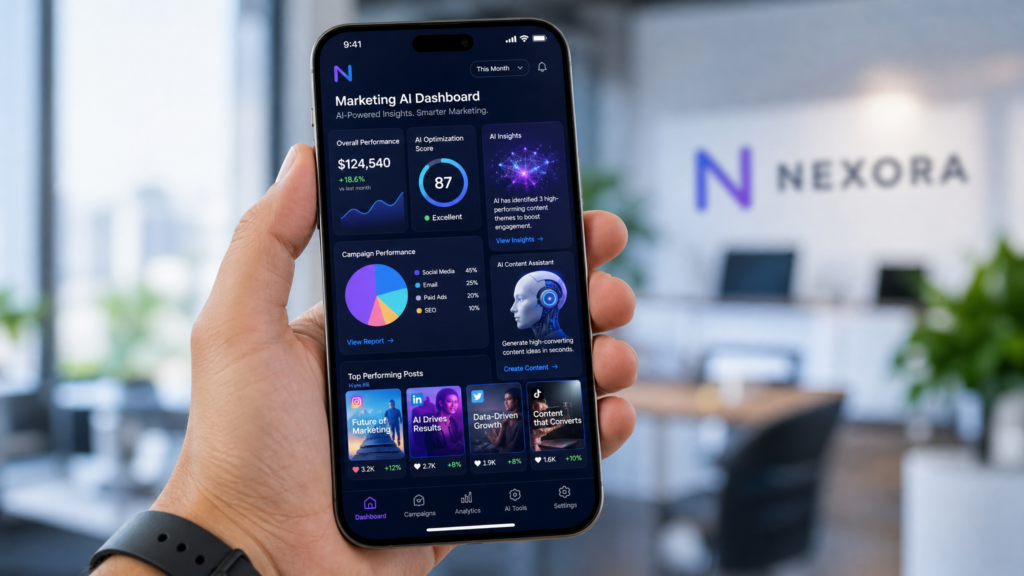
Social media marketing is often the biggest bottleneck for solo-entrepreneurs. We are told we need to be everywhere: LinkedIn for authority, TikTok for reach, Pinterest for traffic, and Instagram for brand depth. For someone running a business from their smartphone, this quickly turns into an 80-hour work week that produces more burnout than revenue.
In 2026, the game has shifted. We no longer manually “do” social media; we engineer systems that manage it for us.
By leveraging the current generation of mobile AI tools, you can move from being a “content creator” who is constantly chasing trends to a “marketing director” who oversees an automated engine. This guide breaks down the exact operational flow to run a multi-platform marketing department entirely from your palm.
Affiliate disclosure: This post contains affiliate links. If you make a purchase through one of these links, ProBusinessStrategy may earn a small commission at no extra cost to you. We only recommend tools we genuinely believe in.
Part 1: The AI Marketing Architecture
Before you open an app, you need to understand the three-layer architecture of modern mobile marketing. Most people start at the wrong end—they start with “posting.” Winners start with the architecture:
The Brain (Strategy & Planning): Using Large Language Models (LLMs) like ChatGPT to identify gaps, trends, and content pillars.
The Factory (Production): Using Generative AI to create high-end visuals, scripts, and captions in minutes.
The Delivery (Automation): Using mobile-first schedulers to ensure your brand is active 24/7 without you being online.
All these layers should ultimately drive traffic back to your WordPress authority site hosted on a high-speed platform like Bluehost.
Part 2: Planning Your 30-Day Engine with ChatGPT
Most people fail at social media because they wake up and think: “What should I post today?” That is a recipe for failure. Instead, we use the ChatGPT mobile app to build a “Logic Map.”
Validating Your Pillars
Use our Pinterest Business Idea Engine to find what is currently trending. Then, give ChatGPT this prompt:
“Act as a viral marketing strategist. I am running a smartphone business in the [Niche] space. Analyze these 3 trends and create 4 distinct content pillars that balance education, authority, and conversion. Focus on what people are searching for in 2026.”
The 30-Day Batch
Once your pillars are set, ask for a 30-day calendar.
The Pro Secret: Don’t just ask for topics. Ask for the “Hook, Value, and CTA” for every single post. This ensures that every post has a purpose—whether it is driving LinkedIn leads or growing your YouTube Affiliate channel.
Part 3: Advanced AI Content Loops
Very few understand how to turn content into a self-reinforcing growth system. This is where AI gives you an unfair advantage. Instead of creating random posts, you build a loop: Create → Distribute → Capture Data → Feed Insights back to AI → Improve.
The 3-Layer Content Loop
Layer 1 — Core Content (Your Blog)
Every idea starts on your website. Whether it’s a guide, a case study, or a tutorial, published on your site via WordPress, this is your “source of truth.”
Layer 2 — Distribution Content (Social Media)
Now you break that one article into 5 LinkedIn posts, 3 Pinterest pins, and 2 short-form videos. Use AI to do this instantly.
Prompt: “Turn this blog post into 5 LinkedIn posts with strong hooks and a soft CTA.”
Layer 3 — Feedback Loop (Optimization)
Track which posts perform and ask AI: “Analyze these results and suggest 10 improved content ideas based on the high engagement of [Topic X].”
Part 4: Platform-Specific Domination Strategies
In 2026, the quality of “phone content” is indistinguishable from professional studio work if you use the right AI stack.
LinkedIn: The Authority Play
LinkedIn in 2026 is about “Quiet Expertise.” Use AI to take sections of your blog posts and rewrite them into “thought-leader” snippets. Ask ChatGPT to “Rewrite this paragraph to sound like a professional LinkedIn post for a SaaS founder. Add 3 bullet points of value.”
Pinterest: The Evergreen Traffic Engine
Pinterest is a search engine, not a social network. Use AI to generate high-volume Titles and Descriptions based on the data from your Pinterest Search Engine guide. Schedule 10 fresh pins a day using tools like Tailwind or Buffer on your phone.
TikTok & YouTube Shorts: High-Retention Video
Use AI video tools like CapCut and AI-voiceovers to create educational “explainer” videos. This is exactly how you can scale the €0 Startup Challenge without needing a camera crew.
Part 5: AI Prompt Frameworks for Daily Use
Here are the frameworks you can reuse daily from your phone to stay ahead of the competition.
1. Content Expansion Prompt
Use this to turn ideas into full posts:
“Act as a social media strategist. Turn this idea into a high-performing post. Include a strong hook, 3 value points, and a short CTA. Tone: clear, professional, practical.”
2. Hook Generator Prompt
Hooks = traffic. If the hook fails, the post fails.
“Generate 10 scroll-stopping hooks for this topic: [Topic]. Make them curiosity-driven, benefit-focused, and short.”
Part 6: The 30-Minute Daily System (The Workflow)
You don’t need 8 hours. You need a system.
Daily (20–30 min): Check comments → reply with AI assistance. Post your daily scheduled content. Save new ideas in your notes app.
Weekly (2–3 hours): Generate content with AI in batches. Create visuals in Canva. Schedule everything for the next 7 days.
Monthly (2 hours): Analyze performance. Update strategy. Improve your prompts based on what actually converted.
Part 7: Monetization Layer (Turning Attention into Income)
Traffic without monetization is just a hobby. Here’s how your system makes money:
Affiliate Content: Naturally lead people to tools like Bluehost or your favorite AI apps within your tutorials.
Lead Generation: Capture emails by offering specific AI resources, then convert them via automated sequences.
Scaling with Experts: As you grow, hire a specialist on Fiverr to handle the manual scheduling, freeing you up for higher-level design and strategy.
Final Thoughts: Leverage vs. Labor
Most entrepreneurs fail because they choose labor over leverage. In 2026, labor is expensive and slow. Leverage—specifically Mobile AI leverage—is cheap and infinite.
By following this social media marketing blueprint, you aren’t just “posting things.” You are building a digital asset that works while you sleep. Whether you are driving traffic to your dropshipping/affiliate hybrid shop or building a personal brand, the system is the same. Your smartphone is the only marketing agency you will ever need.
Internal Linking & Resources:
Recommended Business Tools: