In the past, building a product business required capital, suppliers, and technical design skills.
In 2026, that model is outdated.
Today, you can:
generate product ideas
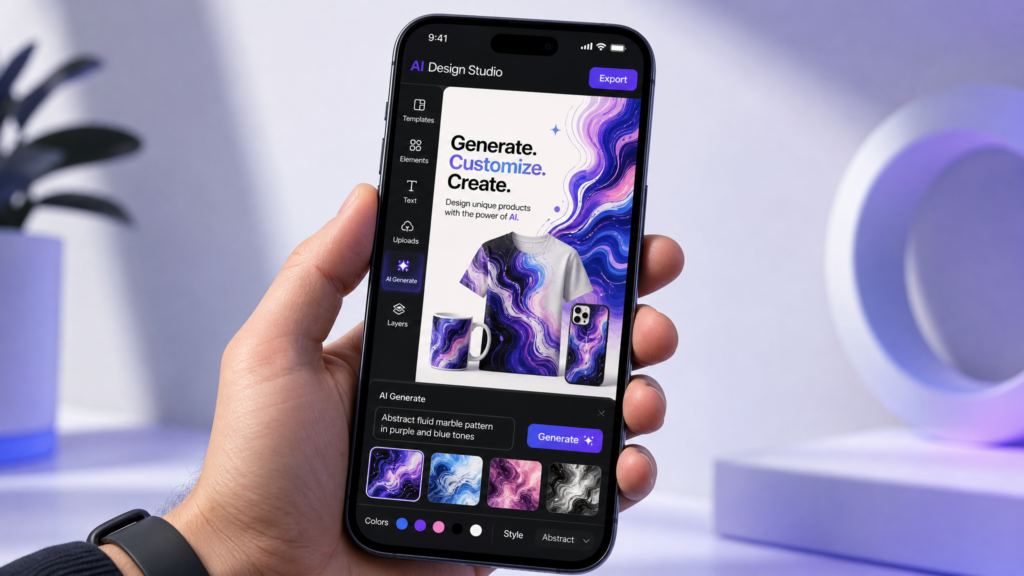
design visuals
create mockups
validate demand
launch products
👉 all from your smartphone
This is not just about “designing images.”
This is about building a product engine powered by AI.
Affiliate disclosure: This post contains affiliate links. If you make a purchase through one of these links, ProBusinessStrategy may earn a small commission at no extra cost to you. We only recommend tools we genuinely believe in.
Part 1: The New Product Design Model
Before AI, product creation looked like this:
Idea → Designer → Prototype → Manufacturer → Inventory → Sales
Now it looks like this:
Idea → AI Design → Mockup → Validate → Launch → Scale
👉 No inventory
👉 No upfront cost
👉 No design skills required
The Core Advantage
AI removes 3 major barriers:
Speed → create designs in minutes
Cost → no need to hire designers
Testing → validate before you invest
👉 This changes everything.
Part 2: Your Smartphone Product Design Stack
To build a real system, you need the right tools.
Everything here works on mobile.
1. ChatGPT (Concept Engine)
Use it to generate:
product ideas
niches
design concepts
brand directions
Example prompt:
Give me 10 product ideas for a print-on-demand business
focused on minimalistic home office design.
If you’re not using it properly yet:
👉 Use ChatGPT from Your Phone for Business
2. AI Image Generators (Design Engine)
Use tools like:
DALL·E
Midjourney
Leonardo AI
To create:
artwork
patterns
illustrations
Pro Tip (Huge difference)
Bad prompt:
“Design for t-shirt”
Good prompt:
“Minimalist black and white typography design for entrepreneurs, clean modern style, high contrast, print-ready, centered composition”
👉 This alone changes your results completely
3. Canva (Production Layer)
This is where everything comes together.
Use Canva mobile to:
refine designs
create layouts
add branding
export final files
4. Mockup Tools (Conversion Layer)
People don’t buy designs.
They buy products.
Use:
Canva mockups
Placeit
Smartmockups
To show:
t-shirts
mugs
phone cases
digital products
👉 This is what drives clicks and sales.
Part 3: The Product Creation Workflow (Step-by-Step)
This is where most people fail.
They skip structure.
Step 1: Find a Winning Angle
Use:
Pinterest
TikTok
Etsy
To identify:
trending niches
visual styles
product types
You can use this method:
👉 Pinterest Business Idea Search Engine
Step 2: Generate 10–20 Designs
Do NOT create one design.
Create multiple.
Why?
👉 volume = probability of success
Step 3: Create Mockups
Turn designs into:
product visuals
lifestyle images
Step 4: Validate Before Selling
Post your designs on:
Pinterest
TikTok
Instagram
Watch:
saves
clicks
engagement
👉 This tells you what works BEFORE you build a store
Step 5: Launch Your Product
Once validated:
👉 Now your product is live
Part 4: The Zero Inventory Model
This is where the real power is.
How It Works
Customer buys product
Order goes to supplier
Supplier prints & ships
You keep profit
👉 You never touch the product
Why This Model Wins
no upfront investment
no storage
no risk
👉 Perfect for smartphone businesses
Part 5: Scaling Your Product Business
Once something works, you scale.
1. Double Down on Winners
Take your best design:
create variations
expand product range
2. Content Marketing Loop
Use:
Pinterest
blog content
social media
To drive traffic
👉 Combine with:
AI Social Media Marketing System
3. Outsource Execution
Once revenue comes in:
Hire on:
👉 Fiverr
To handle:
design tweaks
uploads
customer service
👉 You focus on strategy
Part 6: Common Mistakes (Avoid These)
❌ Overcomplicating designs
Simple sells better
❌ No validation
Don’t guess → test
❌ No traffic strategy
Products don’t sell themselves
❌ Using only 1 design
You need volume
Part 7: Digital Products (Hidden Opportunity)
You don’t need physical products.
You can sell:
templates
planners
guides
Notion setups
👉 Higher margins
👉 No shipping
👉 Instant delivery
Final Thoughts
AI product design is not a trend.
It’s a shift in how businesses are built.
With just your smartphone, you can:
design products
test ideas
launch offers
scale income
👉 Without inventory
👉 Without upfront cost
👉 Without a team
This is one of the most powerful business models available in 2026.
✅ Internal Linking