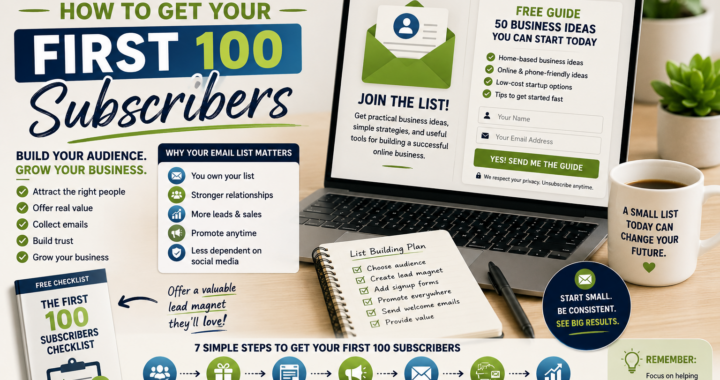
A lead magnet is one of the simplest ways to turn website visitors, social media followers, and casual readers into email subscribers.
But not every lead magnet works.
Many beginners create something like “Join my newsletter” or “Download my free guide” and then wonder why almost nobody signs up.
The problem is usually not the idea of a lead magnet.
The problem is that the lead magnet is too vague, too broad, too weak, or not connected to a real problem.
A good lead magnet gives people a clear reason to exchange their email address.
It solves a small problem.
It promises a specific result.
It feels useful immediately.
And it naturally connects to the business, product, service, affiliate offer, or content that comes after it.
This article explains how to create a lead magnet that converts, with practical examples you can use for your own business.
Affiliate disclosure: This post contains affiliate links. If you make a purchase through one of these links, ProBusinessStrategy may earn a small commission at no extra cost to you. We only recommend tools we genuinely believe in.
What Is a Lead Magnet?
A lead magnet is a free resource you offer in exchange for someone’s email address.
It can be a checklist, guide, template, mini-course, worksheet, calculator, cheat sheet, planner, report, quiz, discount, or resource list.
The goal is simple:
Give value first.
Then build a relationship through email.
Instead of hoping visitors remember your website, you invite them onto your email list. That gives you a way to stay connected, send useful content, build trust, and introduce relevant offers later.
For a business website, this can be extremely valuable.
Traffic is temporary.
An email list is an asset.
Why “Join My Newsletter” Is Usually Too Weak
Many websites ask people to “join the newsletter.”
That can work if the audience already trusts the brand, but for most beginners it is not strong enough.
Why?
Because it does not explain what the visitor gets.
A better offer is specific.
Instead of:
“Join my newsletter”
Use:
“Get the free checklist: 25 Low-Cost Business Ideas You Can Start This Month”
That is much clearer.
The visitor knows what they are getting and why it may help them.
A good lead magnet should answer the silent question in the visitor’s mind:
“What do I get, and why should I care?”
The Best Lead Magnets Solve One Small Problem
A common mistake is trying to create a huge free resource.
You do not need a 100-page e-book.
You do not need a complete course.
You do not need to give away everything you know.
In fact, a smaller lead magnet often works better.
Why?
Because people want fast help.
They want something they can use quickly.
A strong lead magnet solves one small but important problem.
Examples:
A startup cost checklist
A business name worksheet
A pricing calculator
A client call checklist
A 7-day content plan
A website launch checklist
A simple budget spreadsheet
A business idea validation worksheet
A Pinterest board planning template
A lead magnet idea list
These are specific and useful.
The more specific the problem, the easier it is for the visitor to say yes.
Match the Lead Magnet to the Page
A lead magnet converts better when it matches the topic of the page.
If someone is reading an article about business names, offer a business name worksheet.
If someone is reading about client calls from home, offer a client call setup checklist.
If someone is reading about Pinterest affiliate marketing, offer a Pinterest board planner.
If someone is reading about starting a business from a phone, offer a phone business starter checklist.
This is called message match.
The visitor is already interested in the topic. Your lead magnet gives them the next practical step.
A generic lead magnet can work, but a topic-specific lead magnet often converts better.
Lead Magnet Formula
A simple formula is:
Specific Audience + Specific Problem + Simple Result
For example:
“Free Checklist for New Entrepreneurs: Validate Your Business Idea Before You Build”
Audience: new entrepreneurs
Problem: building before testing
Result: validate the idea first
Another example:
“Free Budget Tracker for Small Business Owners: See Where Your Money Goes Each Month”
Audience: small business owners
Problem: unclear finances
Result: track money monthly
Another example:
“Free Pinterest Board Planner: Organize Your Affiliate Content Before You Start Pinning”
Audience: Pinterest affiliate marketers
Problem: random boards and messy strategy
Result: organized board plan
This formula keeps the lead magnet focused.
1. Checklist Lead Magnet
A checklist is one of the easiest lead magnets to create.
It works because people like simple steps.
Examples:
Business Launch Checklist
Client Call Setup Checklist
Website Launch Checklist
Pinterest Affiliate Checklist
First 10 Business Tasks Checklist
Lead Magnet Creation Checklist
A checklist is especially useful when the reader wants to avoid missing something.
For example:
“Client Calls From Home: Professional Setup Checklist”
This is a strong lead magnet because it is practical and easy to understand. A person can download it and use it before a call.
Best for:
Beginners
Service businesses
Home-based businesses
Coaches
Freelancers
Consultants
Blog readers
2. Template Lead Magnet
Templates work very well because they save time.
People do not have to start from zero.
Examples:
Business Plan Template
Budget Spreadsheet Template
Client Proposal Template
Email Campaign Template
Social Media Content Calendar
Lead Magnet Landing Page Template
LinkedIn Outreach Message Template
Templates can convert well because they feel immediately useful.
A good template should help the user do something faster, easier, or better.
For example:
“Free One-Page Business Idea Validation Template”
This would fit a business ideas website perfectly because it helps people evaluate ideas before acting.
3. Worksheet Lead Magnet
A worksheet helps people think through a problem.
Examples:
Business Name Worksheet
Ideal Customer Worksheet
Pricing Worksheet
Offer Clarity Worksheet
Niche Selection Worksheet
Brand Positioning Worksheet
Product Idea Worksheet
Worksheets are especially useful when the person needs clarity.
For example, someone reading about naming a business may not need more theory. They need a worksheet that helps them create and compare names.
A worksheet can guide them step by step.
4. Cheat Sheet Lead Magnet
A cheat sheet gives quick answers.
Examples:
50 Business Name Words
100 TikTok Hooks for Business Ideas
25 Pinterest Pin Title Formulas
30 Email Subject Lines for Small Business
20 Lead Magnet Ideas for Solopreneurs
Business Startup Terms Explained Simply
A cheat sheet works well when the topic is complex and the reader wants a shortcut.
It should be easy to scan.
The best cheat sheets feel like a saved reference.
5. Resource List Lead Magnet
A resource list is simple but valuable when it saves the reader research time.
Examples:
Best Free Tools for New Business Owners
Starter Tools for a Home-Based Business
AI Tools for Solopreneurs
Pinterest Affiliate Tool List
Website Launch Resource List
Small Business Content Tools
This type of lead magnet can also connect naturally with affiliate marketing.
For example, if you create a “Starter Tools for New Entrepreneurs” list, you may include relevant resources such as Namecheap for domain names, Bluehost for hosting, or WordPress Website Builder for building a simple website.
The key is to keep the list useful, not random.
6. Mini-Guide Lead Magnet
A mini-guide is a short guide that explains one specific topic.
Examples:
How to Choose Your First Business Idea
How to Create Your First Lead Magnet
How to Start a Simple Home-Based Business
How to Build a Basic Website for Your Business
How to Create Your First Pinterest Affiliate Board
A mini-guide should be short enough to read quickly.
It should not feel like a full book.
The best mini-guides give the reader a clear starting point.
7. Calculator or Spreadsheet Lead Magnet
Spreadsheets can convert very well when the topic involves numbers.
Examples:
Startup Cost Calculator
Monthly Business Budget Spreadsheet
Pricing Calculator
Profit Margin Calculator
Content ROI Tracker
Affiliate Link Click Tracker
Savings Goal Tracker
This works especially well for finance, pricing, budgeting, business planning, e-commerce, and affiliate marketing.
People like tools that help them make decisions.
If you do not want to design a spreadsheet yourself, you can hire help through Fiverr for spreadsheet setup, template design, PDF formatting, or lead magnet design.
8. Quiz Lead Magnet
A quiz can work well because it feels interactive.
Examples:
What Business Should You Start?
What Type of Lead Magnet Fits Your Business?
What Social Media Platform Fits Your Business Idea?
Are You Ready to Start a Home-Based Business?
What Kind of Online Business Matches Your Skills?
A quiz works when people want a personalized result.
It can be more advanced to set up, but it can also produce very engaged leads.
The important part is the result.
A weak quiz gives a generic answer.
A strong quiz gives a useful recommendation and a clear next step.
9. Email Course Lead Magnet
An email course delivers lessons over several days.
Examples:
5-Day Business Idea Clarity Course
7-Day Startup Planning Course
5-Day Pinterest Affiliate Setup Course
7-Day Work From Home Business Starter Series
5-Day Lead Magnet Creation Challenge
This type of lead magnet is useful because it trains people to open your emails.
Instead of giving everything at once, you deliver value step by step.
That can build trust quickly.
10. Swipe File Lead Magnet
A swipe file is a collection of examples people can learn from.
Examples:
Lead Magnet Headline Swipe File
Pinterest Pin Title Swipe File
Business Name Swipe File
Email Subject Line Swipe File
Social Media Hook Swipe File
Landing Page Call-to-Action Swipe File
This works well for marketing, copywriting, social media, content creation, and business education.
People love examples because examples make the idea easier to use.
What Makes a Lead Magnet Convert?
A converting lead magnet usually has these qualities:
It is specific
It solves a real problem
It has a clear title
It feels quick to use
It matches the page topic
It promises a useful outcome
It looks professional
It leads naturally to the next step
The title is especially important.
A weak title:
“Free Guide”
A stronger title:
“Free Checklist: Validate Your Business Idea Before You Build”
The second title is specific and outcome-focused.
Use a Strong Lead Magnet Title
Use a title that tells people exactly what they get.
Good title formulas:
Free Checklist: [Result]
Free Template: [Task]
Free Worksheet: [Problem]
Free Guide: How to [Outcome]
Free Planner: [Goal]
Free Swipe File: [Examples]
Examples:
Free Checklist: Start Your Home-Based Business the Right Way
Free Worksheet: Choose a Business Name That Fits
Free Template: Plan Your First Lead Magnet
Free Guide: How to Validate a Business Idea Before You Build
Free Planner: Organize Your Pinterest Affiliate Boards
Free Swipe File: 50 Business Content Hooks
A good title sells the usefulness of the resource.
Make the Lead Magnet Look Professional
A lead magnet does not have to be complicated, but it should look clean.
A messy PDF can reduce trust.
Use:
Clear title
Simple layout
Readable font
Enough white space
Short sections
Check boxes if needed
Brand colors
Website name
Useful structure
If design is not your strength, you can create a simple version in Canva, Google Docs, or hire a freelancer on Fiverr to design a clean PDF, checklist, workbook, or template.
Professional design helps, but usefulness matters most.
Create a Simple Opt-In Section
Your opt-in section should be clear.
It needs:
A strong headline
A short explanation
A simple image/mockup
An email signup form
A clear button
Example:
Headline:
Get the Free Business Idea Validation Checklist
Text:
Use this checklist to test your business idea before you spend time or money building it.
Button:
Send Me the Checklist
Avoid vague button text like:
Submit
Use action-focused button text instead:
Get the Free Checklist
Send Me the Template
Download the Guide
Get the Free Planner
Where to Place Your Lead Magnet
You can place a lead magnet in several parts of your website.
Good locations:
Inside relevant blog posts
At the end of articles
In the sidebar
On the homepage
On category pages
On landing pages
In popups
Inside resource pages
Under social media content links
For blog posts, a lead magnet often works well after the introduction and again near the end.
Do not hide it only at the bottom.
Many readers will not get that far.
Examples for ProBusinessStrategy
Here are lead magnet ideas that would fit a business ideas website.
Example 1: 50 Low-Cost Business Ideas You Can Start Today
This is broad and beginner-friendly.
It fits many pages because many visitors come to a business ideas site looking for direction.
Good for:
Homepage
Business Ideas category
Starting a Business articles
Work From Home articles
Phone Business articles
Example 2: Business Idea Validation Checklist
This is practical and strong.
It fits articles about testing ideas, TikTok validation, startup planning, and product creation.
Good for:
Business validation posts
TikTok testing posts
AI business ideas
Starting a Business content
Example 3: Business Name Worksheet
This fits perfectly with business naming content.
Good for:
Business naming article
Branding posts
Starting a Business category
Example 4: Home-Based Business Setup Checklist
This fits home-based business content.
Good for:
Client calls from home
Work from home business ideas
Home office setup
Freelance business posts
Example 5: Pinterest Affiliate Board Planner
This fits Pinterest affiliate content.
Good for:
Pinterest affiliate ideas
Pinterest business plan posts
Digital tools affiliate content
Budgeting affiliate content
These examples show an important principle.
You can have one broad lead magnet and several topic-specific lead magnets.
The broad lead magnet captures general visitors.
The specific lead magnets convert better on focused articles.
What Happens After Someone Signs Up?
A lead magnet is only the beginning.
After someone joins your list, you need a simple follow-up.
A basic welcome sequence could be:
Email 1: Deliver the lead magnet
Email 2: Share one useful tip related to the topic
Email 3: Tell a short story or common mistake
Email 4: Recommend a related article
Email 5: Introduce a relevant product, service, tool, or resource
This turns a one-time download into a relationship.
Do not immediately overwhelm people with sales.
Deliver value first.
Then make a relevant recommendation.
Common Lead Magnet Mistakes
Avoid these mistakes:
Making the lead magnet too broad
Creating something too long
Using a vague title
Offering something unrelated to the page
Making the signup form confusing
Using weak button text
Not delivering the resource quickly
Having no follow-up emails
Making the PDF look messy
Promoting random tools too early
A lead magnet should feel like a small win for the reader.
If they download it and think, “This is useful,” you have started the relationship well.
Final Thoughts
A lead magnet that converts is not about giving away everything.
It is about solving one useful problem.
Make it specific.
Make it practical.
Make it easy to understand.
Match it to the page where people find it.
Give it a strong title.
Make it look professional.
Then follow up with helpful emails.
For business owners, bloggers, affiliate marketers, coaches, freelancers, and solopreneurs, a good lead magnet can become one of the most valuable parts of a website.
It turns visitors into subscribers.
It turns attention into a relationship.
And over time, that relationship can become trust, sales, clients, and business growth.
Internal Linking
Related Articles:
How to Use ChatGPT From Your Phone for Business