Niche Buying Guides: How to Build an Affiliate Content Business Around Product Recommendations in 2026
Every day, millions of people search online before buying something.
They search for:
- best espresso machine for beginners
- best dog bed for senior dogs
- best ergonomic chair under $300
- best air purifier for allergies
- best camera for YouTube beginners
- best hiking backpack for weekend trips
- best standing desk for small apartments
- best sewing machine for home business
- best planner for entrepreneurs
- best budget microphone for podcasting
These searches are valuable because the person is already close to buying.
A Niche Buying Guide Website helps people choose the right products in a specific category. Instead of selling your own inventory, you publish helpful product guides, comparisons, reviews, and recommendation articles. When readers click your affiliate links and purchase a product, you earn a commission.
This is one of the most accessible online business models because you can start with content, research, and a focused niche. You do not need a warehouse, shipping system, customer service team, or manufacturing budget.
You become the trusted advisor between the shopper and the product.
Affiliate disclosure: This guide may contain affiliate links. If you purchase through them, ProBusinessStrategy may earn a commission at no extra cost to you. We only recommend tools we believe are genuinely useful for beginners and serious builders.
What Is a Niche Buying Guide Website?
A niche buying guide website is a content site focused on helping people make product decisions within a specific niche.
Instead of writing about every product category, you focus on a defined market.
For example:
- home office equipment
- pet wellness products
- coffee gear
- sustainable household products
- beginner photography equipment
- camping gear for families
- tools for small apartments
- gardening supplies for beginners
- creator equipment
- baby products for new parents
The site publishes articles such as:
- “Best Coffee Grinders for Beginners”
- “Standing Desk vs. Traditional Desk”
- “Best Dog Beds for Senior Dogs”
- “Best Eco-Friendly Cleaning Kits”
- “Top 10 Budget Cameras for YouTube”
- “How to Choose an Air Purifier for Allergies”
- “Best Indoor Gardening Kits for Apartments”
The goal is not to trick people into buying. The goal is to reduce confusion.
If your content helps someone feel confident, they are more likely to click your recommendation.
Why Niche Buying Guides Are Still Profitable in 2026
Some people think affiliate sites are dead.
They are not.
Low-quality affiliate sites are dying. Thin content, copied product descriptions, fake reviews, and generic AI roundups are losing trust.
But helpful, niche-focused, experience-based buying guides are still valuable.
People are overwhelmed by choice
Online shoppers face too many options.
A simple search can show:
- hundreds of similar products
- conflicting reviews
- sponsored placements
- fake ratings
- confusing specs
- unclear return policies
A good buying guide organizes the noise.
Buyer-intent keywords convert well
Searches that include words like “best,” “review,” “comparison,” “vs,” “under $100,” or “for beginners” often show buying intent.
Examples:
- best laptop stand for remote workers
- best dog harness for small dogs
- best coffee subscription gift
- best accounting software for freelancers
- best air fryer for small kitchens
These readers are not just browsing. Many are preparing to buy.
You can start lean
Compared to physical e-commerce models like refurbished tech or vintage clothing resale, a niche buying guide website requires far less upfront capital.
You need:
- a domain
- hosting
- a website
- content
- affiliate programs
- SEO research
- consistency
The business can compound
A good article can bring traffic for years if updated regularly.
One successful guide can support:
- affiliate revenue
- newsletter growth
- display ads
- digital product sales
- sponsored placements
- brand partnerships
Niche Buying Guides vs. Business Tool Comparison Sites
This model is closely related to a business tool comparison site, but the focus is different.
A business tool comparison site focuses on:
- software
- SaaS tools
- apps
- platforms
- business services
A niche buying guide site usually focuses on:
- physical products
- equipment
- gear
- household items
- consumer goods
- hobby supplies
- pet products
- creator tools
- wellness products
Both use content and affiliate monetization.
The difference is the type of buyer and the type of product.
Choosing the Right Niche
Your niche determines everything: keywords, products, commission rates, competition, content angle, and growth potential.
A good niche has five qualities.
1. Products people actively search for
Choose a niche where people compare before buying.
Good examples:
- home office chairs
- coffee equipment
- pet wellness products
- camping gear
- baby monitors
- air purifiers
- photography gear
- creator microphones
- ergonomic accessories
Bad examples:
- extremely cheap impulse items
- products people buy without research
- items with no search volume
- products with very low margins
2. Enough product variety
You need many possible articles.
For example, coffee gear could include:
- grinders
- espresso machines
- French presses
- pour-over brewers
- kettles
- scales
- storage containers
- coffee subscriptions
- travel mugs
- milk frothers
This gives you room to build a full content cluster.
3. Affiliate programs are available
Before choosing a niche, check monetization.
Look for:
- Amazon Associates
- ShareASale
- Impact
- CJ Affiliate
- brand-direct programs
- niche retailers
- subscription programs
- recurring commissions if possible
4. Buyer problems are clear
The best niches involve real decision anxiety.
Examples:
- “Which air purifier is best for allergies?”
- “What stroller works in small apartments?”
- “Which dog bed is best for joint pain?”
- “What camera should a beginner YouTuber buy?”
Clear pain points create strong content.
5. You can build authority
You do not need to be a world expert on day one, but you need to be willing to research deeply, test products where possible, and publish useful content consistently.
Profitable Niche Examples for 2026
Home office and remote work
Products:
- ergonomic chairs
- standing desks
- laptop stands
- desk lamps
- webcams
- microphones
- monitor arms
- cable management tools
Why it works:
Remote work remains normal, and people invest in productivity and comfort.
Pet wellness products
Products:
- orthopedic dog beds
- enrichment toys
- grooming kits
- pet cameras
- automatic feeders
- anxiety toys
- dental chews
- cat trees
This connects nicely with niche pet subscriptions.
Coffee and tea equipment
Products:
- grinders
- kettles
- espresso machines
- pour-over kits
- tea infusers
- cold brew makers
- storage tins
- subscription gifts
This pairs naturally with specialty coffee/tea subscriptions.
Eco-friendly household products
Products:
- cleaning kits
- reusable storage bags
- compost bins
- refillable soap systems
- sustainable laundry products
- bamboo kitchen tools
This works well alongside eco-friendly household kits.
Creator equipment
Products:
- microphones
- ring lights
- tripods
- cameras
- editing keyboards
- portable lights
- audio interfaces
- smartphone filming rigs
This is strong because creators constantly upgrade their setup.
Content Types That Make Money
“Best X for Y” articles
These are the core of most buying guide sites.
Examples:
- Best Coffee Grinders for Beginners
- Best Dog Beds for Senior Dogs
- Best Desk Chairs for Small Offices
- Best Cameras for YouTube Beginners
These target readers who want a ranked shortlist.
Product comparison articles
Examples:
- Product A vs Product B
- Standing Desk vs Sitting Desk
- Manual Grinder vs Electric Grinder
- Memory Foam vs Orthopedic Dog Bed
These help users make a final decision.
Individual product reviews
Examples:
- Brand X Review
- Product Y Review
- Is Product Z Worth It?
These work best when you can include original photos, testing notes, screenshots, or detailed personal observations.
“Under budget” guides
Examples:
- Best Standing Desks Under $500
- Best Coffee Grinders Under $100
- Best Pet Cameras Under $50
- Best Budget Microphones for Beginners
Budget searches often convert well.
Beginner guides
Examples:
- How to Choose Your First Espresso Machine
- What to Look for in an Ergonomic Chair
- How to Pick the Right Dog Harness
- Beginner’s Guide to Home Office Gear
These build trust before pushing a recommendation.
How to Structure a High-Converting Buying Guide
A strong buying guide should be clear, useful, and easy to scan.
Recommended structure
- Short introduction
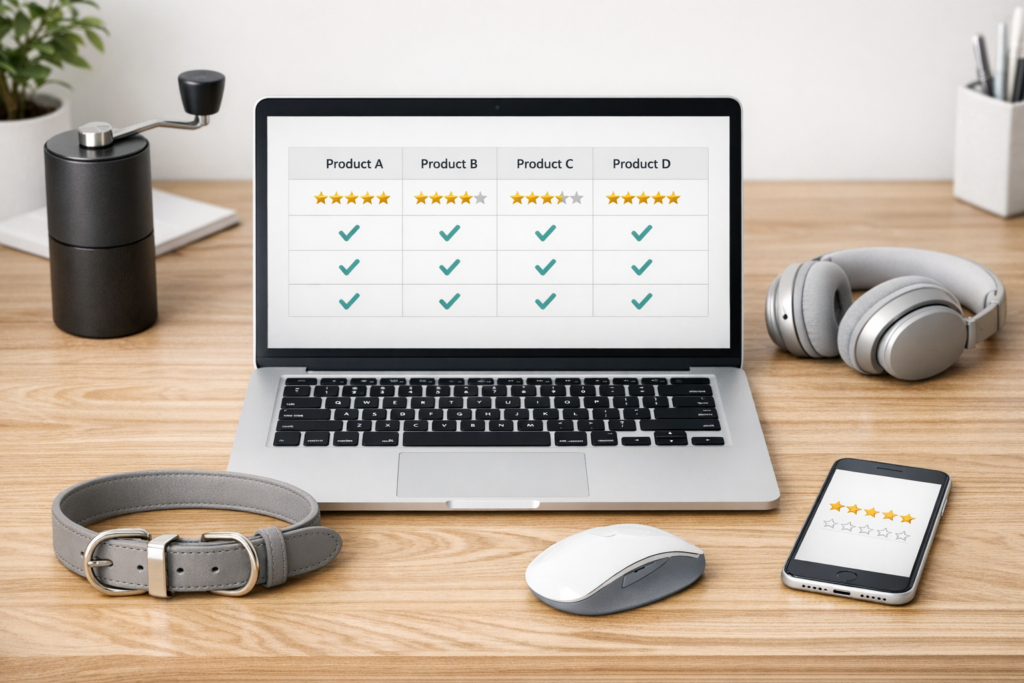
- Quick comparison table
- Best overall recommendation
- Best budget option
- Best premium option
- Best for specific use cases
- Detailed product breakdowns
- Buying criteria
- Common mistakes
- FAQ section
- Final recommendation
Example comparison table columns
Use columns like:
- Product
- Best For
- Key Feature
- Price Range
- Pros
- Cons
- Rating
- Check Price
This helps readers decide quickly.
SEO Strategy for Niche Buying Guides
Focus on long-tail keywords
Instead of targeting “best chair,” target:
- best ergonomic chair for small home office
- best office chair for lower back pain under 300
- best desk chair for remote workers
Long-tail keywords are usually easier to rank for and convert better.
Build topic clusters
Do not write random posts.
Build clusters.
Example coffee gear cluster:
- Best Coffee Grinders for Beginners
- Manual vs Electric Coffee Grinder
- Best Pour-Over Coffee Makers
- Best Gooseneck Kettles
- Coffee Grinder Buying Guide
- Best Coffee Subscription Gifts
- How to Make Better Coffee at Home
Clusters build topical authority.
Internal linking matters
Link related articles together naturally.
For example:
- A coffee grinder guide should link to coffee subscription guides.
- A pet product guide should link to pet subscription articles.
- A business tool guide should link to software comparison articles.
This helps readers and search engines understand your site structure.
Monetization Options
Affiliate commissions
This is the core model.
You earn when users buy through your links.
Programs may pay:
- percentage of sale
- flat commission
- recurring commission
- lead fee
Display ads
Once your traffic grows, display ads can provide additional income.
This works especially well for informational guides.
Sponsored placements
Brands may pay to be included or reviewed.
Always disclose sponsorship clearly.
Email newsletter
Build an email list around your niche.
Examples:
- weekly product deals
- buying tips
- seasonal recommendations
- gift guides
- new product alerts
Digital products
You can sell:
- buying checklists
- comparison spreadsheets
- setup guides
- printable planners
- product research templates
Building Trust and Avoiding the “Fake Review” Problem
Trust is the biggest asset in affiliate content.
Be honest about weaknesses
Every product has drawbacks.
A trustworthy review says:
- who it is best for
- who should avoid it
- what the product does well
- what it does poorly
Use original insight
Where possible, include:
- product photos
- hands-on testing
- screenshots
- setup notes
- real measurements
- customer feedback analysis
- long-term usage notes
Keep articles updated
Prices, availability, and product versions change.
Update your most important buying guides regularly.
Avoid recommending only high-commission products
Readers can sense when a site is commission-first.
Recommend what is genuinely useful.
Long-term trust is worth more than a quick sale.
Simple 90-Day Launch Plan
Days 1–10: Choose your niche
Pick a niche with:
- buyer demand
- enough products
- affiliate programs
- clear problems
- room for content clusters
Days 11–20: Keyword research
Find:
- 10 “best X for Y” keywords
- 10 comparison keywords
- 10 beginner guide topics
- 5 individual product review opportunities
Days 21–40: Build the website
Set up:
- domain
- hosting
- WordPress or another CMS
- affiliate disclosure page
- privacy policy
- basic design
- comparison table plugin
- email signup form
Days 41–70: Publish first content cluster
Start with 10–15 articles.
Include:
- one pillar buying guide
- several supporting product guides
- one beginner guide
- one comparison article
- one FAQ-style article
Days 71–90: Improve and promote
Actions:
- add internal links
- create Pinterest pins if relevant
- submit to Google Search Console
- join affiliate programs
- build email list
- update comparison tables
- create short social posts from each guide
Example Content Cluster: Coffee Gear Buying Guide Site
A niche site around coffee gear could start with:
- Best Coffee Grinders for Beginners
- Best Espresso Machines Under $500
- Best Pour-Over Coffee Makers
- Manual vs Electric Coffee Grinders
- Best Gooseneck Kettles
- How to Choose Your First Espresso Machine
- Best Coffee Storage Containers
- Best Coffee Subscription Gifts
- Best Travel Mugs for Commuters
- Best Milk Frothers for Home Lattes
This cluster could link naturally to specialty coffee/tea subscriptions.
Common Mistakes to Avoid
Mistake 1: Choosing a niche that is too broad
“Best products” is not a niche.
“Home office gear for remote workers” is better.
Mistake 2: Writing generic content
Do not publish articles that simply repeat Amazon descriptions.
Add real decision-making value.
Mistake 3: Ignoring mobile users
Many shoppers read buying guides on their phones.
Tables, buttons, and images must work well on mobile.
Mistake 4: Not disclosing affiliate links
Always use clear affiliate disclosures.
Trust and compliance matter.
Mistake 5: Never updating content
Outdated guides lose rankings and conversions.
Mistake 6: Depending on one affiliate program
Diversify your monetization.
Use multiple networks and direct brand partnerships when possible.
Final Thoughts
A Niche Buying Guide Website is one of the cleanest ways to build an online business without inventory, shipping, or product development.
You help people make better decisions.
You earn when your recommendations are useful.
The best version of this business is not a spammy review site. It is a trusted resource that understands a specific buyer better than general marketplaces do.
Start with one focused niche.
Build helpful buying guides.
Be honest.
Update your content.
Link related articles together.
Over time, your site can become a valuable affiliate asset that earns from search traffic, email subscribers, and product partnerships.
If you enjoy research, comparison, and helping people choose wisely, a niche buying guide site may be one of the best online business models to start in 2026.
Suggested next reads