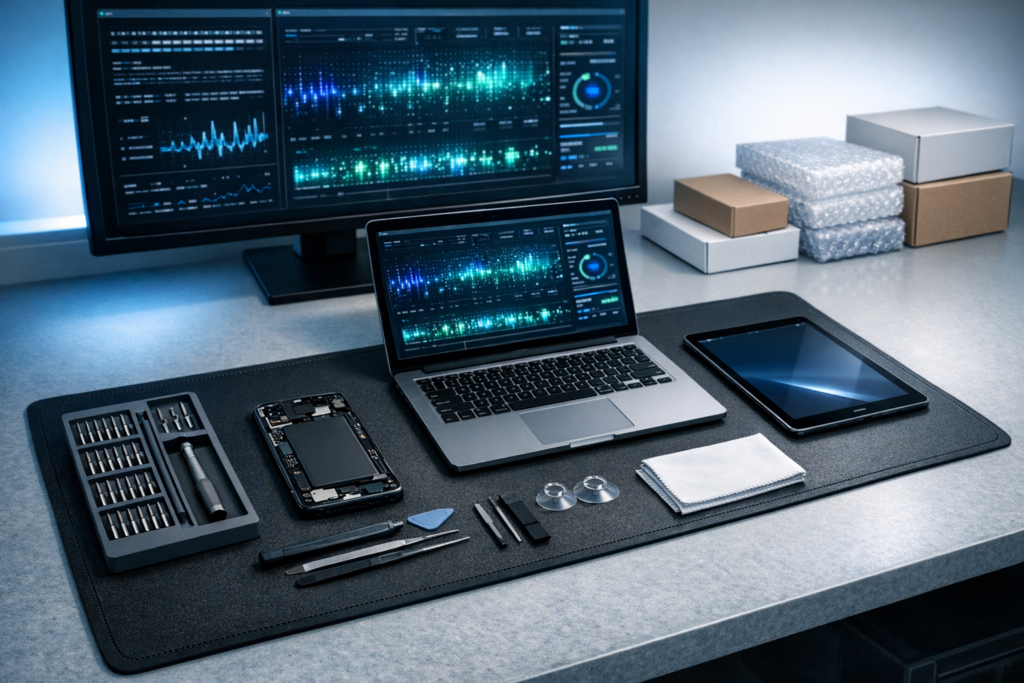
Refurbished Tech: How to Build a Trusted Electronics Resale Business in 2026
Refurbished technology has moved from a budget compromise to a mainstream buying choice. In 2026, more consumers and small businesses are choosing refurbished smartphones, laptops, tablets, monitors, gaming consoles, wearables, and accessories because they want better value, lower environmental impact, and reliable performance without paying full retail price.
That shift creates a serious business opportunity.
A Refurbished Tech business can be highly profitable because electronics often have strong resale value, steady demand, and clear upgrade cycles. People constantly replace devices, businesses refresh equipment, students need affordable laptops, parents buy tablets for children, and remote workers need reliable gear.
But refurbished tech is not like selling simple secondhand products.
Customers expect trust.
They want to know:
- Does it work properly?
- Has it been tested?
- Is the battery healthy?
- Is the device unlocked?
- What condition is it in?
- Is there a warranty?
- Can I return it if something goes wrong?
If you can answer those questions clearly, professionally, and consistently, you can build a strong electronics resale brand.
Affiliate disclosure: This guide may contain affiliate links. If you purchase through them, ProBusinessStrategy may earn a commission at no extra cost to you. We only recommend tools we believe are genuinely useful for beginners and serious builders.
Why Refurbished Tech Is a Strong Business in 2026
Refurbished tech is growing because it solves multiple problems at once.
New electronics are expensive
Premium smartphones, laptops, tablets, and accessories continue to be costly. Many buyers do not need the latest model. They need a reliable device that performs well at a lower price.
A refurbished laptop that costs 40–60% less than a new one can be very attractive to:
- students
- freelancers
- small business owners
- families
- remote workers
- budget-conscious professionals
- schools and nonprofits
Sustainability matters
Electronics create massive e-waste when devices are discarded too early.
Refurbishing extends the life of existing products and reduces environmental impact.
This makes refurbished tech appealing to eco-conscious consumers and businesses that want to reduce waste.
You can connect this naturally to sustainable buying behavior, similar to other circular economy businesses like vintage clothing resale.
Demand is practical and recurring
Tech is not just decorative.
People need devices for:
- work
- school
- communication
- entertainment
- business
- travel
- content creation
- gaming
That creates ongoing demand.
Product value is high
Compared with many small e-commerce products, refurbished tech has higher average order values.
A refurbished accessory may sell for $30–$80.
A smartphone may sell for $150–$700.
A laptop may sell for $250–$1,200.
That means fewer sales can generate meaningful revenue, but it also means quality control must be much stronger.
Choosing Your Refurbished Tech Niche
Do not try to sell every type of electronics from day one.
Start with one category you can understand, test, and explain well.
Refurbished smartphones
Smartphones are one of the biggest refurbished categories.
Common opportunities:
- unlocked iPhones
- Android phones
- business phones
- student phones
- budget family phones
- older flagship models
Important checks:
- battery health
- screen condition
- camera function
- charging port
- speaker and microphone
- face ID / fingerprint sensor
- carrier lock status
- IMEI status
- water damage indicators
Smartphones can be profitable, but testing must be strict.
Refurbished laptops
Laptops are strong because buyers need them for school, work, and business.
Common opportunities:
- business laptops
- student laptops
- creative laptops
- budget laptops
- refurbished MacBooks
- Windows productivity laptops
- Chromebooks
Important checks:
- battery cycles
- keyboard
- trackpad
- ports
- display quality
- storage health
- RAM
- charger
- operating system
- webcam and microphone
Laptops are especially good for building a business-focused brand.
Refurbished tablets
Tablets can be easier than laptops but still require testing.
Common buyers:
- students
- families
- children
- artists
- note-takers
- small businesses
- restaurants
Check:
- touchscreen
- battery
- charging
- Wi-Fi
- cameras
- speakers
- stylus support
- screen scratches
- storage capacity
Refurbished gaming consoles
Gaming consoles have passionate buyers and strong seasonal demand.
Opportunities:
- consoles
- controllers
- handheld gaming devices
- retro gaming systems
- refurbished bundles
Important checks:
- disc drive
- HDMI output
- controller drift
- overheating
- storage
- online account locks
- cables
- game compatibility
This niche also links naturally with collectibles and memorabilia.
Refurbished business equipment
This can be a strong B2B niche.
Examples:
- monitors
- docking stations
- office laptops
- refurbished phones for teams
- keyboards
- routers
- POS tablets
- small office bundles
Selling to small businesses can create larger orders and repeat buyers.
Business Models for Refurbished Tech
There are several ways to enter this market.
Model 1: Buy, test, refurbish, resell
This is the most direct model.
You buy used devices, test them, repair or clean them, then resell at a margin.
Pros:
- higher margin potential
- more control over quality
- stronger brand trust
- ability to specialize
Cons:
- requires technical knowledge
- requires testing tools
- risk of faulty inventory
- returns can be costly
This model works best if you are willing to learn diagnostics and repair basics.
Model 2: Source from certified refurbishers
You buy from wholesalers or certified suppliers who already test and grade products.
Pros:
- easier startup
- more consistent quality
- less technical repair work
- scalable inventory
Cons:
- lower margins
- supplier dependence
- minimum order quantities
- less unique stock
This is a good model if your strength is branding and sales.
Model 3: Trade-in and buyback model
You offer customers cash or store credit for old devices.
Pros:
- direct inventory pipeline
- strong customer relationship
- repeat business potential
- good local brand opportunity
Cons:
- requires valuation knowledge
- fraud risk
- testing needed
- cash flow required
This can become powerful once your brand has trust.
Model 4: Refurbished tech affiliate/content site
If you do not want to hold inventory, you can build a content site around refurbished buying guides and earn affiliate commissions.
Examples:
- best refurbished laptops for students
- best refurbished phones under $300
- refurbished vs new laptop comparison
- where to buy refurbished tech safely
- refurbished tech gift guides
Sourcing Refurbished Tech Inventory
Your sourcing strategy determines your margin and risk.
Local marketplaces
You can source from:
- Facebook Marketplace
- local classifieds
- OfferUp-style apps
- community groups
- local businesses
- student communities
Always test devices before paying when possible.
Business liquidation
Companies often sell used equipment after upgrading.
This can include:
- laptops
- monitors
- docking stations
- phones
- tablets
- accessories
Business liquidation can be excellent because devices may have been professionally maintained.
Trade-ins
Offer a simple buyback system.
For example:
- “Sell us your old phone”
- “Trade your laptop for store credit”
- “Upgrade and recycle your old tech”
This creates repeat customer loops.
Electronics wholesalers
Wholesalers can supply larger quantities of used or refurbished devices.
Before ordering:
- request samples
- understand grading
- check return terms
- verify testing standards
- start with small batches
Repair shops
Local repair shops may have devices they do not want to resell themselves.
You can partner with them and handle e-commerce sales.
Testing and Grading Devices
This is the core of a refurbished tech business.
If your testing is weak, your brand will suffer.
Create a testing checklist
For every device, document what you tested.
For smartphones:
- power on/off
- battery health
- charging port
- screen touch
- display brightness
- cameras
- speakers
- microphone
- Wi-Fi
- Bluetooth
- cellular
- SIM lock
- IMEI status
- buttons
- face/fingerprint unlock
- factory reset
For laptops:
- battery cycles
- keyboard
- trackpad
- screen
- webcam
- microphone
- speakers
- ports
- Wi-Fi
- Bluetooth
- storage health
- RAM
- charging
- operating system
- cooling fan
- hinges
Use condition grades
Use simple, clear grading.
Example:
Grade A: Excellent condition, minimal signs of use
Grade B: Good condition, light scratches or wear
Grade C: Functional with visible wear
For Parts/Repair: Not fully functional, sold clearly as defective
Customers appreciate clarity.
Provide test reports when possible
For higher-value items, include:
- battery health percentage
- storage size
- RAM
- processor
- operating system
- serial/IMEI status confirmation where appropriate
- included accessories
- warranty length
This builds trust and reduces questions.
Data Wiping and Privacy
This is extremely important.
Never sell a device with previous owner data.
Factory reset is not always enough
For phones and tablets, ensure:
- previous accounts are removed
- activation locks are disabled
- device is factory reset
- SIM cards are removed
- storage is cleared
For laptops, consider:
- secure wipe
- fresh OS installation
- removal of old user profiles
- firmware/account locks checked
Data privacy mistakes can create serious trust and legal problems.
Data Wiping and Privacy
This is extremely important.
Never sell a device with previous owner data.
Factory reset is not always enough
For phones and tablets, ensure:
- previous accounts are removed
- activation locks are disabled
- device is factory reset
- SIM cards are removed
- storage is cleared
For laptops, consider:
- secure wipe
- fresh OS installation
- removal of old user profiles
- firmware/account locks checked
Data privacy mistakes can create serious trust and legal problems.
Repairs and Refurbishment
You do not need to perform advanced repairs yourself at first.
Start with simple, lower-risk improvements.
Beginner-friendly refurbishment tasks
- cleaning devices
- replacing chargers/cables
- polishing screens
- replacing laptop batteries when simple
- replacing phone screen protectors
- installing fresh operating systems
- replacing missing rubber feet
- keyboard cleaning
- controller cleaning
Repairs to outsource
Consider outsourcing:
- soldering
- motherboard repairs
- screen replacements on expensive phones
- water damage
- advanced diagnostics
- battery replacements in glued devices
A trusted repair partner can help you scale safely.
Pricing Refurbished Tech
Pricing must account for risk, repairs, and warranty.
Simple pricing formula
Retail Price=Device Cost+Repair Cost+Testing Labor+Packaging+Fees+Warranty Risk+ProfitRetail\ Price = Device\ Cost + Repair\ Cost + Testing\ Labor + Packaging + Fees + Warranty\ Risk + ProfitRetail Price=Device Cost+Repair Cost+Testing Labor+Packaging+Fees+Warranty Risk+Profit
Example:
If you buy a used laptop for $220 and spend:
- repair/cleaning: $35
- testing labor: $25
- packaging: $10
- platform fees: $35
- warranty risk allowance: $30
- desired profit: $120
Then:
220+35+25+10+35+30+120=475220 + 35 + 25 + 10 + 35 + 30 + 120 = 475220+35+25+10+35+30+120=475
A retail price around $450–$500 may make sense depending on model and market demand.
Research market value
Check:
- sold listings
- refurbished marketplaces
- competitor stores
- condition differences
- included accessories
- warranty length
Do not compare your Grade B item to someone else’s Grade A certified item with warranty unless you offer similar value.
Warranty and Returns
Warranty is a major trust signal in refurbished tech.
Why warranty matters
Customers are nervous about used electronics.
Even a short warranty can increase conversions.
Options:
- 14-day return window
- 30-day warranty
- 90-day limited warranty
- paid extended warranty
- replacement or repair policy
Be clear about coverage
State what is covered:
- device functionality
- battery minimum health
- charger if included
- screen functionality
State what is not covered:
- accidental damage
- water damage after purchase
- misuse
- cosmetic wear already disclosed
- software installed by customer
Clarity prevents disputes.
Product Listings That Build Trust
Refurbished tech listings must be detailed.
Include:
- exact model
- year if relevant
- storage
- RAM
- processor
- battery health
- condition grade
- cosmetic notes
- included accessories
- warranty
- return policy
- testing checklist summary
- shipping method
Example listing summary
Refurbished 13-inch Business Laptop — Grade B
This laptop has been tested, cleaned, factory reset, and prepared for everyday productivity. It is suitable for students, remote workers, and small business use.
- Condition: Grade B, light cosmetic wear
- Battery: tested and holds charge
- Storage: 256GB SSD
- RAM: 8GB
- Includes: charger
- Warranty: 30-day limited functionality warranty
- Notes: small scratch on top cover, shown in photos
Photography for Refurbished Tech
Photos should be honest and clean.
Required photos
For each device:
- front view
- back view
- side/ports
- screen on
- keyboard/trackpad if laptop
- close-up of flaws
- accessories included
- packaging if relevant
- serial/IMEI hidden or partially obscured for safety
Do not hide cosmetic damage.
Clear flaw photos reduce returns.
Where to Sell Refurbished Tech
eBay
eBay is strong for electronics because buyers search specific models.
Good for:
- phones
- laptops
- consoles
- parts
- accessories
Amazon Renewed
Amazon Renewed can be powerful but has stricter requirements.
Good for sellers who can meet quality and volume standards.
Back Market-style marketplaces
Specialized refurbished marketplaces can provide buyer trust but may require approval.
Facebook Marketplace/local sales
Good for:
- testing demand
- avoiding shipping risk
- local laptop/phone sales
- quick cash flow
Meet safely and document transactions.
Shopify store
Best for building a trusted brand.
A Shopify store allows:
- detailed product pages
- warranty pages
- email list
- trade-in forms
- bundles
- business customer offers
Marketing a Refurbished Tech Business
Educate buyers
Many customers need help choosing.
Create content like:
- “Refurbished vs Used: What’s the Difference?”
- “Best Refurbished Laptop for Students”
- “How to Check Battery Health Before Buying a Used Phone”
- “Is Refurbished Tech Safe to Buy?”
- “What Does Grade A Refurbished Mean?”
Educational content builds trust.
Focus on value comparisons
Show savings clearly.
Example:
- New retail price: $999
- Refurbished price: $529
- Savings: $470
- Warranty included
This helps buyers justify the purchase.
Use sustainability messaging
Mention:
- extended device life
- reduced e-waste
- circular economy
- responsible reuse
- lower carbon footprint compared with buying new
Do not overclaim unless you have data.
Build bundles
Bundles increase average order value.
Examples:
- student laptop bundle
- remote work bundle
- refurbished phone + case + charger
- gaming console + controller bundle
- small business starter kit
This connects naturally with other e-commerce bundle strategies.
Common Mistakes to Avoid
Mistake 1: Selling untested devices as refurbished
If it is not tested and cleaned, it is not truly refurbished.
Mistake 2: Vague condition descriptions
“Good condition” is not enough. Use grades and photos.
Mistake 3: Ignoring batteries
Battery health is one of the biggest issues in refurbished tech.
Mistake 4: No return or warranty policy
Customers need reassurance.
Mistake 5: Poor packaging
Electronics need protective shipping.
Use strong boxes, padding, and proper labeling.
Mistake 6: Buying locked or stolen devices
Always check account locks, carrier locks, and device status where applicable.
Legal and Compliance Considerations
Refurbished electronics can involve more responsibility than simple resale.
Consider:
- consumer protection laws
- warranty terms
- data wiping obligations
- tax/VAT
- import/export rules
- battery shipping regulations
- brand trademark usage in listings
- e-waste rules
- marketplace policy compliance
For a broader business foundation, read our guide on legal and tax basics for online businesses.
Example 30-Day Launch Plan
Days 1–5: Choose your product category
Pick one:
- phones
- laptops
- tablets
- gaming consoles
- business equipment
Do not start with everything.
Days 6–10: Learn testing standards
Create your testing checklist.
Research common defects for your category.
Days 11–15: Source 5–10 starter units
Start small.
Track:
- purchase price
- condition
- repair needs
- expected resale price
- risk level
Days 16–20: Test, clean, and grade
Document every device.
Take clear notes and flaw photos.
Days 21–25: Create listings
Write detailed listings with:
- specs
- condition grade
- testing summary
- accessories
- warranty
- shipping
- return policy
Days 26–30: Launch and promote
Post listings, create trust-building content, and gather feedback.
Focus on quality over volume.
Scaling a Refurbished Tech Brand
Once you have a reliable process, scale carefully.
Add trade-ins
Offer customers credit for old devices.
Build B2B offers
Sell refurbished laptops and monitors to:
- freelancers
- small businesses
- schools
- nonprofits
- remote teams
Create standardized bundles
Examples:
- remote worker laptop kit
- student study setup
- creator starter bundle
- small office refurbished tech pack
Hire or partner with technicians
This improves repair capacity and quality control.
Build a warranty reputation
A strong warranty can become your competitive advantage.
Final Thoughts
Refurbished Tech is one of the most practical and profitable e-commerce opportunities in 2026, but it rewards professionalism.
Customers are willing to buy used electronics when they trust the seller.
That trust comes from testing, transparency, grading, warranty, clear photos, honest listings, and strong customer support.
Start with one category. Learn the devices. Document your process. Protect customer data. Package carefully. Be honest about condition. Offer reasonable support.
If you do that, you are not just reselling electronics.
You are giving valuable technology a second life.
Suggested next reads


Hi there i am kavin, its my first occasion to commenting anywhere,
when i read this piece of writing i thought i could also make comment due to this sensible article.
Hi Kavin, thank you for your comment. I’m glad you found the article useful.