E-Commerce Hybrid Affiliate Store: How to Build a Store Without Inventory in 2026
Many people want to start an online store.
But they do not want to buy inventory, manage a warehouse, ship products, deal with returns, or take the financial risk of ordering stock before they know what customers actually want.
That is why a hybrid affiliate store can be such an attractive business model.
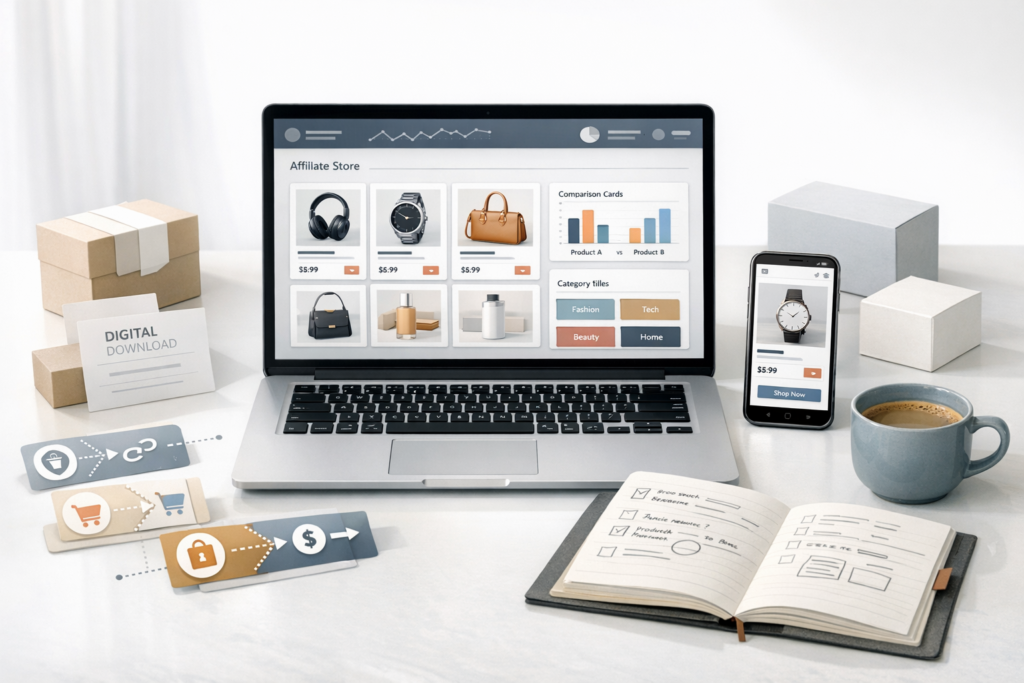
A hybrid affiliate store looks and feels like an e-commerce website, but it does not rely only on products you personally own. Instead, it combines affiliate products, curated product recommendations, comparison pages, digital products, email marketing, and sometimes your own physical products later.
You build a store-like experience around a specific niche.
Visitors browse helpful product categories, guides, reviews, comparisons, and recommendations. When they click to buy certain products, they are sent to partner retailers or brands through your affiliate links. If they purchase, you earn a commission.
At the same time, you can sell your own digital products, such as checklists, guides, templates, mini-courses, or memberships.
This gives you the feel of an e-commerce business without starting with the operational burden of traditional retail.
You are not just building a store.
You are building a curated shopping guide, niche authority site, and monetized recommendation platform.
Affiliate disclosure: This guide may contain affiliate links. If you purchase through them, ProBusinessStrategy may earn a commission at no extra cost to you. We only recommend tools we believe are genuinely useful for beginners and serious builders.
What Is a Hybrid Affiliate Store?
A hybrid affiliate store is a niche website that combines e-commerce-style product discovery with affiliate monetization and owned digital products.
It may include:
- product category pages
- buying guides
- product reviews
- comparison tables
- “best of” lists
- curated collections
- gift guides
- resource pages
- email capture
- digital product sales
- sponsored placements
- affiliate product links
- optional private-label products later
Unlike a traditional online store, you do not necessarily process every order yourself.
Instead, the visitor may click from your site to:
- Amazon
- Walmart
- Target
- Etsy
- Shopify brands
- niche retailers
- software companies
- direct-to-consumer brands
- affiliate partner stores
You earn when visitors buy through your tracked links.
Why This Business Works in 2026
People want help choosing products
Consumers are overwhelmed with options.
They do not always want thousands of random products.
They want someone to help them choose.
That is why buying guides, curated collections, comparison sites, and niche recommendation platforms are valuable.
A hybrid affiliate store gives visitors a more guided shopping experience than a basic blog.
You can start without inventory
You do not need to:
- order products in bulk
- rent storage space
- manage shipping
- handle returns
- negotiate fulfillment
- risk money on unsold stock
That makes the business more accessible for beginners.
This connects well with the idea of starting a business using only your smartphone, because a lean recommendation site can begin with research, content, and simple tools.
You can test niches before creating products
A hybrid affiliate store helps you learn:
- which categories get traffic
- which products people click
- which guides convert
- which keywords bring buyers
- which audiences subscribe
- which price points perform
Later, you can create your own digital or physical products based on real demand.
You can combine multiple revenue streams
A traditional affiliate site may rely only on commissions.
A hybrid store can also earn from:
- digital products
- sponsored placements
- email promotions
- premium guides
- display ads
- memberships
- consulting
- future private-label products
This makes the business more resilient.
Hybrid Affiliate Store vs Traditional E-Commerce
A traditional e-commerce store usually sells products it owns or controls.
A hybrid affiliate store starts with curation and recommendations.
Traditional e-commerce
You may need:
- inventory
- suppliers
- fulfillment
- payment processing
- returns management
- customer service
- product photography
- packaging
- cash flow for stock
Hybrid affiliate store
You mainly need:
- niche research
- content
- affiliate partnerships
- website setup
- SEO
- email list
- product comparison structure
- trust-building content
- digital product strategy
Traditional e-commerce can produce higher margins if successful, but it also carries more operational risk.
Hybrid affiliate stores are often easier to start and test.
Hybrid Affiliate Store vs Dropshipping
Dropshipping also avoids holding inventory, but it still often involves customer service, supplier reliability, shipping delays, refunds, and order management.
A hybrid affiliate store is different.
You usually send the customer to the merchant.
The merchant handles:
- payment
- shipping
- product fulfillment
- returns
- customer support
That does not mean affiliate stores are effortless. You still need traffic, trust, content quality, and conversion strategy.
But the operational load is usually lighter than dropshipping.
If readers want to compare both models, they can also explore a dropshipping course business.
Choosing a Profitable Niche
Your niche is the foundation.
A good hybrid affiliate store niche should have:
- buyer intent
- many products
- recurring interest
- comparison opportunities
- affiliate programs
- content potential
- room for digital products
- long-term demand
Strong niche examples
Home office setup store
Affiliate products:
- desks
- chairs
- monitors
- keyboards
- desk lamps
- webcams
- productivity tools
Digital products:
- ergonomic setup checklist
- home office layout planner
- remote work productivity guide
Coffee gear store
Affiliate products:
- grinders
- espresso machines
- pour-over kits
- coffee subscriptions
- mugs
- scales
- filters
Digital products:
- home café setup guide
- brewing recipe cards
- coffee tasting journal
This connects naturally with specialty coffee/tea subscription businesses.
Pet product recommendation store
Affiliate products:
- dog beds
- collars
- toys
- grooming tools
- training products
- pet cameras
Digital products:
- puppy starter checklist
- pet care planner
- dog training tracker
This pairs well with niche pet subscription businesses.
Eco-friendly home store
Affiliate products:
- reusable bags
- refill bottles
- compost bins
- bamboo organizers
- cleaning kits
- sustainable kitchen tools
Digital products:
- zero-waste home checklist
- sustainable shopping planner
- eco home starter guide
This links naturally with eco-friendly household kits.
Creator gear store
Affiliate products:
- cameras
- microphones
- lighting
- tripods
- editing software
- creator tools
Digital products:
- content calendar
- video script templates
- creator setup checklist
What Pages Your Hybrid Affiliate Store Needs
A strong hybrid affiliate store should feel more structured than a random blog.
Homepage
The homepage should explain:
- who the site is for
- what problem it solves
- main categories
- popular guides
- featured recommendations
- email signup
- trust statement
Category pages
Examples:
- Best Home Office Gear
- Coffee Brewing Equipment
- Pet Travel Essentials
- Eco-Friendly Kitchen Products
- Creator Studio Tools
Category pages organize the site and help users browse.
Buying guides
Buying guides are the core content type.
Examples:
- Best Ergonomic Office Chairs for Small Spaces
- Best Coffee Grinders for Beginners
- Best Eco-Friendly Cleaning Products
- Best Dog Beds for Apartments
- Best Microphones for YouTube Creators
This connects directly with niche buying guides.
Product reviews
Review individual products in detail.
Include:
- who it is for
- key features
- pros and cons
- price range
- alternatives
- affiliate link
- honest recommendation
Comparison pages
Examples:
- Product A vs Product B
- Best Budget vs Premium Options
- Shopify App A vs Shopify App B
- Manual vs Electric Coffee Grinder
- Standing Desk vs Traditional Desk
Comparison content often attracts high-intent visitors.
Digital product pages
Sell your own:
- checklists
- templates
- planners
- guides
- mini-courses
- memberships
Digital products increase your control and margins.
How to Make the Store Feel Like a Store
A hybrid affiliate site should not feel like a random pile of articles.
It should feel curated.
Use product cards
Product cards can include:
- product image
- short benefit
- ideal user
- price range
- rating criteria
- call-to-action button
Use comparison tables
Tables help buyers decide quickly.
Include:
- product name
- best for
- key feature
- price range
- pros
- cons
- buy button
Create curated collections
Examples:
- Best Starter Home Office Setup Under $500
- Minimalist Coffee Bar Essentials
- Eco-Friendly Kitchen Starter Kit
- Beginner Creator Studio Bundle
- Apartment Dog Owner Essentials
Add buyer paths
Guide users by situation.
Examples:
- “I am a beginner”
- “I want the budget option”
- “I want premium quality”
- “I need a small-space solution”
- “I want eco-friendly products”
The more helpful your structure, the more trustworthy your store becomes.
Affiliate Programs to Consider
Depending on the niche, possible affiliate sources include:
- Amazon Associates
- Impact
- ShareASale
- CJ Affiliate
- PartnerStack
- Awin
- Rakuten Advertising
- direct brand affiliate programs
- software affiliate programs
- marketplace programs
Look for:
- fair commissions
- good product quality
- trusted merchants
- reliable tracking
- reasonable cookie duration
- strong conversion rates
- clear affiliate terms
Do not promote products only because commissions are high.
Trust matters more.
Adding Your Own Digital Products
Your own products can turn a basic affiliate site into a real hybrid business.
Examples
For a home office store:
- Home Office Setup Checklist
- Remote Work Productivity Planner
- Ergonomic Desk Layout Guide
For a coffee gear store:
- Home Barista Starter Guide
- Coffee Recipe Cards
- Coffee Tasting Journal
For an eco home store:
- Zero-Waste Home Starter Guide
- Sustainable Shopping Checklist
- Eco Cleaning Planner
For a creator gear store:
- YouTube Setup Checklist
- Content Calendar Template
- Video Script Templates
Digital products can be:
- low-ticket downloads
- bundles
- paid guides
- templates
- mini-courses
- memberships
This creates revenue even when affiliate commissions fluctuate.
Building an Email List
An email list is critical because affiliate clicks alone are not enough.
You want to capture visitors before they leave.
Lead magnet ideas
Examples:
- Best Products Checklist
- Starter Kit Buying Guide
- Budget Setup Planner
- Product Comparison Spreadsheet
- Seasonal Gift Guide
- Niche Shopping Checklist
Email sequence
A simple welcome sequence might include:
- Deliver the free checklist
- Share your best beginner guide
- Recommend top products
- Introduce your digital product
- Send a comparison guide
- Invite the reader to reply with questions
Email gives you repeat traffic and more monetization options.
It also pairs well with an e-commerce premium newsletter.
SEO Strategy for a Hybrid Affiliate Store
SEO is one of the strongest traffic sources for this model.
Target keywords with commercial intent.
Keyword types
Best product keywords
Examples:
- best ergonomic chair for small office
- best coffee grinder for beginners
- best pet carrier for travel
- best eco-friendly cleaning products
Comparison keywords
Examples:
- product A vs product B
- best budget vs premium desk chair
- manual vs electric coffee grinder
Problem-solving keywords
Examples:
- how to set up a home office in small apartment
- what do you need for a home coffee bar
- how to make your kitchen more eco-friendly
Starter kit keywords
Examples:
- home office starter kit
- coffee brewing starter kit
- puppy starter kit
- creator studio starter kit
Internal linking strategy
A good structure:
- Homepage links to main categories
- Categories link to buying guides
- Buying guides link to product reviews
- Product reviews link back to buying guides
- Guides link to digital products
- Email lead magnets are placed throughout
This helps users and search engines understand the site.
Trust and Transparency
Affiliate stores must be trustworthy.
Use clear affiliate disclosures
Tell readers when links may earn commissions.
Be honest about pros and cons
Do not pretend every product is perfect.
Explain your selection criteria
For example:
“We evaluate products based on price, durability, user reviews, features, ease of use, and suitability for beginners.”
Update content regularly
Product prices, availability, and features change.
Update important pages.
Avoid fake reviews
If you have not personally tested a product, be transparent.
You can still create research-based guides, but do not claim hands-on experience unless it is true.
Monetization Stack
A mature hybrid affiliate store can earn from several layers.
Layer 1: Affiliate commissions
Core revenue from product referrals.
Layer 2: Digital products
Higher-margin downloads and templates.
Layer 3: Email promotions
Promote guides, deals, and digital products.
Layer 4: Sponsored placements
Brands may pay to be featured, but disclose sponsorships clearly.
Layer 5: Display ads
Once traffic grows, ads can add passive revenue.
Layer 6: Own products
Eventually, launch your own physical or digital product based on audience demand.
Example Starter Concept
Brand:
Smart Home Office Picks
Audience:
Remote workers, freelancers, and small business owners building productive workspaces.
Affiliate categories:
- standing desks
- ergonomic chairs
- monitor arms
- keyboards
- lighting
- webcams
- productivity software
Digital products:
- Home Office Setup Checklist
- Ergonomic Workspace Planner
- Remote Work Productivity Guide
Lead magnet:
“$500 Home Office Starter Kit Checklist”
Core SEO pages:
- Best Home Office Setup for Beginners
- Best Ergonomic Chairs for Remote Workers
- Best Desk Lamps for Productivity
- Standing Desk vs Regular Desk
- Home Office Setup Checklist
30-Day Launch Plan
Days 1–5: Choose niche and revenue model
Decide:
- niche
- audience
- main product categories
- affiliate programs
- first digital product idea
Days 6–10: Build site structure
Create:
- homepage
- three category pages
- affiliate disclosure page
- privacy policy
- email signup
- first lead magnet outline
Days 11–15: Write core content
Publish:
- one pillar guide
- two buying guides
- two product comparison articles
- one digital product landing page draft
Days 16–20: Join affiliate programs
Apply to:
- Amazon Associates
- niche retailer programs
- software affiliate programs
- direct brand programs
Add affiliate tracking properly.
Days 21–25: Create lead magnet
Build:
- checklist
- buying guide PDF
- comparison spreadsheet
- email welcome sequence
Days 26–30: Launch and promote
Promote through:
- SEO
- Reddit where appropriate
- niche communities
- social media
- YouTube shorts or blog snippets
Common Mistakes to Avoid
Mistake 1: Choosing a niche with no buying intent
Traffic is not enough.
You need visitors who want recommendations.
Mistake 2: Promoting too many random products
Curation matters.
Do not become a product dump.
Mistake 3: Ignoring email capture
Most visitors will not buy on the first visit.
Mistake 4: Relying only on Amazon
Amazon can be useful, but commissions may be low.
Explore direct brand programs and higher-value partners.
Mistake 5: Not adding owned products
Digital products help you control revenue.
Mistake 6: Weak trust signals
Affiliate stores need credibility, clarity, and honesty.
Final Thoughts
A Hybrid Affiliate Store is one of the most practical ways to build an e-commerce-style business without starting with inventory.
You can create a helpful shopping experience, recommend products, build niche authority, earn affiliate commissions, grow an email list, and sell your own digital products.
It is not a shortcut to instant income.
You still need strong content, good niche selection, trustworthy recommendations, SEO, and consistency.
But compared to traditional e-commerce, the starting risk can be much lower.
Start with one niche.
Build useful buying guides.
Add affiliate products carefully.
Create one helpful digital product.
Capture emails.
Improve your content over time.
Eventually, your hybrid affiliate store can become more than a website.
It can become a trusted shopping guide, digital product business, and e-commerce media asset.
Suggested next reads