Introduction: Sustainability is the New Standard
In 2026, “eco-friendly” is no longer a niche—it is a consumer expectation. As more people look to reduce plastic waste and eliminate toxic chemicals from their homes, the demand for curated “Eco-Kits” has exploded. People want to live sustainably, but they are busy; they want someone to do the research for them.
This is where your opportunity lies. Using nothing but your smartphone, you can curate, brand, and sell household starter kits—ranging from zero-waste kitchen sets to non-toxic cleaning bundles. By leveraging mobile-first sourcing and drop-shipping models, you can build a “green” empire without ever touching a piece of inventory.
Affiliate disclosure: This post contains affiliate links. If you make a purchase through one of these links, ProBusinessStrategy may earn a small commission at no extra cost to you. We only recommend tools we genuinely believe in.
1. The “Eco-Kit” Concept: Convenience Meets Consciousness
The magic of this business is in the curation. You aren’t just selling a bamboo toothbrush; you are selling a “Zero-Waste Morning Routine.”
- Why it works on a phone: You can easily manage multiple micro-influencer relationships and customer questions via social media apps, which is where the eco-conscious audience lives.
- Internal Link: This model fits perfectly into the Sustainable Recommerce Trend we’ve seen growing this year.
2. 3 Profitable Kit Ideas for 2026
A. The Zero-Waste Kitchen Starter Set
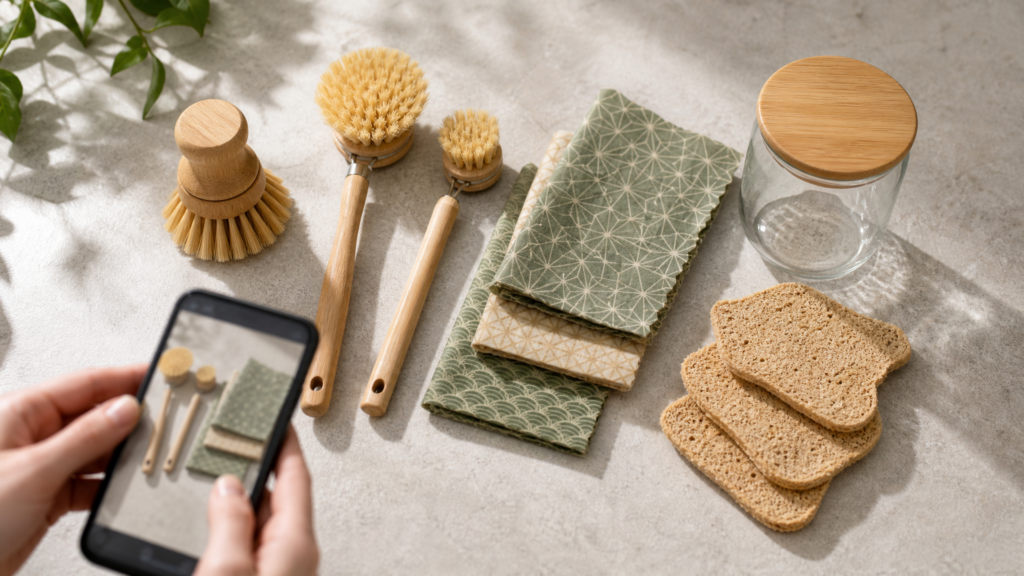
A bundle containing beeswax wraps, silicone baggies, bamboo dish brushes, and compostable sponges.
- Target Audience: New homeowners and parents looking to reduce plastic.
B. The Non-Toxic Laundry Bundle
Wool dryer balls, concentrated soap sheets (plastic-free), and essential oil scents.
- Mobile Advantage: Use Canva Mobile to create “How-to” graphic cards that you include as a digital download with every purchase.
C. The “Eco-Traveler” Kit
Solid shampoo bars, reusable cutlery, and mineral-safe sunscreen.
- Internal Link: Pair this with our Budget Smartphone Sourcing Guide to find high-quality sustainable manufacturers
3. Sourcing Sustainable Products on Mobile
The biggest challenge is avoiding “greenwashing.” You must vet your suppliers carefully.
- Use Specialized Apps: Besides Alibaba, use apps like Common Objective or Faire to find suppliers with verified eco-certifications.
- Ask for Certifications via Chat: Use your phone to instantly message suppliers and ask for their FSC, GOTS, or Fair Trade certificates.
- Internal Link: See How to Source Products with Your Phone for the full vetting checklist.
4. Branding Your Green Empire
To sell at a premium price, your brand must feel authentic.
- Storytelling: Use Instagram Stories and TikTok to show the “Why” behind your business. Share facts about plastic waste and how your kits solve the problem.
- Minimalist Design: Use clean, earth-toned templates for your shop and social media.
- Internal Link: Check our Mastering Mobile Productivity guide to learn how to batch-create this content.
5. Fulfillment: The “Green” Way to Ship
Shipping can be the least eco-friendly part of a business.
- Plastic-Free Fulfillment: Partner with 3PL (Third Party Logistics) companies that offer plastic-free packaging. You can manage these partnerships and view inventory levels through their mobile apps.
- Carbon Offsetting: Use Shopify apps that automatically calculate and offset the carbon footprint of every delivery.
6. Conclusion: Profit with Purpose
Launching an eco-friendly household kit business is one of the most rewarding ways to use your smartphone in 2026. You are solving a real-world problem while building a scalable, high-margin brand. The tools are in your pocket; the market is waiting.
Action Step: Ready to build your store? Visit our Best Apps to Start a Business on Your Phone guide to choose the greenest platform for your launch.