LinkedIn is not only a place to upload a resume or announce a new job.
For entrepreneurs, consultants, freelancers, creators, and business owners, LinkedIn can become a serious authority-building platform.
But there is one mistake many people make.
They try to talk about everything.
One day they post about productivity. The next day they post about leadership. Then marketing. Then AI. Then mindset. Then personal stories. Then sales. Then business lessons. Then random motivation.
That may feel active, but it often creates a weak personal brand.
People do not know what to remember you for.
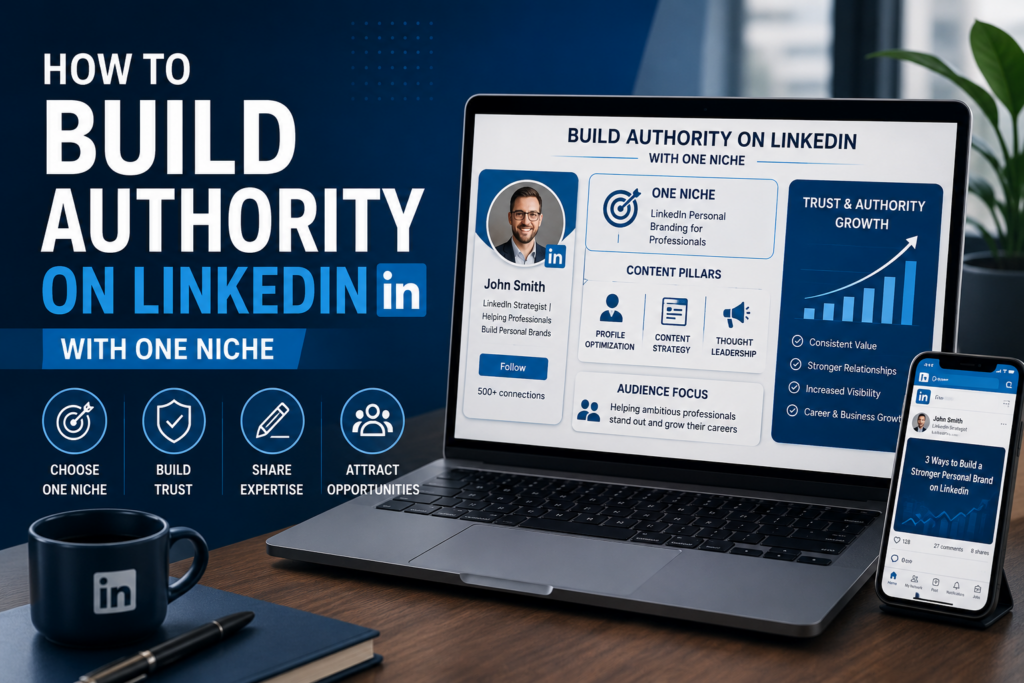
A stronger strategy is to build authority around one niche.
One clear topic.
One type of problem.
One audience.
One area of expertise.
That does not mean you can never talk about anything else. It means your content has a center of gravity. When people see your name, they should quickly understand what you help with and why they should follow you.
That is the power of a LinkedIn authority niche.
Affiliate disclosure: This post contains affiliate links. If you make a purchase through one of these links, ProBusinessStrategy may earn a small commission at no extra cost to you. We only recommend tools we genuinely believe in.
What Is a LinkedIn Authority Niche?
A LinkedIn authority niche is the specific area you want to become known for.
It is not just a topic.
It is the connection between:
- who you help
- what problem you solve
- what perspective you bring
- what outcome you want people to associate with you
For example, “marketing” is not a strong authority niche.
It is too broad.
“Marketing systems for small local service businesses” is stronger.
“AI” is not a strong authority niche.
It is too broad.
“AI workflows for one-person online businesses” is stronger.
“Leadership” is broad.
“Leadership communication for first-time managers” is more specific.
A good LinkedIn niche makes your expertise easier to understand.
It helps people remember you.
It also makes content creation easier because you are no longer asking, “What should I post today?”
You are asking, “What does my niche audience need to understand next?”
That is a much better question.
Why One Niche Works Better Than Posting About Everything
Authority is built through repetition.
Not boring repetition, but strategic repetition.
If you want people to associate you with a subject, they need to see you talk about that subject consistently.
That is how memory works.
If someone sees you post about LinkedIn strategy once, they may forget it.
If they see you post about LinkedIn positioning, LinkedIn profiles, niche content, authority building, and consulting leads again and again, they begin to connect your name with that topic.
This is how authority starts.
People do not need to agree with every post.
They do not even need to like every post.
But they need to understand what you stand for.
A niche gives your content a clear identity.
It also makes your profile more attractive.
When someone visits your profile, they should not feel confused.
They should think:
“This person helps people like me solve a problem I care about.”
That is the beginning of trust.
The Problem with Broad Personal Branding
Broad personal branding feels safe because it gives you many things to talk about.
But it can also make you invisible.
If your profile says you are interested in business, marketing, leadership, AI, growth, productivity, mindset, entrepreneurship, and innovation, the reader may not know what to do with that information.
It sounds impressive, but it does not create a strong reason to follow you.
Specificity is more powerful.
Compare these two examples:
“I help businesses grow.”
This is broad and forgettable.
“I help freelance designers turn LinkedIn posts into consulting leads.”
This is clear.
Or:
“I help entrepreneurs use AI.”
This is broad.
“I help solo founders use AI to create content systems without hiring a team.”
This is sharper.
Or:
“I create content about business.”
This is general.
“I share business ideas for people who want to start small, test quickly, and build from one laptop or phone.”
This is more memorable.
The narrower message is usually stronger because it gives people a clear reason to care.
How to Choose Your LinkedIn Authority Niche
Choosing your LinkedIn niche does not mean choosing a tiny box forever.
It means choosing a clear starting point.
Here are five questions to help you find it.
1. Who Do You Want to Be Known By?
Do you want to be known by startup founders, freelancers, local business owners, coaches, creators, consultants, job seekers, real estate agents, e-commerce sellers, solopreneurs, or small business beginners?
Authority is not built in the abstract.
It is built with a specific audience.
The more clearly you define the audience, the easier it becomes to create useful content.
2. What Problem Do They Keep Facing?
A strong niche is connected to a repeated problem.
For example:
- They cannot find clients.
- They do not know how to position themselves.
- They are overwhelmed by AI tools.
- They do not know what to post.
- They struggle to price their service.
- They want to start a business but do not know where to begin.
- They want to build trust online.
- They have knowledge but no clear offer.
Your authority grows when you talk about a problem repeatedly from different angles.
3. What Can You Explain Better Than Most People?
You do not need to be the biggest expert in the world.
But you need to explain something clearly.
Authority on LinkedIn often comes from clarity.
If you can make a confusing problem easier to understand, people will remember you.
This is especially powerful in niches like business, marketing, AI, personal branding, sales, freelancing, consulting, and content strategy.
4. What Can You Talk About for 100 Posts?
A good niche should give you enough content.
If you can only think of five post ideas, the niche may be too narrow or not interesting enough to you.
A strong LinkedIn niche can create content around:
- mistakes
- lessons
- frameworks
- examples
- opinions
- case studies
- myths
- beginner questions
- advanced tactics
- checklists
- stories
- comparisons
- before-and-after examples
If you can create 100 posts around the topic, you have enough depth.
5. Can the Niche Lead to Business?
Authority is useful, but business authority should also connect to opportunity.
Ask:
Can this niche lead to consulting?
Can it lead to freelance work?
Can it lead to coaching?
Can it lead to digital products?
Can it lead to speaking?
Can it lead to partnerships?
Can it lead to affiliate income?
Can it lead to clients?
If the niche builds attention but never connects to a business model, it may not be the right niche for a business-focused LinkedIn strategy.
Examples of Strong LinkedIn Authority Niches
Here are examples of sharper LinkedIn authority niches.
AI for Small Business Owners
Instead of talking about AI in general, focus on how small business owners can use AI to save time, write better content, improve customer communication, create simple systems, or test ideas.
Possible posts:
- “3 AI workflows a solo business owner can use this week”
- “Why most small businesses do not need 20 AI tools”
- “How to use AI without making your brand sound generic”
LinkedIn Content for Consultants
This niche helps consultants turn their expertise into posts that build trust and attract leads.
Possible posts:
- “Why consultants should stop posting vague advice”
- “How to turn client questions into LinkedIn posts”
- “The simplest LinkedIn content system for consultants”
Business Ideas for Solopreneurs
This niche is about helping people find small, practical, realistic business ideas they can test without a big team.
Possible posts:
- “A business idea does not need to be big to be useful”
- “How to test a small idea before building a website”
- “Why boring business ideas can be better than trendy ones”
Personal Branding for Freelancers
This niche helps freelancers become more visible and trusted.
Possible posts:
- “Your LinkedIn profile should not read like a resume”
- “How freelancers can explain their niche in one sentence”
- “Why clients need to understand your value quickly”
Local Business Marketing
This niche helps local businesses improve their online presence.
Possible posts:
- “What I would fix first on a local restaurant’s website”
- “Why local service businesses need clearer offers”
- “3 simple content ideas for a local cleaning company”
Each of these niches is specific enough to be remembered, but broad enough to create many posts.
The One-Sentence Positioning Formula
A simple LinkedIn positioning formula is:
I help [specific audience] achieve [specific outcome] through [specific method].
Examples:
“I help solopreneurs turn business ideas into simple content systems.”
“I help consultants build authority on LinkedIn without posting generic advice.”
“I help local service businesses create clearer online offers.”
“I help freelancers position themselves as niche experts on LinkedIn.”
“I help small business owners use AI to save time and create better content.”
This sentence does not need to be perfect on day one.
But it gives your content direction.
When your positioning is clear, your posts become more focused.
Your profile becomes easier to understand.
Your audience becomes easier to attract.
How to Build a Content System Around One Niche
Once you choose your niche, you need a repeatable content system.
Do not rely on random inspiration.
Create content pillars.
For LinkedIn authority, five useful pillars are:
1. Teach the Basics
Explain beginner concepts in your niche.
If your niche is LinkedIn authority, teach topics like positioning, profile clarity, content pillars, audience selection, and trust-building.
Basic content is not too simple.
For new people entering your world, basic content is often the most useful.
2. Share Mistakes
People like learning what to avoid.
Examples:
- “The biggest mistake beginners make when choosing a niche”
- “Why your LinkedIn profile does not create trust”
- “Why posting more is not always the answer”
Mistake-based posts work because they create curiosity and practical value.
3. Show Frameworks
Frameworks make your thinking memorable.
Examples:
- The One Niche Authority System
- The 3-Part LinkedIn Positioning Test
- The Trust Before Traffic Method
- The Profile Clarity Checklist
- The 100-Post Niche Test
A framework makes you look more strategic because you are not only giving tips.
You are organizing knowledge.
4. Break Down Examples
Examples make your content concrete.
You can show:
- weak vs strong profile headlines
- broad vs specific niches
- vague vs clear offers
- generic vs useful posts
- random content vs authority content
This helps people see the difference.
5. Share Opinions
Authority requires a point of view.
If you only repeat safe advice, you may blend in.
You do not need to be controversial for attention, but you should have clear beliefs.
For example:
- “Posting every day is useless if people do not know what you stand for.”
- “A small niche can be more powerful than a broad personal brand.”
- “Your LinkedIn profile should make your expertise obvious in seconds.”
- “Authority is not built by sounding smart. It is built by being useful repeatedly.”
Opinions help people remember you.
What to Post on LinkedIn When You Have One Niche
Here are practical post ideas for a LinkedIn authority niche.
1. The Problem Post
Talk about one problem your audience keeps facing.
Example:
“Most freelancers do not have a visibility problem. They have a positioning problem.”
Then explain why.
2. The Mistake Post
Show a common mistake and how to fix it.
Example:
“Do not choose a niche based only on what sounds profitable. Choose a niche you can explain, serve, and create content around consistently.”
3. The Framework Post
Give a simple method.
Example:
“To choose your LinkedIn niche, answer three questions: Who do I help? What problem do I solve? What do I want to be remembered for?”
4. The Before-and-After Post
Show transformation.
Example:
Before:
“I help businesses with marketing.”
After:
“I help local service businesses turn unclear offers into simple marketing messages that attract better leads.”
5. The Lesson Post
Share what you learned from experience, research, or observing your niche.
Example:
“The best LinkedIn content usually does not come from trying to impress people. It comes from answering the questions your ideal audience is already asking.”
6. The List Post
Give a short list of useful ideas.
Example:
“7 signs your LinkedIn niche is too broad.”
7. The Story Post
Use a short personal or business story that connects to your niche.
The story should support your message.
It should not be random.
8. The Resource Post
Share a checklist, prompt, template, or simple process.
This can build trust and lead people toward a lead magnet, newsletter, or service.
How Your Profile Should Support Your Niche
Your LinkedIn content should not stand alone.
Your profile should support the same authority niche.
If people like your post and click your profile, they should immediately understand what you do.
Focus on these areas.
Headline
Your headline should explain your niche clearly.
Weak headline:
“Founder | Speaker | Consultant | Marketing | Growth | Innovation”
Stronger headline:
“I help consultants build LinkedIn authority with niche content and clear positioning.”
About Section
Your About section should explain:
- who you help
- what problem you solve
- why it matters
- how you help
- what people can do next
Do not make it a life story unless that story supports your positioning.
Featured Section
Use the Featured section to show your best proof.
This could include:
- your best article
- a newsletter
- a case study
- a free guide
- a website link
- a service page
- a useful post
- a lead magnet
The Featured section should not be random.
It should support your authority niche.
Experience Section
Your experience should also support your positioning.
Instead of only listing responsibilities, explain results, expertise, projects, and outcomes.
The Role of a LinkedIn Newsletter
A LinkedIn newsletter can be useful when your niche has an ongoing topic.
For example:
- Weekly LinkedIn positioning tips
- AI workflows for small business owners
- Business ideas for solopreneurs
- Content systems for consultants
- Local business marketing breakdowns
A newsletter can help you organize your authority into a repeatable format.
It also gives people a reason to subscribe to your thinking, not just follow your posts.
But the newsletter should be specific.
A newsletter called “Business Tips” is vague.
A newsletter called “The One-Person Business Positioning Letter” is clearer.
Specificity helps people understand why they should subscribe.
How to Turn Authority Into Business Opportunities
Building authority is not only about likes and comments.
The real goal is trust.
Trust can turn into business opportunities.
Depending on your niche, LinkedIn authority can lead to:
- consulting calls
- freelance clients
- coaching offers
- workshops
- paid newsletters
- digital products
- speaking opportunities
- podcast invitations
- partnerships
- affiliate income
- website traffic
- email subscribers
But this only happens when your audience understands what you do.
That is why one niche matters.
If people see you as a general poster, they may enjoy your content but not know how to work with you.
If they see you as the person who solves one specific problem, they are more likely to think of you when that problem becomes urgent.
The 90-Day LinkedIn Authority Plan
Here is a simple plan for building authority around one niche.
Days 1–10: Define Your Niche
Choose your audience, problem, and positioning sentence.
Write down:
- who you help
- what they struggle with
- what outcome they want
- what you want to be known for
- what services, products, or offers could connect later
Days 11–30: Create Content Pillars
Choose 4 or 5 content pillars.
For example:
- niche positioning
- content strategy
- profile clarity
- trust-building
- consulting leads
Write 10 post ideas for each pillar.
Now you have 40 to 50 post ideas.
Days 31–60: Publish and Observe
Start posting consistently.
You do not need to post every day, but you do need rhythm.
Pay attention to:
- which topics get comments
- which posts start conversations
- which questions people ask
- which posts attract the right people
- which posts connect to business opportunities
Do not judge too quickly.
Authority grows through repeated signals.
Days 61–90: Refine and Build Assets
After you have posted enough, look for patterns.
Turn the strongest ideas into:
- a profile update
- a newsletter topic
- a lead magnet
- a service page
- a longer article
- a small digital product
- a consulting offer
This is how LinkedIn content becomes more than visibility.
It becomes a business system.
Common Mistakes to Avoid
The first mistake is changing your niche too quickly.
If one post does not perform well, that does not mean the niche is wrong.
Authority takes time.
The second mistake is posting only motivational content.
Motivation can get engagement, but expertise builds trust.
The third mistake is being too broad.
If your content could be for everyone, it may not feel important to anyone.
The fourth mistake is never making an offer.
If you want business opportunities, people need to know how you help.
The fifth mistake is copying what big creators do.
A large creator can post broadly because they already have attention.
A smaller creator often needs more specificity.
The sixth mistake is writing for other creators instead of your actual buyers.
Engagement from peers can feel good, but it may not build your business.
Who This Strategy Is Best For
This LinkedIn authority niche strategy is useful for:
- consultants
- freelancers
- coaches
- solopreneurs
- B2B service providers
- creators
- agency owners
- startup founders
- business educators
- niche experts
- people building a personal brand
- people who want to attract clients without cold pitching all day
It is especially powerful for people who have knowledge but are not yet known for it.
LinkedIn can help you make that knowledge visible.
But visibility alone is not enough.
You need a clear niche.
Final Thoughts
Building authority on LinkedIn does not require becoming famous.
It requires becoming known for something specific.
One audience.
One problem.
One clear point of view.
One repeatable content system.
That is enough to begin.
The goal is not to talk about everything.
The goal is to become useful around one valuable topic again and again.
When people repeatedly see you explain the same niche from different angles, they begin to remember you.
When they remember you, they may follow you.
When they trust you, they may contact you.
And when your niche is connected to a real business problem, that trust can turn into opportunities.
That is how you build authority on LinkedIn with one niche.
Not by being everywhere.
Not by saying everything.
But by becoming known for one thing that matters.
Related Articles