Hobby Subscription Box: How to Build a Recurring Revenue Business Around Passion in 2026
A Hobby Subscription Box is a recurring delivery service that provides customers with a curated selection of products, tools, materials, and inspiration centered around a specific hobby. Instead of a one-time purchase, customers sign up for a monthly or quarterly subscription to receive a “surprise” box that helps them pursue their passion.
In 2026, the subscription economy is no longer just about convenience; it is about curation and experience.
People lead busy lives, and while they want to enjoy their hobbies—whether it is watercolor painting, gardening, sourdough baking, or model building—they often lack the time to research new techniques or source specialized materials.
That is where you come in.
As a hobby box founder, you are not just a retailer. You are a curator. You solve the problem of choice by sending your subscribers exactly what they need to start their next project. For a business owner, this model is highly attractive because it creates recurring revenue, allowing you to predict your income and manage inventory with much more precision than traditional e-commerce.
Affiliate disclosure: This guide may contain affiliate links. If you purchase through them, ProBusinessStrategy may earn a commission at no extra cost to you. We only recommend tools we believe are genuinely useful for beginners and serious builders.
Why Hobby Subscription Boxes Are a Strong Business in 2026
The model works because it benefits both the customer and the entrepreneur.
Predictable recurring revenue
Unlike traditional e-commerce where you have to “win” the customer every single time, subscription models provide a steady stream of income. If you have 200 subscribers paying $40 a month, you know you are starting next month with $8,000 in revenue.
High customer lifetime value (LTV)
Because the relationship is ongoing, a single customer can be worth hundreds or even thousands of dollars over the course of a few years. This makes your marketing efforts much more efficient.
Easier inventory management
Because you know how many subscribers you have before you ship, you can order exactly the amount of inventory you need. This drastically reduces waste and the risk of being stuck with unsold stock, a common issue in niches like vintage clothing resale.
Community and passion-driven
Hobbyists are passionate buyers. They love sharing their progress on social media, which creates a natural “unboxing” marketing loop that helps your brand grow organically.
Choosing Your Profitable Hobby Niche
The key to success is to avoid being “too general.” A “General Craft Box” is hard to market. A “Beginner Watercolor Florals Box” is a laser-focused niche.
1. Creative Arts & Crafts
- Examples: Calligraphy, pottery, knitting, embroidery, leatherworking, or acrylic pouring.
- Why it works: These hobbies require constant refills of materials (yarn, paint, paper).
2. Sustainable Living & Gardening
- Examples: Organic seed collections, indoor herb gardening, DIY natural cleaning kits, or composting basics.
- Why it works: Fits perfectly with the 2026 trend of eco-friendly household kits.
3. Food & Beverage Exploration
- Examples: Specialty coffee tasting, rare tea blends, hot sauce making, or sourdough baking kits.
- Why it works: Consumable products guarantee that the customer will need a new box next month.
4. Wellness & Mindful Hobbies
- Examples: Daily journaling kits, meditation accessories, DIY candle making, or adult coloring and mindfulness.
- Why it works: People prioritize mental health and “offline” hobbies more than ever.
5. Niche Interests & Collectibles
- Examples: Tabletop gaming accessories, rare comic finds, or scale model building.
- Why it works: Connects deeply with the collectibles and memorabilia market.
How to Structure Your Subscription Box
There are three main ways to package your hobby service:
The “Project in a Box”
Every month, the subscriber gets everything they need to complete one specific project (e.g., a kit to make one specific macramé plant hanger).
The “Discovery Box”
The subscriber gets a selection of different items to try out (e.g., 5 different types of specialty coffee beans from different regions).
The “Expert Re-up”
For serious hobbyists who already have the tools but need high-quality consumables (e.g., a monthly delivery of premium oil paints and canvas).
Sourcing Products and Managing Costs
Profitability in subscription boxes depends on your COGS (Cost of Goods Sold).
Wholesale relationships
To make a profit, you cannot buy items at retail price and put them in a box. You must source from wholesalers or manufacturers. As your subscriber count grows, your “buying power” increases, allowing you to negotiate better rates.
The “Sample” Strategy
Many brands are willing to give you products at a deep discount—or even for free—if they know their product is being put in front of their exact target audience.
Custom Manufacturing
Once you hit a certain scale (usually 500+ boxes), you can start manufacturing your own branded items (like custom-designed pins, tools, or stationery) to increase your margins.
Pricing Your Subscription Box for Profit
A common mistake is pricing too low and forgetting about shipping and packaging.
The Pricing Formula
Price=COGS+Packaging+Shipping+Fulfillment+Marketing+Profit MarginPrice = COGS + Packaging + Shipping + Fulfillment + Marketing + Profit\ MarginPrice=COGS+Packaging+Shipping+Fulfillment+Marketing+Profit Margin
- COGS (Cost of Goods): The cost of the items inside.
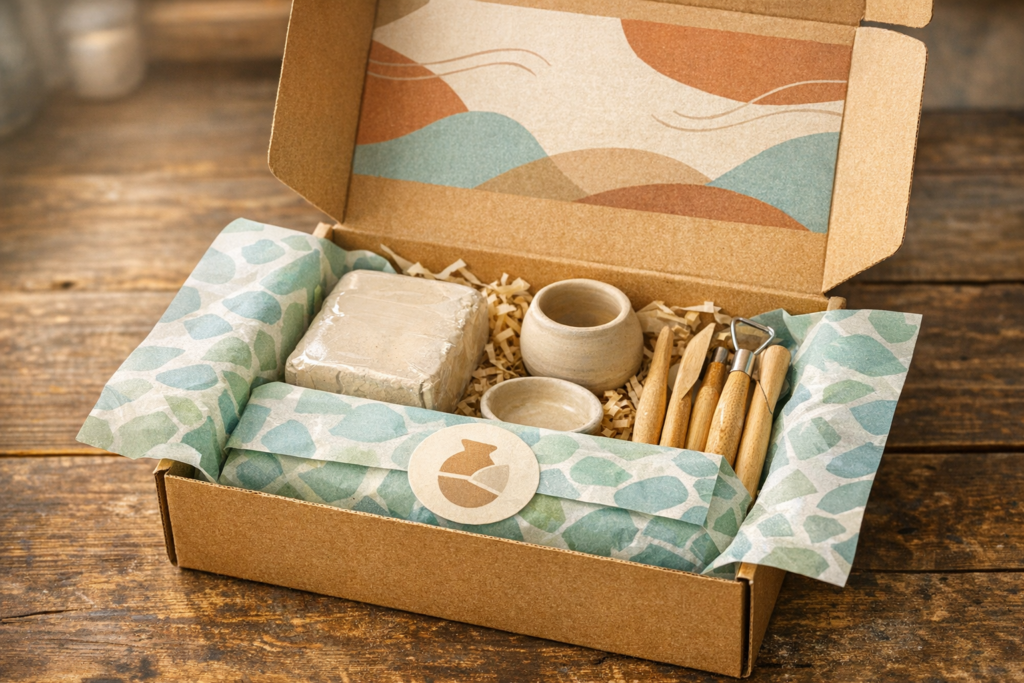
- Packaging: The box, tissue paper, stickers, and cards.
- Shipping: The actual postage cost.
- Fulfillment: Your time (or a warehouse’s cost) to pack the box.
- Marketing: How much it costs you to acquire one customer (CAC).
A healthy target is a 40-50% gross margin. If your box costs you $20 to produce and ship, you should be charging $35 – $40.
Branding and the Unboxing Experience
In the subscription world, the box is the brand.
In 2026, customers expect more than just a brown cardboard box. They want an “experience.”
- Custom Boxes: Branded exteriors make the delivery feel like a gift.
- Inner Details: Branded tissue paper, custom stickers, and a handwritten-style note.
- The “Hero” Item: Include one item that makes the subscriber go “Wow!”
- The Tutorial: Include a printed guide or a QR code to a private video tutorial.
Technology: Setting Up Your Subscription Store
You need a platform that can handle recurring payments and customer accounts.
- Shopify + Subscription Apps: The most flexible way to build your own brand.
- Subbly: A dedicated platform built specifically for subscription box businesses.
- Cratejoy: An all-in-one marketplace that helps beginners find their first subscribers.
This connects to our broader guide on building your first e-commerce store.
Marketing Your Box: Building a Waitlist
The best way to launch a subscription box is by not launching it immediately.
1. The Pre-launch Phase
Create a landing page and offer a “sneak peek” or a “Launch Discount” in exchange for an email address. This allows you to measure interest before you buy inventory.
2. Influencer Partnerships
Send your box to micro-influencers in your hobby niche. “Unboxing” videos on TikTok and Instagram Reels are the #1 way to drive subscriptions.
3. Community Building
Start a Facebook Group or Discord for your subscribers. When they feel part of a club, they are much less likely to cancel their subscription.
Operations: Packing and Shipping
Batch Fulfillment
Instead of shipping one by one, subscription boxes are shipped in batches. You spend 2–3 days a month packing and shipping everything at once. This is much more efficient than the daily shipping required for refurbished tech.
Shipping Software
Use tools like Pirate Ship or ShipStation to get discounted rates and print all your labels in one click.
Dealing with Churn (Cancellations)
“Churn” is the percentage of people who cancel every month. If you have 100 subscribers and 5 cancel, your churn is 5%.
How to reduce churn:
- Skip a Month: Allow customers to pause instead of cancel.
- Surprise Bonuses: Include an unexpected freebie every few months.
- Survey: Ask people why they are leaving so you can fix the problem for future members.
Example 30-Day Launch Plan
- Days 1-7: Pick your specific hobby niche and research 5-7 items for Box #1.
- Days 8-14: Order samples, build your landing page, and start your email waitlist.
- Days 15-21: Finalize your “Founder’s Box” prototype and film an unboxing video.
- Days 22-30: Open for “Pre-orders” to your email list and use the revenue to buy your first batch of inventory.
Final Thoughts
A Hobby Subscription Box is the ultimate way to turn a passion into a steady, scalable business. By focusing on a specific community and providing incredible value through curation, you create a brand that people look forward to every single month.
Don’t just sell items. Sell the joy of starting something new.
Suggested next reads