E-books & Practical Guides: Build Authority and Passive Income in 2026
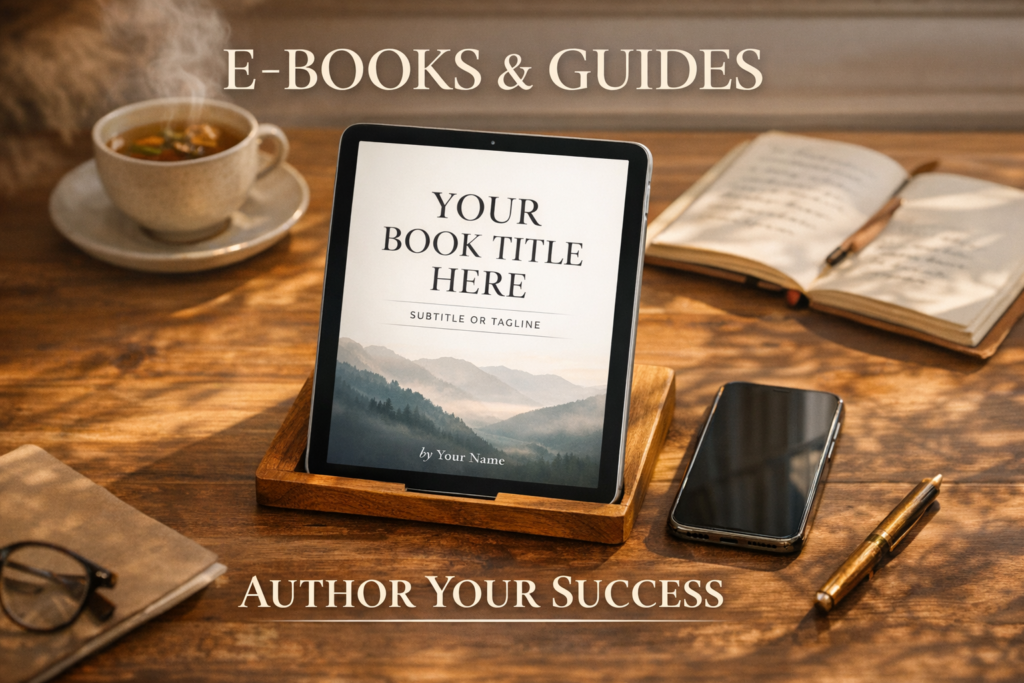
The “e-book” has changed. Gone are the days of 300-page fluff-filled PDFs that nobody reads. In 2026, the most successful authors are selling Practical Guides.
A practical guide is short, punchy, and designed to get the reader from Point A to Point B as fast as possible. Whether it is a 40-page playbook on real estate investing or a 20-page guide on plant-based meal prepping, people are paying for curated knowledge.
The best part? You can write, design, and launch an e-book entirely from your smartphone. Here is your complete roadmap to becoming a digital author and e-commerce owner this year.
Affiliate disclosure: This guide may contain affiliate links. If you purchase through them, ProBusinessStrategy may earn a commission at no extra cost to you. We only recommend tools we believe are genuinely useful for beginners and serious builders.
1) The Shift to “Micro-Knowledge”
In 2026, “Expertise” is being sold in smaller packages.
Why Practical Guides outperform traditional E-books:
- Solved Outcomes: Readers want a solution to one specific problem (e.g., “How to get your first 1,000 TikTok followers”).
- Speed to Consume: A guide that can be read in 45 minutes is more valuable than a book that takes 10 hours.
- Cross-Product Synergy: You can bundle a guide with AI Prompt Packs or Notion Dashboards.
To explore all digital product models, see our E-commerce Hub.
2) Choosing a Profitable Topic
Don’t write about what you like; write about what people are searching for.
Top Categories for 2026 E-books:
- Money: Side hustle playbooks, crypto/stock basics for beginners, tax guides. (Link to Highest Paying Businesses).
- Skills: Coding basics, mobile photography, AI engineering prompts.
- Lifestyles: Solo travel safety, van-life on a budget, habit stacking.
- Business: Starting an LLC (Link to LLC Guide), hiring virtual assistants.
3) Writing Your Guide on a Smartphone
You don’t need a typewriter or a desk.
- Voice-to-Text: Use the dictation feature on your phone to “talk” your book out while walking or driving. This creates a natural, conversational tone.
- Writing Apps: Use Google Docs, Notes, or Notion. They sync perfectly across devices.
- The “Outline First” Rule: Never start with Page 1. Write your 10 chapter headings first. Then, fill in 3 bullets for each. Now you just have to “connect the dots.”
4) Designing for Readability (The Mobile-First View)
Most of your readers will be reading on their phones.
- Short Paragraphs: No more than 3–4 lines.
- Bullet Points: Use them everywhere to break up text.
- Canva for Design: Use Canva’s “E-book” templates. (See Canva Templates Idea #02). Focus on a clean cover and high-contrast text.
- Interactive Elements: Include clickable links to your E-commerce Hub or your YouTube/TikTok.
5) Pricing Your Digital Book
- Lead Magnets ($0): A 5-page guide to get email signups. (See Build an Email List Guide).
- Tripmire / Mini-Guide ($7 – $19): Low-cost, high-volume.
- The “Standard” E-book ($27 – $47): For in-depth, original research or specific professional advice.
- The “Bundle” ($97+): E-book + Video Mini-Course + Templates.
6) Where to Publish
Amazon Kindle Direct Publishing (KDP)
Pros: Massive built-in audience.
Cons: They take 30–65% commission, and you don’t “own” the customer data.
Gumroad / Payhip
Pros: You get the email address, keep 90%+ of the money, and setup takes 3 minutes.
Cons: You must drive your own traffic.
Shopify
Best for building a long-term “Education Brand.” (Check our Dropshipping Guide for Shopify setup).
7) Building a Sales Page That Converts
Your “Book Description” is more important than the book itself for the first sale. Use the PAS formula:
- Problem: Identify their frustration (e.g., “Tired of your 9-5 but don’t know where to start?”).
- Agitation: Make them feel the cost of not acting (“Every month you wait is another month of wasted potential”).
- Solution: Present your guide as the clear, fast roadmap to the result.
8) Marketing Your Guide without Spending a Dollar
- Medium & LinkedIn: Post “Chapter 1” for free as a long-form article. Link to the full guide at the end.
- TikTok / Reels: Share “3 Tips from my new guide” and a CTA to the link in bio.
- Affiliate Marketing: Let others sell your book for a 50% commission. It’s better to have 50% of a sale you wouldn’t have made than 100% of zero.
9) Operations from Your Phone
- Drafting: Google Docs app.
- Formatting: Canva app.
- Sales Tracking: Gumroad/Shopify apps.
- Customer Support: WhatsApp Business or email.
For more automation to help you manage sales, check 10 Business Automation Apps.
10) FAQs
How long does an e-book need to be?
As long as it needs to be to solve the problem. In 2026, a 30-page “Pure Value” guide beats a 200-page “Fluff” book every time.
Can I sell e-books on a niche I’m learning?
Yes. You can position it as “My journey and lessons learned” or “The curated checklist of [TOPIC]”. People love learning from people who are just a few steps ahead.
Do I need an ISBN?
Not for selling on your own site or Gumroad. Only if you want to be in libraries or certain large bookstores.
Conclusion
E-books and practical guides are the bridge between having knowledge and having a business. They establish you as an authority and provide a steady stream of passive income.
Don’t wait for “inspiration.” Pick a problem you’ve solved, outline the steps today, and start dictating your first chapter into your phone.
Ready for the next step? Explore Idea #07: Music Sample Packs or go back to our Complete E-commerce Strategy.