Running a business used to mean doing everything manually.
You had to write content yourself, answer customer questions one by one, create social media posts from scratch, follow up with leads, send emails, manage products, and keep track of everything at the same time. For many solopreneurs, side hustlers, and small business owners, that constant manual work became the biggest barrier to growth.
But in 2026, that is no longer necessary.
Today, you can automate major parts of your business directly from your smartphone. You do not need a full office setup, a desktop computer, or a team of employees to create systems that save time and keep your business moving. With the right AI tools and a clear workflow, your phone can become your command center for content, customer communication, lead generation, sales, and daily operations.
This matters because most people do not fail in business because their idea is bad. They fail because they cannot keep up with the workload. They start strong, but eventually the content stops, the follow-up slows down, the leads get ignored, and the business becomes too dependent on daily effort.
Automation changes that.
When you automate the right parts of your business, you create consistency. Content keeps getting published. Emails keep getting sent. Leads keep getting nurtured. Customers keep getting responses. Your systems continue working even when you are tired, busy, or away from your phone for a few hours.
That does not mean your business runs without you. It means your business no longer depends on you doing every repetitive task yourself.
In this guide, you will learn how to automate your business with AI from your smartphone, what to automate first, which tools make the most sense, how to avoid common mistakes, and how to build a smartphone-first business that is easier to manage and easier to grow.
Affiliate disclosure: This post contains affiliate links. If you make a purchase through one of these links, ProBusinessStrategy may earn a small commission at no extra cost to you. We only recommend tools we genuinely believe in.
Why business automation matters more than ever
Business automation is not just about saving time. It is about creating leverage.
If you manually create every post, reply to every message, and write every email from scratch, your business can only grow as fast as your energy allows. That is a dangerous model, especially if you are building your business in the evenings, on weekends, or around a full-time job.
Automation creates breathing room.
It helps you:
reduce repetitive work
improve consistency
make fewer mistakes
respond faster
turn one piece of work into multiple outputs
scale without immediately hiring people
This is especially powerful when you run a smartphone-based business. A phone is always with you. That means you can review workflows, approve content, check your website, respond to important messages, and trigger automations from anywhere.
In other words, automation gives you flexibility, and AI gives you speed.
Together, they allow you to build a business that is much more efficient than the old manual model.
What AI automation actually means for a smartphone business
When people hear the word automation, they often imagine complicated software or tech-heavy systems that only large companies can use. That is outdated thinking.
For a smartphone entrepreneur, AI automation simply means using tools and systems to handle recurring tasks with less manual effort.
That can include:
generating blog outlines faster
turning one article into multiple social posts
creating email sequences automatically
sending welcome emails to new subscribers
answering basic customer questions
organizing tasks and ideas
posting content on a schedule
collecting leads through landing pages
managing online store processes
outsourcing repetitive work more efficiently
You are not trying to automate your entire business overnight. You are trying to remove friction.
The smartest way to approach this is to automate one layer at a time.
The five areas you should automate first
If you want results without getting overwhelmed, focus on automating these five areas first.
1. Content creation
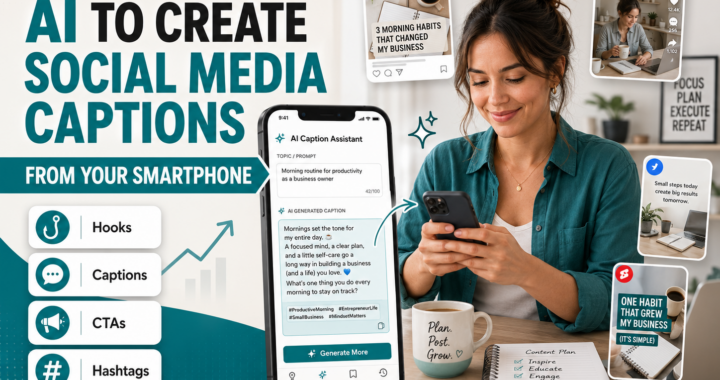
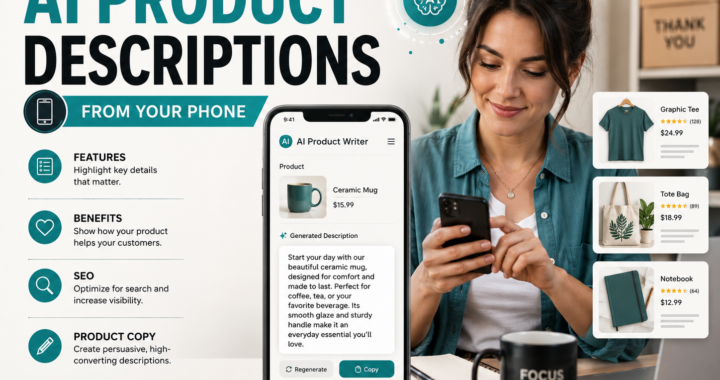
Content is often the biggest bottleneck for small business owners. You know you need blog posts, social media captions, Pinterest pins, product descriptions, emails, and landing page copy, but creating everything manually takes too long.
This is where AI becomes one of the most practical business tools on your phone.
You can use AI to:
brainstorm article ideas
write first drafts
create outlines
repurpose long content into short content
generate captions and headlines
rewrite content for different platforms
This does not mean publishing raw AI text without editing. It means using AI to speed up the production process and then improving the result with your own perspective, structure, and examples.
If you want to go deeper into this part of the process, read How to Create Content with AI on Your Smartphone.
2. Lead capture
Traffic is useful, but traffic without lead capture is wasted opportunity.
If someone visits your site, reads your content, and leaves without subscribing, you may never see them again. That is why one of the smartest things to automate is how you capture leads.
This can include:
email signup forms
lead magnets
simple landing pages
popups
welcome sequences
A basic website built on WordPress and hosted with Bluehost can already give you a strong foundation for lead capture. Once those forms and pages are live, they work for you 24/7.
3. Email follow-up
Email automation is one of the best examples of a system that keeps working in the background.
Instead of manually emailing every new subscriber, you can create a sequence once and let it run automatically. That might include:
a welcome email
a short introduction to your business
your best content recommendations
useful tips
affiliate recommendations
soft offers
This matters because many people do not buy the first time they see your site. Email gives you a second chance, a third chance, and a long-term relationship channel.
4. Customer communication
Not every customer question needs a handcrafted answer.
Many questions repeat themselves:
How does this work?
Where do I start?
Which product do you recommend?
How long does delivery take?
Can I do this from my phone?
What tools do I need?
You can automate part of this communication through FAQs, email templates, saved replies, chatbot-style tools, and clear content that answers common objections before people even ask.
This does not replace personal service. It removes repetitive support work.
5. Sales and fulfillment
If your business makes money through affiliate offers, digital products, services, or ecommerce, part of the sales process can also be automated.
For example:
affiliate links work in content around the clock
digital product delivery can happen automatically
ecommerce stores can process orders without manual involvement
service inquiries can flow through forms and automated email responses
If you want to sell physical or digital products in a more structured way, Shopify is one of the easiest ways to manage that from your phone.
The simplest AI automation stack for smartphone entrepreneurs
You do not need ten complicated platforms to automate your business. In fact, too many tools often create confusion.
A simple stack is usually better.
Website and content hub
Your website is the center of your business. Social media helps, but your site is where you build authority, publish long-term content, collect leads, and place your affiliate offers.
A strong beginner-friendly setup is:
This gives you flexibility, ownership, and a strong base for long-term growth.
Selling products or offers
If your business model includes a store, product pages, or a more ecommerce-driven setup, Shopify is a practical option. It is mobile-friendly and easy to manage from your phone.
Outsourcing and support
Even with AI, you do not have to do everything yourself.
If you need help with design, editing, setup work, Pinterest graphics, product images, SEO cleanup, or technical tasks, Fiverr can help you move faster without hiring a full-time team.
That combination already gives you a strong operating system:
website and content hub
product or service delivery
outsourced support when needed
AI for speed and repurposing
A practical example of smartphone business automation
Let’s say you are building a content-based business around affiliate marketing, business ideas, or digital products.
Here is how automation might look in practice.
First, you use AI on your phone to brainstorm an article topic and create an outline. Then you turn that into a blog post and publish it on your site.
Next, you use AI again to turn the article into:
a Pinterest description
a LinkedIn post
a short email
a short-form video script
a few caption ideas
That means one article becomes multiple content assets.
Inside the article, you naturally recommend relevant tools. If you are talking about launching a website, you can recommend Bluehost or WordPress. If you are explaining how to sell products, you can mention Shopify. If you are showing readers how to speed up setup or outsource technical work, you can point them to Fiverr.
Then you publish the article, schedule the supporting content, and let your lead capture and email systems do the rest.
Now your business is no longer based on one single action. It becomes a loop:
create once
distribute multiple times
capture leads
recommend tools
earn while the content keeps working
That is what real automation looks like for a smartphone business.
How to automate your content workflow from your phone
For many online businesses, content is the easiest place to begin automation because the results are immediate.
A simple content workflow can look like this:
Step 1: idea generation
Use AI to brainstorm topics, article angles, headlines, and subtopics. This saves you from staring at a blank page.
Step 2: outline creation
Ask AI to organize the article into a useful structure with sections, subheadings, and practical takeaways.
Step 3: draft support
Use AI to speed up sections that are repetitive or research-based, then improve the article with your own voice, examples, and edits.
Step 4: repurposing
Turn the article into:
Pinterest titles
pin descriptions
short social posts
email blurbs
a short script for video content
Step 5: publishing and linking
Publish the article and connect it to other relevant posts on your site.
This system becomes even stronger when your content is connected. For example, if you are writing about AI and mobile business, you can link readers to How to Use ChatGPT from Your Phone for Business Tasks and How to Create Content with AI on Your Smartphone.
That strengthens your SEO and keeps readers moving through your site.
How to automate lead generation without making it complicated
A lot of business owners think lead generation requires an advanced funnel. It does not.
A simple system is enough.
You need:
a useful article or page
a clear next step
a reason to subscribe
an automated follow-up
For example, if someone reads an article about affiliate marketing, you can offer a short checklist, a curated tools page, or a simple beginner guide. Once they subscribe, your email system can automatically welcome them and point them toward your best content and offers.
The key is not complexity. The key is relevance.
If your content solves a real problem, then your lead capture system only needs to make the next step easy.
How to automate customer trust
Trust is often overlooked in discussions about automation.
People assume automation is only about speed, but trust-building can also be automated through consistent structure and useful information.
You build trust when:
your site looks professional
your content is well organized
your recommendations make sense
your internal links guide people clearly
your responses are timely
your calls to action are simple and relevant
That is one reason a proper website matters. A business site hosted on Bluehost and built on WordPress gives you a more solid foundation than trying to manage everything through scattered social accounts alone.
Automation works best when the customer experience feels smooth, not robotic.
Where affiliate offers fit naturally in an automated business
Affiliate offers work especially well in automated businesses because they fit directly into useful educational content.
You are not forcing sales. You are recommending tools that support the process you are describing.
For example:
when talking about launching a business website, recommend Bluehost
when talking about building and managing a flexible content site, recommend WordPress
when talking about ecommerce or product selling, recommend Shopify
when talking about outsourcing setup, editing, or design work, recommend Fiverr
This works because the recommendation is aligned with the reader’s next logical step.
That is also why content-driven automation is so powerful. Your articles, guides, and supporting posts become long-term business assets. They educate, rank, support trust, and generate income at the same time.
When to use freelancers instead of doing everything yourself
One of the biggest mistakes small business owners make is treating AI like it means they must do everything themselves forever.
AI should reduce workload, not trap you in a bigger system.
Sometimes the smartest move is to use AI for the first 70 to 80 percent and then outsource the remaining tasks that drain your time or energy.
That might include:
image cleanup
logo tweaks
blog formatting
Pinterest design
proofreading
small WordPress fixes
technical setup tasks
Instead of losing hours trying to do all of that on your own, you can hire help through Fiverr and keep your focus on the activities that move your business forward.
Automation is not only software. Delegation is part of automation too.
Common mistakes to avoid
As useful as automation is, there are a few mistakes that can make your business feel messy or impersonal.
Automating too much too soon
Do not try to automate every single part of your business at once. Start with one area, make it work well, and then expand.
Publishing unedited AI content
AI can speed up writing, but raw output usually needs editing. Your readers still want clarity, personality, and practical value.
Using too many tools
More tools do not mean better results. A simple, stable system beats a chaotic one every time.
Forgetting internal links
If you want your site to grow, your articles need to support one another. Good internal linking improves SEO and keeps readers engaged.
Recommending tools without context
Affiliate links work best when they are tied to a real need. Explain why the tool matters in that moment.
A simple first automation plan for this week
If you want to keep this practical, here is a realistic first plan.
Day 1
Choose one repetitive business task that drains your time.
Day 2
Decide whether that task can be simplified, automated, or partially outsourced.
Day 3
Set up one core tool:
Bluehost if you still need hosting
WordPress if you need a stronger content base
Shopify if you want to sell products
Fiverr if you need outside help
Day 4
Create one automated content workflow from idea to published post.
Day 5
Repurpose that content into at least two extra formats.
Day 6
Add internal links and affiliate recommendations where relevant.
Day 7
Review what worked and repeat the process next week.
That is how automation becomes real. Not through a giant complicated setup, but through steady improvements.
The future of smartphone business automation
The next few years will make smartphone business management even easier.
We are moving toward:
smarter AI assistants
better mobile editing workflows
stronger integrations between apps
easier automation dashboards
faster voice-based commands
more personalized content systems
better AI help for customer support and lead handling
But even now, the opportunity is already here.
You do not need to wait for the perfect system. You only need a good enough system that saves time, supports consistency, and helps your business move forward.
Final thoughts
Business automation with AI is not about building a cold, robotic company.
It is about removing the repetitive tasks that slow you down so you can spend more time on the parts of business that actually matter: thinking, creating, improving, and serving your audience.
Your smartphone is no longer just a communication device. In 2026, it can function as your content studio, publishing tool, website manager, sales monitor, and automation control center.
If you build the right systems, your business becomes easier to run and easier to grow.
Start simple.
Automate one thing first.
Then connect that first system to the next.
That is how a smartphone business stops feeling chaotic and starts feeling scalable.
Recommended tools to support your automation system
If you want to build a stronger automated business from your phone, these tools fit naturally into the process:
Bluehost — for hosting your website and building a solid foundation
WordPress — for publishing content and growing your site long-term
Shopify — for selling products or running an ecommerce business from your smartphone
Fiverr — for outsourcing setup, design, editing, and technical tasks when you want to scale faster
Continue building your Phone Business
If you want to keep building this part of your site, these articles connect naturally with this guide: