Printable Educational Kits: Monetize Your Knowledge for Parents and Teachers in 2026
In a world increasingly dominated by screens, the demand for physical, hands-on learning materials is exploding. In 2026, parents, homeschoolers, and teachers are willing to pay for high-quality, ready-to-print educational kits that make learning fun and easy.
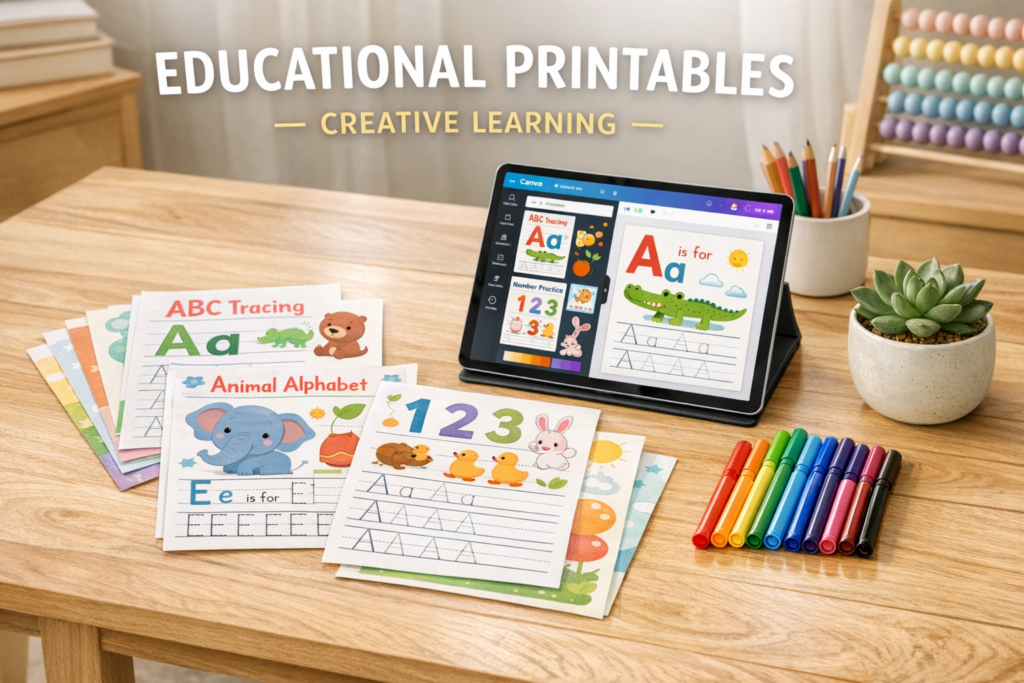
Whether it’s a “Preschool Alphabet Pack,” a “Financial Literacy for Teens Kit,” or “Dinosaur Science Worksheets,” educational printables are high-margin digital products. You design the file once, and it gets downloaded (and printed) thousands of times worldwide.
The best part? You can design these entire kits on your smartphone during your commute or while waiting for coffee. Here is your roadmap to building an educational content empire.
Affiliate disclosure: This guide may contain affiliate links. If you purchase through them, ProBusinessStrategy may earn a commission at no extra cost to you. We only recommend tools we believe are genuinely useful for beginners and serious builders.
1) Why Educational Printables are a Winning Product
Printables bridge the gap between “Digital Convenience” and “Physical Learning.”
The 2026 Advantage:
- Low Friction: The customer gets the product instantly. No shipping costs, no waiting.
- Infinite Inventory: You never run out of “stock.”
- High Loyalty: Parents and teachers who like your style will buy from you for every grade level or season.
- Bundling Potential: You can combine these kits with E-books or even Canva Templates for other teachers.
2) High-Demand Educational Niches
The key to high sales on platforms like Etsy or TeachersPayTeachers is Niche Focus.
Top Niches for 2026:
- Preschool & Kindergarten: Tracing sheets, color-by-number, and basic math games.
- Homeschooling Systems: Weekly lesson planners, grade trackers, and unit studies.
- Mental Health & Soft Skills: Emotional intelligence cards, mindfulness journals, and social skills prompts for kids.
- STEM/STEAM: Science experiment logs, coding logic puzzles, and space exploration kits.
- Language Learning: Multi-lingual flashcards and vocabulary games.
To see how printables compare to other models, view our E-commerce Hub.
3) Mobile-First Design Workflow
You don’t need Adobe InDesign to create professional worksheets.
- Canva Mobile: This is your powerhouse. Use the “Worksheet” or “Poster” templates. (See our Canva Guide Idea #02).
- AI Image Generators: Use AI tools on your phone to create unique, original illustrations for your coloring books or flashcards. (Check AI Prompt Packs Idea #03 for art prompts).
- PDF Converters: Ensure your final files are high-resolution PDFs (300 DPI) so they look crisp when printed.
4) Structuring a “Best-Selling” Educational Kit
A “Kit” is more valuable than a single page. Aim for 20–50 pages per pack.
What to include:
- Instruction Page: A simple guide for the parent or teacher.
- Progress Tracker: A page where the child can add stickers or checkmarks as they learn.
- Varied Activities: Combine tracing, coloring, matching, and “cut-and-paste” elements.
- Certificate of Completion: A “Well Done!” page the child can hang on their wall.
5) Pricing for Volume and Profit
- Single Worksheets/Short Packs: $2 – $7.
- Comprehensive Activity Kits (20+ pages): $12 – $24.
- Yearly Curriculum Bundles: $47 – $97.
Pro Tip: Seasonal kits (Christmas, Back-to-School, Summer Break) are huge revenue drivers. Mark your calendar and launch 3 months in advance.
6) Where to Sell Your Educational Printables
TeachersPayTeachers (TpT)
Pros: The “Amazon” for educators. Huge built-in traffic.
Cons: High commission and high competition.
Etsy
Pros: Best for parents and homeschoolers. Very easy to set up.
Cons: Ad costs can eat into margins if you aren’t careful.
Your Own Website (Shopify/WooCommerce)
Pros: You keep 100% of the customer’s data and can build a brand. (See Dropshipping Guide for Shopify basics).
7) Marketing to Busy Parents and Teachers
Don’t just show the product; show the experience.
- Pinterest: This is the #1 traffic source for printables. Create “Vertical Pins” showing the kit being used.
- TikTok/Reels: Film a “Prepare a lesson with me” video where you print and organize your own kit.
- Freebies (The Lead Magnet): Give away a 3-page “Sample Pack” to build your email list. (See How to Build an Email List from Zero).
8) Managing Operations via Smartphone
- Design: Canva App.
- Inventory/Sales: Etsy Seller or Shopify App.
- Communication: Handle customer questions via the Etsy app to maintain a high “Star Seller” rating.
For automation to handle your social media schedule, check 10 Business Automation Apps.
9) Legals: Protecting Your Designs
Always include a “Terms of Use” page in your PDF.
- Rule #1: Personal/Classroom use only.
- Rule #2: No redistribution or reselling of the files.
- Rule #3: All original art belongs to [Your Brand].
10) FAQs
Do I need to be a teacher?
No, but you do need to research the educational standards (like Common Core in the US) to ensure your materials are actually useful.
What if I can’t draw?
Use Canva’s library or AI image tools to create the visuals. You are selling the structure and curation, not just the art.
Can I sell to schools?
Yes, but schools usually buy through TpT ClassFund or bulk licenses on your own site.
Conclusion
Printable educational kits allow you to have a positive impact on the next generation while building a highly scalable digital business.
Find a topic that children struggle with, create a fun activity to solve it, and get your first listing live today.
Ready for more? Explore Idea #09: Social Media Management Service or go back to the Main Strategy Guide.