Creator Merch: The 2026 Strategy to Turn Followers Into a Loyal Fanbase
In 2026, the term “Influencer” has evolved into “Creator-Entrepreneur.” Having a large following is no longer the goal; the goal is Ownership. While ad revenue and sponsorships are unpredictable, owning your own brand through Creator Merch provides a direct, sustainable income stream that is entirely under your control.
Launch day used to be a logistics nightmare. Today, thanks to seamless mobile integrations and premium fulfillment, you can launch a custom product line between filming two TikToks. This is the ultimate guide to building a merch brand that fans actually want to wear and use.
Affiliate disclosure: This guide may contain affiliate links. If you purchase through them, ProBusinessStrategy may earn a commission at no extra cost to you. We only recommend tools we believe are genuinely useful for beginners and serious builders.
1. Merch 2.0: Beyond the Logo Slap
The biggest mistake creators made in 2024 and 2025 was simply slapping their logo on a cheap white T-shirt. In 2026, fans want “Lifestyle Merch.”
Aesthetics Over Logos
Your fans don’t necessarily want to walk around like a human billboard for your username. They want to wear the Values and Aesthetics of your community.
- The “Inside Joke” Design: Use a phrase or symbol that only your true fans understand.
- The “Vibe” Brand: If your content is about “Mindfulness,” your merch should be high-quality, calming, and minimalist.
- The “Limited Drop” Culture: Scarcity drives sales in 2026. Instead of a permanent store, run “Friday Drops” that sell out in 48 hours.
2. Choosing Your “Signature” Product
Merch in 2026 is no longer limited to apparel. Your signature product should reflect what you do.
Creator-Product Match:
- Gamer/Tech Creator: Custom-branded desk mats, ergonomic phone stands, or premium cable organizers.
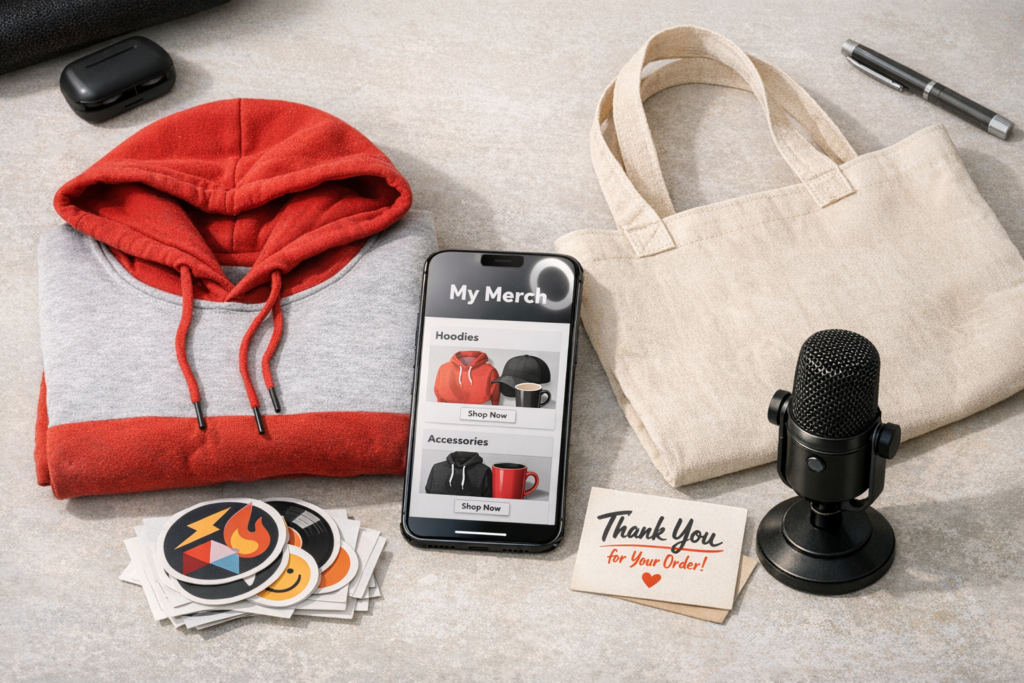
- Cooking/Lifestyle Creator: High-quality embroidered aprons or eco-friendly tote bags for farmers’ market hauls.
- Fitness Creator: Personalized stainless steel water bottles and “high-compression” activewear.
- Business/UGC Creator: Minimalist tech sleeves for tablets or branded “Creator” notebook covers.
Check our E-commerce Best Practices for more on product/audience alignment.
3. Designing for the “Viral” Look (Mobile Workflow)
Your merch needs to look good on camera. High-contrast colors and bold typography work best for social media conversion.
The Mobile Design Stack:
- Canva Mobile: Your primary tool for layout and typography. Use “Custom Dimensions” to ensure high-res exports.
- Adobe Express (Mobile): Excellent for removing backgrounds and adding premium textures to your designs.
- Procreate (iPad/iPhone): If you are an artist, use Procreate for hand-drawn designs that feel authentic and unique.
- AI Aesthetic Research: Use Pinterest and TikTok to find “Moodboards” that match your brand’s color palette.
4. Fulfillment: Seamless and Invisible
You are a creator, not a warehouse manager. In 2026, the Print-on-Demand (POD) model for merch is so advanced that quality is indistinguishable from high-end retail.
Why We Use Printful for Merch:
For Creator Merch, branding is everything. Printful allows you to:
- Inside Neck Labels: Print your brand name inside the shirt where the size tag usually is.
- Custom Packing Slips: Add a personal note to every customer.
- Pack-ins: You can ship them a stack of 5,000 branded stickers, and they will put one in every order for you.
5. Setting Up Your “Social Storefront”
In 2026, your store shouldn’t feel like a website—it should feel like an extension of your social profile.
- Shopify Mobile App: The hub of your business.
- Shopify Inbox: Real-time chat with fans who have questions about sizing or shipping.
- Shopify Collective: In 2026, you can also curate other brands’ products that fit your merch “vibe” and sell them on your store for a commission.
6. The Launch Strategy: The “Hype” Method
Don’t just post a link. Use the 90/10 Rule: 90% Hype, 10% Selling.
The 7-Day Launch Countdown:
- Day 7-5: Tease the “Vibe.” Post aesthetic photos without showing the product. Ask “Are you ready?”
- Day 4-3: Show the samples. Post a video of you unboxing the samples and reacting to the quality.
- Day 2: The “Behind the Design” video. Tell the story of why you chose this design.
- Launch Day: Go Live on TikTok/Instagram. Have the product tagged in the bio.
- Post-Launch: Share “UGC” from fans who bought the merch. Social proof is your strongest sales tool.
7. Pricing for Premium Value
Merch is a premium product. Your fans aren’t buying a “shirt”; they are supporting your mission.
2026 Pricing Benchmarks:
- T-Shirts: $35 – $45
- Hoodies: $65 – $85
- Accessories (Hats/Totes): $25 – $35
- Digital Add-ons: Always include a free “Digital Download” (like a mobile wallpaper) with every purchase to provide instant gratification.
For more on automation, check 10 Business Automation Apps.
8. Retention: Turning Buyers into Collectors
A one-time sale is a transaction. A repeat buyer is a Fan.
- Merch Drops: Release “Season 1,” “Season 2,” etc. This creates historical value for your older pieces.
- Exclusive Community: Give merch owners early access to your next video or a private Discord channel.
- Loyalty Discounts: Use Smile.io (Shopify app) to give points for every purchase.
9. Legal & Security
Ensure your brand is protected before you go viral.
- Trademark Your Logo: If you plan on building a long-term brand, protect your intellectual property. (Refer to Legal & Tax Guide #13).
- Clear Terms of Service: Be clear about shipping times (since POD takes longer than Amazon Prime) and return policies.
10. Conclusion: The Power of Creation
Creator Merch is the most personal form of e-commerce. It is the bridge between your digital content and the physical world. In 2026, the tools are ready, the audience is waiting, and your phone is the only command center you need.
Stop being just a creator. Start being a brand owner.
Explore more ideas: Idea #09: Niche POD Apparel or Idea #11: Recommerce.