Most beginner affiliate marketers focus on one thing: posting content.
But here’s the uncomfortable truth:
Posting content without tracking performance is like running a business without looking at your bank account.
You might feel productive.
You might even get traffic.
But you have no idea what actually makes you money.
The real difference between someone earning €50/month and someone earning €5,000/month with affiliate marketing is not effort.
It’s optimization.
And the best part?
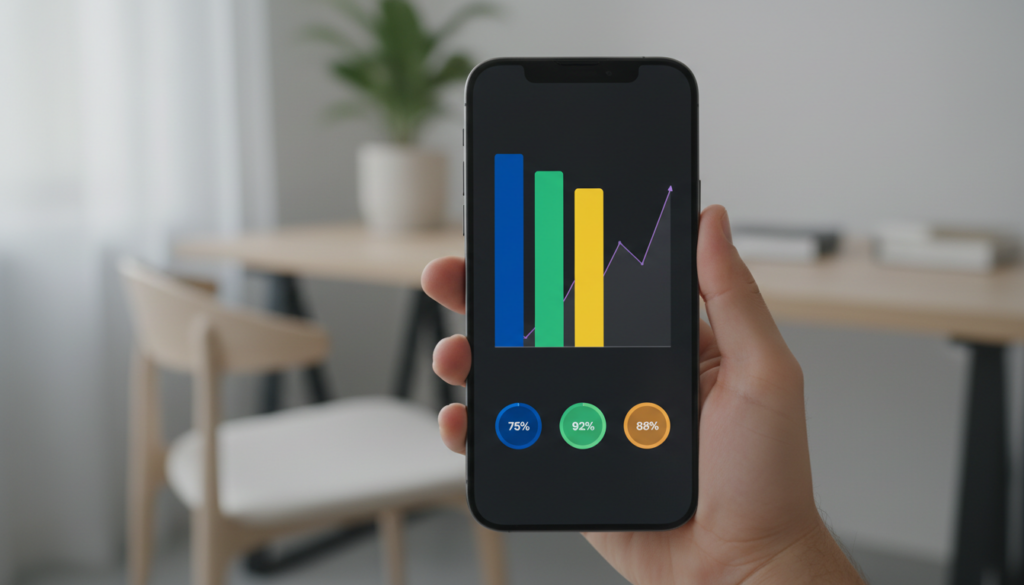
You can track and optimize your entire affiliate business directly from your smartphone.
In this guide, you will learn:
what metrics actually matter
how to track affiliate performance from your phone
how to identify winning content
how to fix underperforming links
how to scale what works
Affiliate disclosure: This post contains affiliate links. If you make a purchase through one of these links, ProBusinessStrategy may earn a small commission at no extra cost to you. We only recommend tools we genuinely believe in.
Why Tracking Is the Real “Leverage Point”
Affiliate marketing has one massive advantage over most businesses:
👉 Everything is measurable.
You can see:
clicks
conversions
revenue
traffic sources
user behavior
But most people ignore it.
They:
post randomly
guess what works
copy others blindly
Smartphone marketers who win do the opposite.
They:
track daily
adjust weekly
scale monthly
If you’re still building your base, start with
👉 https://probusinessstrategy.com/start-affiliate-marketing-smartphone/
The 4 Core Metrics You MUST Track
Forget dashboards with 50 numbers.
You only need these 4:
1. Clicks
How many people click your affiliate link?
This tells you:
if your content is engaging
if your call-to-action works
2. Conversion Rate
How many clicks turn into sales?
This tells you:
if the offer is good
if your audience trusts you
3. Revenue per Click (RPC)
RPC=Total EarningsTotal ClicksRPC = \frac{Total\ Earnings}{Total\ Clicks}RPC=Total ClicksTotal Earnings
This is your most important metric.
It shows:
how valuable your traffic is
4. Traffic Source
Where do buyers come from?
Google?
TikTok?
Pinterest?
Email?
Step 1: Set Up Your Mobile Tracking System
You don’t need complex tools.
You need:
affiliate dashboards
traffic tracking
simple overview
Affiliate dashboards (mobile-friendly)
Check daily:
These platforms already show:
clicks
sales
commissions
Website tracking
If you run your site on
👉 WordPress website builder
Use:
Google Analytics app
Jetpack mobile stats
Step 2: Identify Your “Money Pages”
Not all articles are equal.
Usually:
20% of your content generates 80% of your revenue
How to find them:
Open analytics on your phone and look for:
pages with traffic
pages with clicks
pages with conversions
These are your money pages.
Step 3: Optimize Underperforming Pages
This is where most growth happens.
Situation 1: Traffic but no clicks
Fix:
weak CTA
poor link placement
Example improvement:
Instead of:
“You can use a website builder”
Say:
beginners can start with the WordPress website builder to get online quickly
Situation 2: Clicks but no sales
Problem:
wrong audience
weak offer
Fix:
switch programs
test alternatives
Example:
Instead of only promoting hosting, combine with:
Situation 3: No traffic
Problem:
SEO weak
topic too broad
Fix:
improve title
add internal links
update content
Step 4: Optimize Link Placement (CRITICAL)
Most people bury their links.
That kills conversions.
Best placements:
1. Early in the article
(first 20%)
2. Inside explanations
(natural context)
3. After value delivery
(when reader trusts you)
Example (GOOD placement):
If you’re starting an ecommerce business, platforms like
👉 Shopify
make it extremely easy to launch from your phone.
Step 5: Use Content Feedback Loops
This is where you scale.
Your process:
Post content
Track results
Find winners
Double down
Example:
If this article performs well:
👉 email marketing from phone
Create:
TikTok about it
Pinterest pins
email content
YouTube short
Step 6: Use Outsourcing to Scale Winners
Once you know what works:
Don’t do everything yourself.
Use:
👉 Fiverr
For:
blog writing
Pinterest pins
thumbnails
editing
Step 7: Improve Technical Performance
Speed = conversions.
If your site is slow:
people leave
sales drop
Use:
👉 Pressable WooCommerce Hosting
Step 8: Track Across Multiple Channels
As you grow, you’ll have:
blog
social
email
To manage complexity:
👉 M2E Multichannel Connect for WooCommerce
Step 9: Build a Weekly Optimization Routine
Simple system:
Daily (5–10 min)
check clicks
check sales
Weekly (30 min)
update 1–2 articles
improve CTAs
test new links
Monthly
identify top content
scale winners
Biggest Mistakes Smartphone Marketers Make
❌ Only posting, not tracking
❌ Promoting too many programs
❌ Ignoring mobile UX
❌ Not updating old content
❌ Chasing traffic instead of revenue
Final Thoughts
Tracking and optimization is where affiliate marketing becomes a real business.
Not when you:
write more
post more
try more platforms
But when you:
understand your numbers
improve what works
remove what doesn’t
If you combine:
with smart optimization…
👉 your smartphone becomes a full business control center.
Expand Your Smartphone Business Knowledge
Optimization is just one part of building a successful mobile-first empire. To truly scale your results, we recommend exploring these essential guides to master other areas of your affiliate business:
How to Share Affiliate Links from Your Smartphone (Clean & Professional): Now that you know how to track links, learn how to mask and share them professionally to increase your trust and click-through rates.
How to Use Telegram for Affiliate Marketing from Your Smartphone: Discover how to use messaging apps to drive high-converting traffic to the performance pages you are currently optimizing.
How to Start a Business Using Only Your Smartphone (2026 Guide): If you are still in the early stages, this pillar guide walks you through the entire foundation of a phone-based business model.
Best Apps to Start a Business on Your Phone in 2026: A curated list of the absolute best mobile tools that integrate perfectly with the tracking and optimization strategies discussed in this article.