Every office has small emergencies.
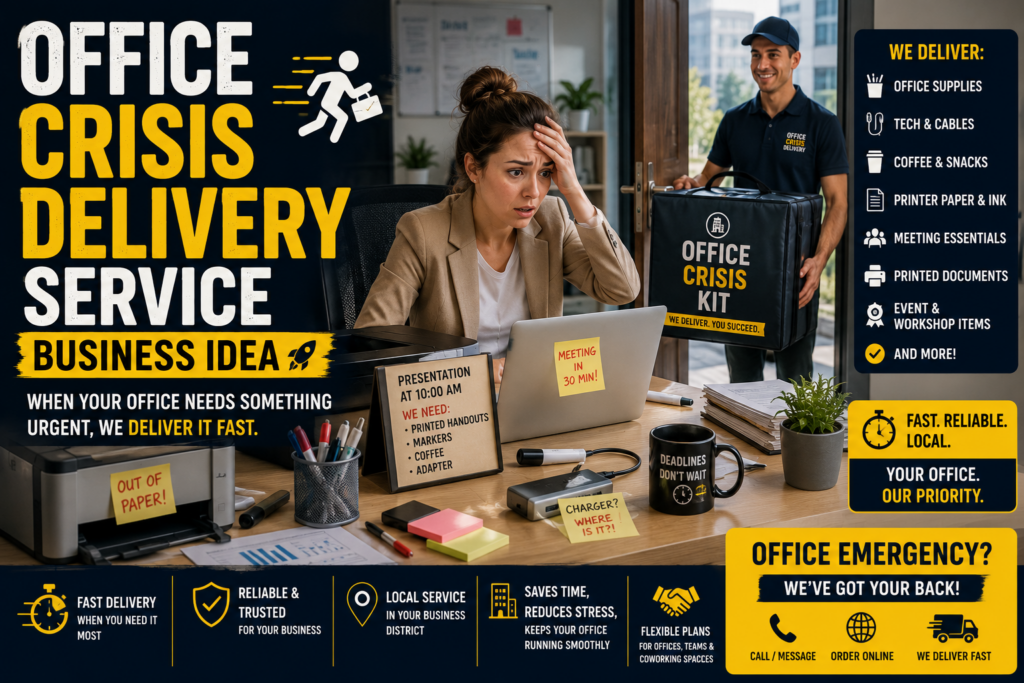
The printer runs out of paper before an important meeting.
Someone forgets a laptop charger.
The team needs coffee before a client presentation.
A meeting room has no markers, pens, name tags, notebooks, or water.
A business owner needs documents moved across town.
A coworking space needs supplies before an event.
A small company needs snacks, cables, adapters, batteries, or printed materials quickly.
These are not dramatic problems.
But in the middle of a workday, they can become urgent.
That is where an office crisis delivery service can become a strong local business idea.
This is not normal parcel delivery.
It is not restaurant delivery.
It is not a large office supply store.
It is a fast local support service for workplaces that need something now.
The business is built around one clear promise:
“When your office needs something urgently, we deliver it fast.”
That makes it a practical and out-of-the-box delivery business idea.
Affiliate disclosure: This post contains affiliate links. If you make a purchase through one of these links, ProBusinessStrategy may earn a small commission at no extra cost to you. We only recommend tools we genuinely believe in.
What Is an Office Crisis Delivery Service?
An office crisis delivery service is a local B2B delivery business that helps offices, small companies, coworking spaces, agencies, freelancers, clinics, studios, and meeting venues get urgent workplace items quickly.
The service can deliver:
- printer paper
- notebooks
- pens
- whiteboard markers
- sticky notes
- envelopes
- folders
- name tags
- coffee
- tea
- snacks
- bottled water
- phone chargers
- laptop chargers
- HDMI cables
- USB-C cables
- adapters
- batteries
- extension cords
- printed documents
- presentation materials
- client gifts
- meeting room supplies
- event supplies
- small equipment
- courier documents
- keys or access cards where safe and allowed
The business can start small with one city area or business district.
The goal is not to stock every office product in the world.
The goal is to solve urgent office problems quickly and reliably.
Why This Business Idea Can Work
This idea can work because businesses often value time more than small cost savings.
A private customer may hesitate to pay extra for convenience.
A business customer may pay faster because the problem affects work, meetings, clients, employees, or productivity.
If a team is preparing for a client presentation and suddenly needs printed handouts, coffee, markers, or adapters, the cost of waiting can feel higher than the delivery fee.
That is the advantage of B2B delivery.
The customer is not only buying a product.
They are buying:
- saved time
- fewer interruptions
- smoother meetings
- professional appearance
- convenience
- reliability
- less stress
- fewer last-minute problems
An office crisis delivery service can become useful because most workplaces do not want employees leaving the office to search for small items.
A fast local service can fill that gap.
Who Would Use This Service?
The audience is larger than traditional offices.
This business can serve many workplace types.
Small Offices
Small companies often do not have a full office manager or supply system.
They may run out of things unexpectedly.
A local office crisis delivery service can help them avoid wasted time.
Examples:
- marketing agencies
- design studios
- accountants
- consultants
- real estate offices
- insurance offices
- law offices
- recruitment firms
- small tech teams
- local service companies
Coworking Spaces
Coworking spaces host many people, meetings, events, and workshops.
They may need:
- coffee
- snacks
- markers
- flipchart paper
- name tags
- printer paper
- adapters
- cables
- visitor materials
- event supplies
A coworking space could become a recurring business customer.
Meeting and Training Venues
Training rooms and meeting venues often need last-minute supplies.
Examples:
- notepads
- pens
- water bottles
- snacks
- printed handouts
- flipchart paper
- markers
- name badges
- small gifts
This can become a strong B2B niche because meetings happen at scheduled times.
If something is missing, it must be fixed quickly.
Freelancers and Consultants
Freelancers who work with clients may occasionally need urgent help.
For example:
- printed proposals
- client gifts
- chargers
- presentation materials
- business cards
- meeting supplies
- workshop tools
A consultant running a workshop cannot always leave the room to buy supplies.
A local runner service can solve that.
Clinics and Professional Practices
Some professional practices may need small non-medical office items quickly.
Examples:
- forms
- printer paper
- pens
- waiting room water
- document folders
- batteries
- basic office supplies
Important note: this should stay focused on office and workplace supplies, not regulated medical products unless the business fully understands local rules.
Event Teams
Business events create many small urgent delivery needs.
Examples:
- badges
- lanyards
- tape
- signage
- printed agendas
- water
- snacks
- extension cords
- chargers
- pens
- table cards
An office crisis delivery service can later expand into event runner services.
What Could You Deliver?
A strong office crisis delivery service should organize its offer into clear categories.
1. Office Supply Emergencies
These are classic workplace needs.
Examples:
- printer paper
- pens
- markers
- sticky notes
- notebooks
- folders
- envelopes
- labels
- staples
- tape
- scissors
- paper clips
- name tags
This category is simple but useful.
2. Tech and Cable Emergencies
This may be one of the strongest categories.
Many workplace problems involve forgotten or missing tech items.
Examples:
- phone chargers
- laptop chargers
- USB-C cables
- HDMI cables
- adapters
- power strips
- extension cords
- batteries
- mouse
- keyboard
- webcam
- USB drive
A meeting can be delayed because one small cable is missing.
That is exactly the kind of problem this business can solve.
3. Meeting Room Supplies
Meetings create predictable needs.
Examples:
- bottled water
- coffee
- tea
- snacks
- notepads
- pens
- printed agenda
- flipchart paper
- whiteboard markers
- table cards
- name badges
A “meeting rescue kit” could be a strong product.
4. Coffee and Snack Restock
Workplaces often need quick food and drink support.
Examples:
- coffee
- tea
- milk
- sugar
- snacks
- fruit
- bottled water
- soft drinks
- cookies
- healthy snack packs
This can become recurring income if offices order weekly restocks.
5. Printing and Document Delivery
This is a useful add-on.
The service could offer:
- print and deliver documents
- collect printed materials
- deliver contracts
- move signed papers
- deliver brochures
- deliver proposals
- bring event handouts
This works especially well for consultants, real estate agents, training companies, and small offices.
6. Client Gift and Welcome Items
Some offices need last-minute professional gifts.
Examples:
- flowers
- local gift box
- thank-you card
- notebook and pen set
- welcome package
- branded materials
- snack basket
This could connect with local shops and artisan businesses.
Office Crisis Delivery Kits
A great way to package this business is with ready-made kits.
Instead of only selling individual items, create named bundles.
The Meeting Rescue Kit
Includes:
- notepads
- pens
- water
- markers
- sticky notes
- printed agenda
- name cards
The Presentation Emergency Kit
Includes:
- HDMI cable
- USB-C adapter
- power strip
- batteries
- presentation clicker
- printed handouts where possible
The Office Supply Refill Kit
Includes:
- paper
- pens
- markers
- sticky notes
- tape
- folders
The Client Meeting Kit
Includes:
- coffee
- water
- snacks
- notepads
- pens
- table cards
The Coworking Event Kit
Includes:
- badges
- markers
- flipchart paper
- tape
- water
- snacks
- sign-in sheets
The New Employee Desk Kit
Includes:
- notebook
- pen
- desk organizer
- coffee mug
- sticky notes
- welcome card
Bundles are useful because they make the service feel more organized and professional.
They also make ordering faster.
A busy office manager does not want to build a shopping basket from scratch every time.
They want a quick solution.
The Best Business Model
There are several possible business models for an office crisis delivery service.
1. On-Demand Delivery
This is the simplest model.
A workplace orders when something is needed urgently.
The price includes:
- product cost
- delivery fee
- urgency fee where relevant
This model is easy to test.
2. Office Subscription
A business pays a monthly fee for regular restocks or a number of delivery credits.
Examples:
- 4 office supply runs per month
- weekly snack restock
- monthly meeting supply kit
- priority emergency delivery
Subscriptions can make income more predictable.
3. B2B Account Model
Companies can create accounts with monthly billing.
This makes ordering easier for offices.
A business account could include:
- priority response
- fixed delivery zone
- preferred product list
- monthly invoice
- recurring supplies
- emergency credits
4. Coworking Space Partnership
Coworking spaces can become repeat customers.
They could order supplies before events, workshops, networking sessions, or busy workdays.
5. Local Store Partnership Model
The delivery service can partner with local stationery shops, bakeries, coffee shops, print shops, and gift stores.
You become the connector between local stores and workplaces.
This can help you avoid holding too much inventory at the beginning.
How to Start Small
The best way to start is not to serve every business in the city.
Start with one clear area and one clear use case.
Step 1: Choose a Business District
Pick an area with many offices, coworking spaces, agencies, clinics, meeting rooms, and small companies.
A dense business district makes delivery faster.
Step 2: Choose 10 to 20 Core Products
Start with the most common emergency items.
For example:
- printer paper
- pens
- markers
- sticky notes
- notebooks
- HDMI cable
- USB-C cable
- phone charger
- power strip
- batteries
- bottled water
- coffee
- snacks
- folders
- tape
You can expand based on orders.
Step 3: Create 3 Simple Kits
Start with:
- Meeting Rescue Kit
- Tech Emergency Kit
- Office Supply Refill Kit
These are easy to explain.
Step 4: Build a Simple Website
The website should show:
- delivery area
- opening hours
- what you deliver
- kits
- urgent delivery options
- business account option
- contact form
- WhatsApp or phone number
- pricing examples
- trust and safety rules
For this type of business, a simple website is very useful because B2B customers want legitimacy. A clear domain from Namecheap and a beginner-friendly website setup with Bluehost can be enough to test the idea professionally.
The website does not need to be complicated.
It needs to be clear.
Step 5: Contact Local Businesses Directly
This business can work well with direct outreach.
You can contact:
- office managers
- coworking spaces
- small business owners
- real estate offices
- accountants
- consultants
- training companies
- event venues
- local agencies
A simple message could be:
“Hi, we offer fast local delivery for urgent office supplies, meeting items, chargers, printing, snacks, and workplace essentials in this area. If your team ever runs out of something before a meeting or event, we can help quickly.”
This is clear and useful.
Step 6: Test with a Few Repeat Customers
Do not worry about scaling immediately.
Try to get 5 to 10 repeat business customers first.
Learn what they actually need.
Then build your menu and pricing around real demand.
Pricing Ideas
Pricing should be simple.
B2B customers often prefer clarity over complicated discounts.
Standard Delivery Fee
Example:
Same-area delivery: fixed price
Longer distance: higher price
Urgent Delivery Fee
If the customer needs delivery within 30 to 60 minutes, charge more.
Product Cost Plus Service Fee
You charge product cost plus a handling/service fee and delivery fee.
Kit Pricing
Create fixed prices for common kits.
Example:
Meeting Rescue Kit: fixed price
Tech Emergency Kit: fixed price
Office Supply Refill Kit: fixed price
Monthly Plans
Examples:
Starter Office Plan: 2 deliveries per month
Team Plan: 5 deliveries per month
Coworking Plan: recurring restock plus emergency runs
Event Plan: meeting and workshop support
Monthly plans can make the business more stable.
Why B2B Delivery Can Be Powerful
B2B delivery is different from consumer delivery.
A consumer may compare every euro.
A business often cares more about reliability and time.
If a meeting is about to start and the team is missing something important, the delivery fee is not the main concern.
The main concern is solving the problem quickly.
That creates pricing power.
Also, a business can become a repeat customer.
One office might order:
- snacks every week
- supplies every month
- urgent cables occasionally
- meeting kits before events
- printed documents when needed
This makes the customer value higher than a one-time consumer order.
Marketing Ideas for an Office Crisis Delivery Service
This business can be marketed through direct outreach, local search, and professional content.
1. LinkedIn Outreach
LinkedIn is useful because the target customers are professionals.
You can connect with:
- office managers
- founders
- operations managers
- coworking space managers
- event planners
- consultants
- HR managers
Post content like:
- “5 things offices always run out of before meetings”
- “The missing cable that can delay a presentation”
- “Why small offices need an emergency supply plan”
- “How coworking spaces can prepare for last-minute events”
2. Local SEO
Create website pages around local search terms.
Examples:
- office supplies delivery in [city]
- urgent office delivery in [city]
- meeting supplies delivery in [city]
- same-day office supplies in [city]
- coworking supplies delivery in [city]
Local search can bring high-intent customers.
3. Flyers in Business Districts
A clean flyer with a QR code can work.
Headline:
“Office emergency? We deliver supplies fast.”
List:
- chargers
- paper
- markers
- coffee
- snacks
- documents
- meeting kits
4. Partnerships with Local Shops
Partner with:
- stationery stores
- print shops
- coffee shops
- bakeries
- office supply shops
- gift shops
- coworking spaces
You can become the delivery layer for local B2B orders.
5. Email Outreach
A short email can work well.
Subject idea:
“Fast local delivery for office emergencies in [city]”
Message:
“We help small offices and coworking spaces get urgent supplies, meeting items, chargers, snacks, and printed materials delivered locally when they need them fast.”
Operational Challenges
This business is practical, but it needs structure.
Inventory Management
Do not stock too much at first.
Start with common items and learn from demand.
Delivery Speed
Do not promise 30-minute delivery across a whole city.
Start with a small zone.
Product Substitutions
If a specific item is unavailable, the customer should approve substitutions.
Business Billing
B2B customers may prefer monthly invoices.
This requires clear records.
Reliability
Businesses may depend on you during important moments.
If you promise delivery, you need to deliver.
Insurance and Liability
Check local requirements for courier services, business insurance, and transporting valuable items.
How This Business Could Grow
An office crisis delivery service can grow in several directions.
1. Workplace Essentials Delivery
Become a recurring supplier of office basics.
2. Meeting Room Setup Service
Deliver and prepare meeting room supplies before client meetings, workshops, and training sessions.
3. Coworking Space Support
Serve coworking spaces with weekly restocks and event kits.
4. Business Errand Runner
Expand into document runs, small item pickup, printing, and local errands.
5. Event Office Runner
Support conferences, workshops, corporate events, and networking events.
6. Micro-Warehouse for Offices
Hold a small inventory of the most requested supplies and deliver quickly within a business district.
7. Subscription Office Support
Offer monthly packages for small companies that do not have an office manager.
Why This Fits the Out-of-the-Box Delivery Hub
This idea fits the out-of-the-box delivery hub because it is not built around food, parcels, or groceries.
It is built around workplace interruptions.
Small things can delay big work.
A missing charger can stop a presentation.
No markers can hurt a workshop.
No coffee can make a long meeting feel worse.
No printed materials can make a business look unprepared.
An office crisis delivery service solves those small but important problems.
That makes it a strong local B2B delivery idea.
Final Thoughts
An office crisis delivery service is a smart delivery business idea because it solves urgent problems for businesses.
The customer is clear.
The need is practical.
The service can start locally.
The products are simple.
The pricing can be stronger than many consumer delivery services.
And the business can grow into recurring office restocks, meeting kits, coworking partnerships, event delivery, document runs, and B2B support services.
The best way to start is simple:
Choose one business district.
Create a short list of urgent office items.
Build a few useful kits.
Set clear delivery times.
Contact local offices and coworking spaces.
Test demand.
If businesses start using the service repeatedly, you are no longer just delivering office supplies.
You are helping workplaces stay productive when small things go wrong.
That is a valuable position.
Related Articles