LinkedIn isn’t just a digital resume anymore. In 2026, it’s the most powerful platform for building a profitable one-person company in the B2B space. While other platforms chase attention through entertainment, LinkedIn rewards expertise, professionalism, and genuine value—exactly what solopreneurs can provide.
The opportunity is massive. Decision-makers, executives, and business owners actively use LinkedIn to solve problems and find solutions. When you position yourself correctly, you don’t need to chase clients—they come to you through strategic content and clear positioning.
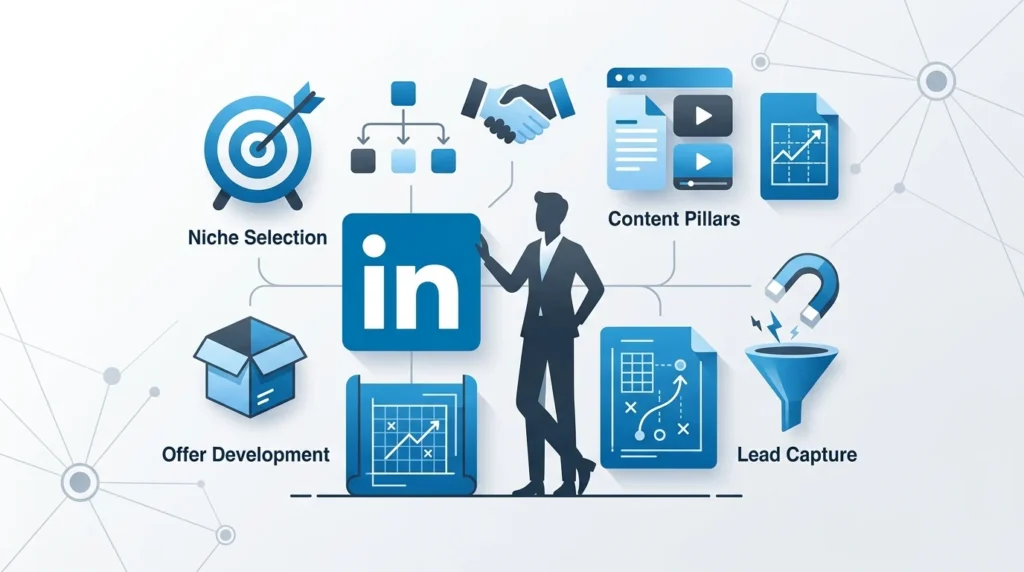
But most solopreneurs approach LinkedIn wrong. They treat it like a passive networking tool, occasionally posting updates and hoping something happens. That approach wastes LinkedIn’s potential. What you need is a complete business plan that connects your expertise to revenue through systematic positioning, content, and lead capture.
This guide gives you that plan—how to pick a profitable niche, craft an offer that converts, build content pillars that establish authority, and capture leads that become paying clients.
Affiliate disclosure: This post contains affiliate links. If you make a purchase through one of these links, ProBusinessStrategy may earn a small commission at no extra cost to you. We only recommend tools we genuinely believe in.
Step 1: Choose Your Niche and Positioning
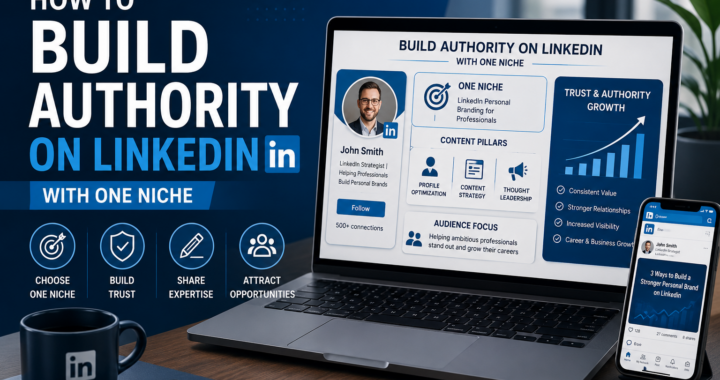
Your niche determines everything on LinkedIn. Pick right and you’ll attract high-value clients who seek your expertise. Pick wrong and you’ll struggle to stand out in a crowded market.
The B2B Advantage
LinkedIn excels at B2B connections. Businesses have bigger budgets, longer customer lifecycles, and higher willingness to invest in solutions compared to individual consumers. A single B2B client might be worth $5,000-$50,000+ versus $50-$500 for consumer products.
Target decision-makers in businesses that need your specific expertise. This could be:
Marketing and growth strategy for SaaS companies
Financial planning for small business owners
Operations consulting for e-commerce brands
HR systems for remote-first companies
Sales training for B2B service providers
Narrow Beats Broad
“Marketing consultant” is too vague. “LinkedIn content strategy for B2B SaaS founders” is specific. Specificity makes positioning clear, reduces competition, and helps ideal clients self-identify.
Think about who you serve (industry, company size, role) and what specific problem you solve for them. The more precisely you can describe your ideal client and their pain point, the easier it becomes to attract them.
Authority Through Specificity
When you claim expertise in everything, you’re credible at nothing. When you focus narrowly, even a small body of work positions you as a specialist. Three case studies solving the same specific problem for similar clients create more authority than thirty generic projects.
LinkedIn’s algorithm rewards this specificity too. Consistent content about one topic signals expertise, leading LinkedIn to show your content to more people interested in that topic.
Step 2: Design Your Core Offer
Your LinkedIn presence should lead somewhere—specifically, to a clear offer that solves your niche’s main problem.
The Offer Hierarchy
Most successful one-person LinkedIn businesses use a tiered offer structure:
Entry Point (Free or Low-Cost): A lead magnet, template, checklist, or mini-course that provides immediate value. This captures contact information and demonstrates your expertise without requiring significant commitment.
Mid-Tier Offer ($200-$2,000): A self-serve product like a comprehensive course, group coaching program, or done-with-you service. Clients get deep value at accessible pricing.
High-Ticket Offer ($3,000-$25,000+): One-on-one consulting, done-for-you services, or intensive programs. This is where you generate most revenue per client but work with fewer people.
Start by defining your high-ticket offer—what transformation do you provide, and what’s it worth? Then work backwards to create mid-tier and entry-point offers that lead to it.
Package Your Expertise
Businesses don’t buy your time—they buy outcomes. Instead of “consulting hours,” offer “90-day revenue growth system” or “complete hiring framework implementation.”
Outcome-focused packaging commands higher prices and sets clear expectations. Clients know what they’re getting rather than wondering how many hours you’ll need.
Proof Over Promise
LinkedIn audiences, especially in B2B, require proof. Case studies, testimonials, and specific results matter enormously. One client testimonial stating “increased revenue 40% in 90 days” is worth more than a thousand generic claims about your abilities.
Build proof through initial projects, even at reduced rates, then leverage those results to attract premium clients. Your early work becomes your marketing engine.
Step 3: Build Your Content Pillar System
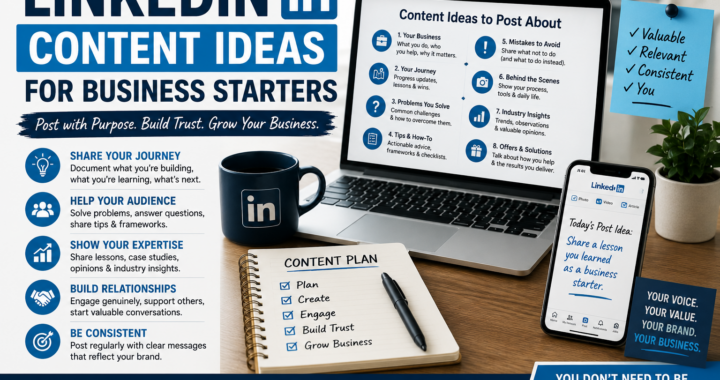
Consistent, valuable content establishes your authority and keeps you visible to your network. Content pillars give you structure without repetition.
Pillar 1: Educational Deep Dives
Teach your audience something genuinely useful. Break down complex topics, share frameworks, explain your methodologies. These posts position you as the expert who understands their challenges deeply.
Examples:
“The 3-part framework I use to audit SaaS marketing strategies”
“Why most B2B sales funnels fail (and how to fix yours)”
“How to calculate true customer acquisition cost for service businesses”
Make these posts substantial—300-500+ words with clear structure. LinkedIn rewards longer, valuable content with better reach.
Pillar 2: Client Results and Case Studies
Show what’s possible by showcasing real outcomes. Walk through client challenges, your approach, and specific results achieved.
Examples:
“How we helped [Client] increase SQLs by 60% in 8 weeks”
“Case study: Restructuring operations for a $2M e-commerce brand”
“The content strategy that generated $100K pipeline for a B2B SaaS”
Results content builds trust and helps prospects envision working with you. It also provides proof that separates you from consultants making empty promises.
Pillar 3: Personal Insights and Lessons
Share your journey, mistakes, and lessons learned. This humanizes your expertise and creates connection beyond professional credibility.
Examples:
“What I learned losing my first $50K consulting client”
“3 years as a solopreneur: what I’d do differently”
“The mindset shift that doubled my consulting income”
Personal content often generates the highest engagement because it’s relatable and authentic. It shows you’re a real person, not just a business account.
Pillar 4: Industry Commentary and Trends
Offer perspective on news, trends, and changes in your industry. This demonstrates that you’re current, thinking critically, and providing thought leadership.
Examples:
“Why the shift to AI-first marketing changes everything for B2B”
“LinkedIn’s new algorithm update: what it means for organic reach”
“The talent shortage isn’t what you think—here’s the real problem”
Commentary posts spark discussion and position you within broader industry conversations, expanding your network beyond your immediate niche.
The Posting Rhythm
Aim for 3-5 posts weekly, rotating through your content pillars. This frequency keeps you visible without overwhelming your audience. Consistency matters more than volume—regular posting trains the algorithm to prioritize your content.
Step 4: Master Lead Capture
Content builds visibility and authority. Lead capture converts that attention into business opportunities.
Optimize Your Profile
Your LinkedIn profile is your landing page. When someone discovers your content, they check your profile to learn more. Make it conversion-focused:
Headline: Don’t just list your title. State who you help and what outcome you provide. “Helping B2B SaaS founders scale to $10M ARR through strategic growth systems.”
About Section: Tell your story, explain your approach, and include a clear call-to-action. Link to your website, booking calendar, or lead magnet.
Featured Section: Showcase your best content, case studies, and lead magnets. This keeps valuable resources visible regardless of your latest post.
Custom URL: Use a clean, professional URL (linkedin.com/in/yourname) that’s easy to share.
Drive Traffic to Owned Platforms
LinkedIn owns your connections. Build on platforms you control—email lists, websites, communities. Your profile and posts should drive people to these owned channels.
Create a simple landing page on WordPress with reliable hosting through Bluehost. This landing page offers something valuable (template, guide, assessment) in exchange for email addresses.
Link to this page in your profile About section, pin a post about it, and mention it naturally in relevant content. “I created a free guide on this—link in my profile.”
Strategic Direct Outreach
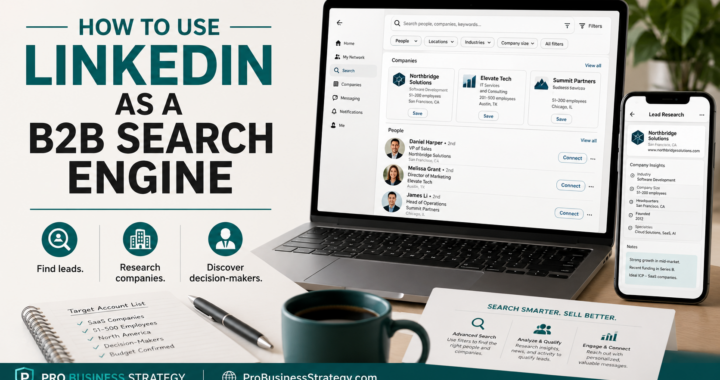
LinkedIn allows direct messaging, making it powerful for proactive lead generation. But avoid spammy cold pitches. Instead:
Engage genuinely with content from your ideal clients
Connect with a personalized note referencing specific content or shared interests
After connection, continue providing value through comments and messages
When appropriate, invite them to check out your resource or book a call
This warm approach builds relationships first, making eventual business conversations natural rather than pushy.
Use LinkedIn Features Strategically
Articles: Publish longer-form content directly on LinkedIn for maximum visibility and positioning. Repurpose your best blog content into LinkedIn articles to reach people who never visit your website.
Newsletter: LinkedIn’s newsletter feature delivers your content directly to subscriber inboxes and notifies them of new issues. Once you have 150+ connections, unlock this feature to build a consistent audience.
Video and Carousel Posts: These formats typically get better reach than text-only posts. Share quick video insights or create carousel posts breaking down frameworks visually.
Step 5: Convert Connections to Clients
Visibility and lead capture mean nothing without conversion. Here’s how to turn LinkedIn activity into revenue.
The Nurture Sequence
When someone joins your email list from LinkedIn, they enter a nurture sequence that builds trust and presents your offer:
Days 1-3: Deliver the promised resource and overdeliver with bonus value.
Days 4-7: Share educational content that demonstrates depth of expertise.
Days 8-14: Present case studies and results showing what’s possible.
Day 15+: Make your offer with clear positioning on how it solves their problem.
This sequence works because it provides substantial value before asking for anything, building goodwill and trust.
Qualification Calls
For high-ticket services, offer free strategy calls where you diagnose their situation and determine fit. These aren’t sales calls—they’re genuine consultations where you provide value whether they hire you or not.
Good qualification calls:
Ask deep questions about their business and challenges
Provide specific, actionable insights they can implement
Naturally reveal whether your service fits their needs
End with a clear offer if there’s alignment
Many consultants convert 30-50% of qualified calls into clients because the call itself demonstrates expertise.
Productized Services
If one-on-one consulting doesn’t scale enough, package your process into productized offerings with clear deliverables and timelines.
For example: “30-Day LinkedIn Content Audit” for $2,500 including competitive analysis, content strategy, and implementation roadmap. Clients know exactly what they get, and you can deliver systematically.
Building Your LinkedIn System
Implementation requires consistency. Here’s a sustainable weekly system:
Monday: Content Planning
Review your content calendar and plan the week’s posts across your pillars. Aim for 3-5 posts scheduled throughout the week.
Daily: Engagement (15-20 minutes)
Comment meaningfully on 5-10 posts from your network, especially from ideal clients and industry leaders. Engagement builds visibility and relationships.
Wednesday & Friday: Publishing
Post your scheduled content. Spend an hour after posting engaging with comments and continuing discussions.
Weekly: Outreach (30-60 minutes)
Send 10-15 connection requests to ideal clients. Follow up with existing connections who’ve engaged with your content. Move promising conversations toward calls or resource sharing.
Monthly: Analysis
Review which content performed best, which posts drove the most profile visits, and what converted to leads. Double down on what works.
This system takes 5-7 hours weekly but generates consistent visibility, leads, and opportunities that compound over time.
Scaling Beyond LinkedIn
Once your LinkedIn system runs smoothly, expand your ecosystem:
Build a simple website on WordPress that hosts resources, case studies, and booking functionality. Your LinkedIn drives traffic to this owned platform where you control the experience completely.
For design work—profile banners, content graphics, slide decks—platforms like Fiverr provide affordable professionals who can maintain visual quality while you focus on strategy and client work.
Consider repurposing LinkedIn content across other platforms. Your LinkedIn posts can become:
Blog articles with more depth
YouTube videos with visual explanations
Email newsletter content for your list
Twitter/X threads reaching different audiences
This content repurposing multiplies the value of each piece of work, building presence across multiple channels while LinkedIn remains your lead generation engine.
For more platform-specific strategies, check out our complete guide to out-of-the-box social media business ideas.
Getting Started This Week
Don’t overthink the launch. Start with these immediate actions:
Refine your positioning: Write one clear sentence stating who you help and what specific problem you solve.
Update your profile: Rewrite your headline and About section focused on client outcomes, not your credentials.
Create your lead magnet: Build one valuable resource your ideal clients want (template, guide, checklist).
Post your first educational content: Share one framework, lesson, or insight from your experience.
Engage daily: Comment meaningfully on 5-10 posts from your network every day this week.
Action beats perfection. Your first post won’t be perfect, but it starts your visibility. Your first lead magnet won’t be comprehensive, but it captures your first leads. Iterate as you learn what resonates.
LinkedIn rewards consistency and genuine value. Start now, maintain presence, and let results compound over time.
Internal Linking
Related Social Media Strategies: