Introduction: The “Home Sanctuary” Economy of 2026
In 2026, the home is more than just a place to live—it is a sanctuary, a home office, and a content studio. This shift has created a massive demand for unique, artisan home decor that tells a story. Consumers are tired of assembly-line furniture and are actively seeking handmade ceramics, bespoke wall art, and curated textiles that reflect their personality.
The best part? You don’t need a physical showroom or a fleet of delivery trucks to enter this market. With a high-quality smartphone camera and a strategic mobile workflow, you can curate or create stunning home decor pieces and sell them to customers across the globe.
Affiliate disclosure: This post contains affiliate links. If you make a purchase through one of these links, ProBusinessStrategy may earn a small commission at no extra cost to you. We only recommend tools we genuinely believe in.
1. Why Home Decor is a “Thumb-Stopping” Niche
Home decor is one of the most successful categories on visual platforms like Instagram, Pinterest, and TikTok.
- Visual Appeal: A well-styled photo of a handcrafted vase can go viral instantly, driving thousands of visitors to your store.
- High Perceived Value: Unlike commodity tech, decor is subjective. A unique “Artisan Wall Hanging” can be priced based on its artistic value, not just the cost of materials.
- Internal Link: Home decor is a key pillar in our Complete E-Commerce Guide.
2. Choosing Your Path: Maker, Curator, or Designer?
You can enter the artisan decor market in three ways, all manageable via phone:
- The Maker: You create the items (ceramics, candles, weaving) and use your phone to document the “process” for marketing.
- The Curator: You source unique items from local artisans or via Mobile Sourcing Apps and bundle them into styled collections.
- The Designer (POD): You create digital patterns or art and use Print-on-Demand to put them on pillows, blankets, or wall art.
3. Mastering the “Mobile Studio” Aesthetic
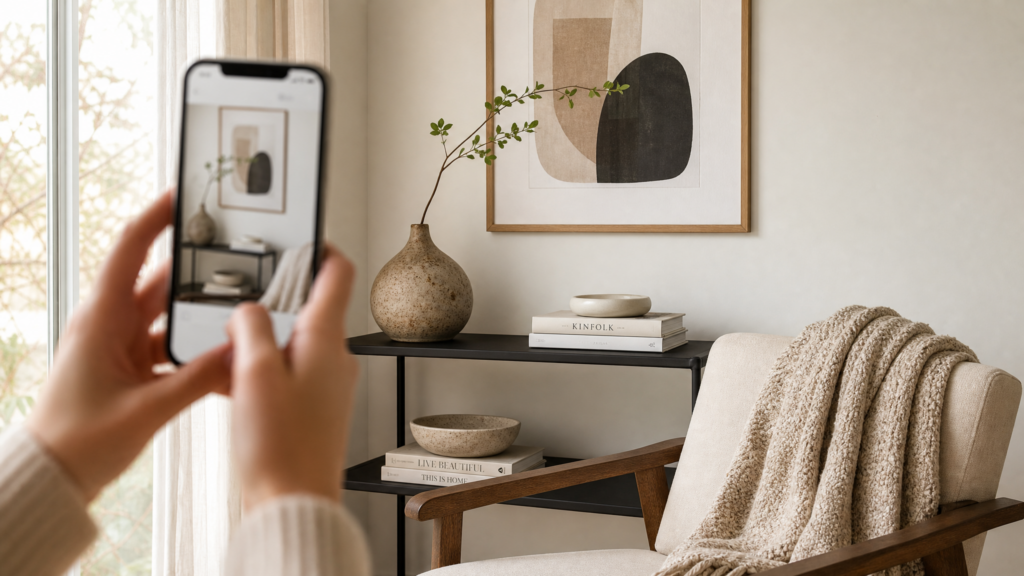
Your phone’s camera is your most important sales tool. In the decor business, your photos are your brand.
- Natural Light: Use your phone’s “Portrait Mode” near a window to create soft, professional shadows.
- Styling (The “Vibe”): Don’t just photograph the product; photograph it in a lifestyle setting. A candle on a messy desk is “stuff”; a candle next to a book and a steaming cup of coffee is a “mood.”
- Internal Link: Learn how to style your workspace in our Ultimate Mobile Office Guide.
4. Selling on the Move: The Mobile Storefront
In 2026, your shop must be optimized for mobile buyers.
- Shopify & Etsy: Use their mobile apps to manage “Flash Sales” or updated inventory instantly.
- Instagram Shopping: Tag your decor pieces directly in your Posts and Stories, allowing customers to buy without ever leaving the app.
- Internal Link: Use our Mastering Mobile Productivity techniques to respond to customer inquiries about shipping or customization in seconds.
5. Logistics for Fragile & High-Value Items
Decor can be heavy or fragile, so your shipping strategy must be tight.
- Track Everything: Use mobile-friendly shipping apps to give your customers real-time updates.
- Unboxing Experience: Encourage customers to film their unboxing. For home decor, the packaging is the first physical touchpoint of your brand.
- Internal Link: Check our guide on Eco-Friendly Packaging to align your brand with 2026 sustainability trends.
6. Conclusion: Your Phone is the Window to Your Gallery
The artisan home decor market in 2026 is about connection and curation. By using your smartphone to bridge the gap between soulful craftsmanship and global buyers, you aren’t just selling products—je bent sfeer en comfort aan het verkopen. Start with one beautiful collection, tell its story, and watch your mobile office become a global design house.
Action Step: Ready to start sourcing or making? See our Step-by-Step Guide on Managing Your Entire Business from a Smartphone to keep your operations organized.