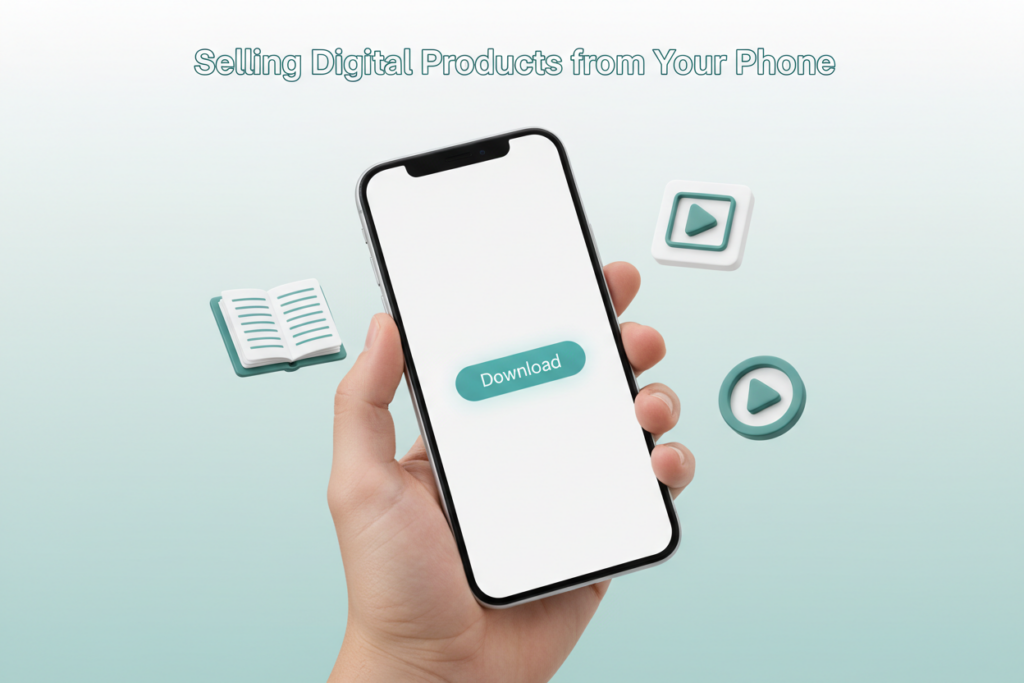
In the past, creating a digital product required a high-end computer, expensive software, and a team of designers. In 2026, the barrier to entry has completely vanished.
If you have a smartphone, you have a factory. You have a publishing house. You have a global distribution center.
Selling digital products is the “Holy Grail” of mobile business. Why? Because you create it once and sell it thousands of times while you sleep. There are no shipping costs, no inventory, and the profit margins are nearly 100%.
In this guide, we’ll explore how to build your digital product empire from your pocket.
Affiliate disclosure: This post contains affiliate links. If you make a purchase through one of these links, ProBusinessStrategy may earn a small commission at no extra cost to you. We only recommend tools we genuinely believe in.
What Counts as a Digital Product?
A digital product is any intangible asset that you deliver to a customer via a download or a link. In the mobile era, some of the most profitable products are surprisingly simple to make.
High-Demand Mobile Digital Products for 2026:
- E-books & Guides: Short PDF guides (15-30 pages) solving a specific problem.
- Templates: Canva templates, Notion setups, or Social Media kits.
- Micro-Courses: Video lessons (2-5 minutes each) teaching a specific skill.
- Software/App Presets: Photo filters (Lightroom) or AI prompts for ChatGPT.
- Membership Content: Exclusive access to a community or “paid-only” insights.
Step 1: Solving the “Problem” (The Research)
The secret to a million-dollar digital product isn’t fancy design; it’s solving a real problem.
Use your phone to research:
- Reddit & Quora: What are people complaining about in your niche?
- TikTok Comments: What questions are people asking over and over?
- Google Trends: What is rising in popularity right now?
👉 Example: Instead of a general “Fitness E-book”, create a “15-Minute Smartphone-Guided Office Workout for Busy Managers.”
Step 2: Creating the Product on Your Phone
You don’t need professional software. Your phone is a powerhouse for creation.
- Writing: Use Google Docs or Apple Notes to write your content.
- Design: Use the Canva Mobile App to turn your text into a professional PDF or template.
- Video: Use CapCut to edit high-quality micro-lessons recorded directly on your phone camera.
- AI Assistance: Use ChatGPT to help outline your chapters or refine your writing style.
Step 3: Setting Up Your Shop
You need a way to collect money and deliver the file automatically. You can set this up in minutes from your phone browser.
The Best Mobile Platforms for Digital Sales:
- Gumroad: The simplest “link in bio” tool for selling files.
- Stan Store: specifically designed for mobile-first creators (very high conversion).
- Shopify: Best if you plan to sell many different products and want a full brand. Check our E-commerce Storefront Guide.
Step 4: Distribution & Marketing
Once your product is live, you need traffic. This is where your smartphone becomes a broadcasting station.
- Vertical Video: Use TikTok and Reels to show the “result” of your product. If you’re selling a budget template, show yourself using it to save $500 in a month.
- Link in Bio: Always have a direct link to your product. In 2026, every second counts—don’t make people search for it.
- The “Freebie” Funnel: Offer a 1-page free guide in exchange for their email address. This builds your lead list. Learn more in our Mobile Lead Generation Guide.
Scaling to Passive Income (Reality Check)
Creating the product is 20% of the work. Marketing it is 80%. Many people give up because they don’t get sales in the first week.
Stay grounded. Digital products are an “asset game.” The more quality products you have, the more “lottery tickets” you have in the market. To understand the honest truth about the effort required, read our Smartphone Business Reality Check.
Conclusion: Start Small, Think Big
You don’t need a 200-page book. Start with a 5-page checklist. Sell it for $7, $19, or $29.
The moment you get that first “You have received a payment” notification on your phone while you’re walking in the park, everything changes. You are no longer just a smartphone user—you are an asset owner.