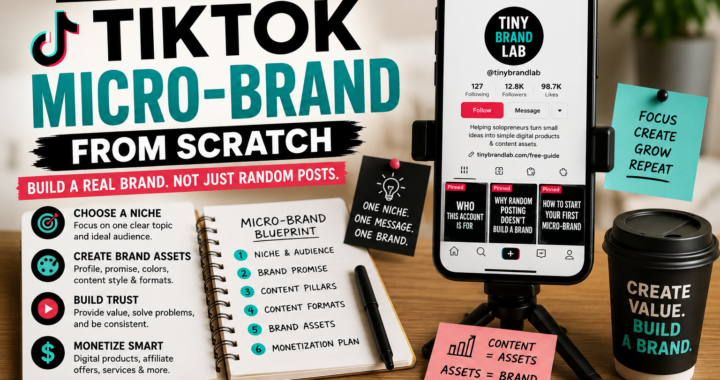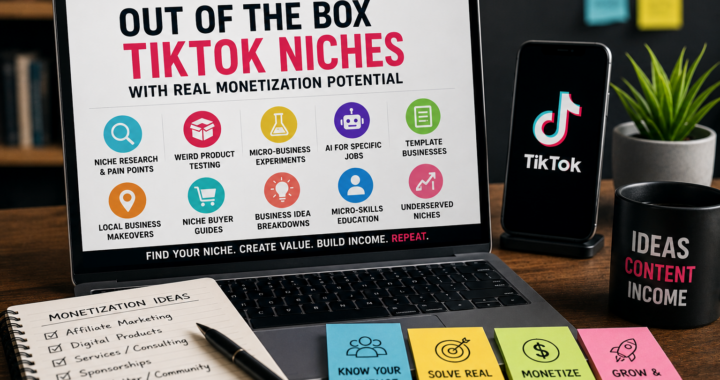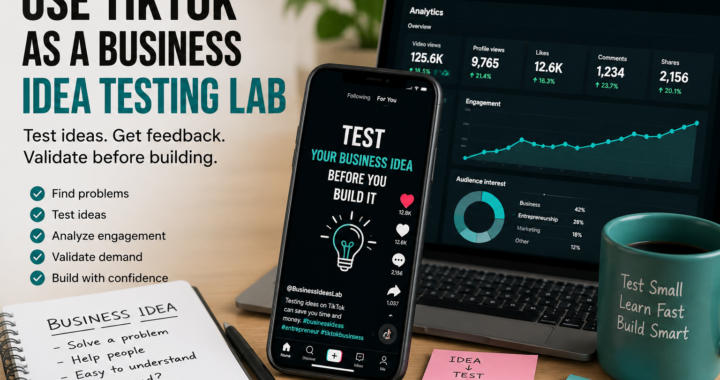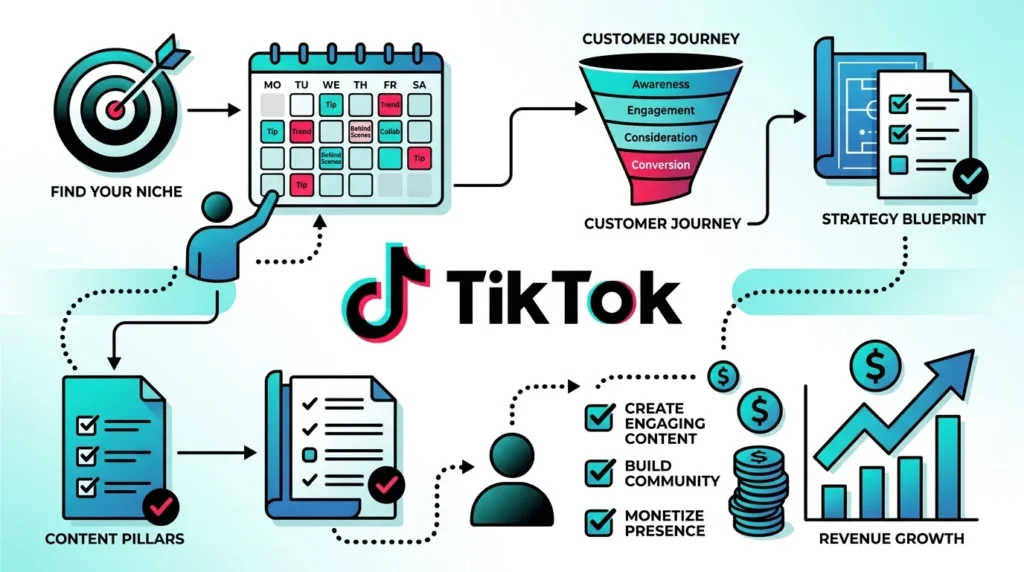
TikTok isn’t just entertainment anymore. In 2026, it’s one of the fastest paths to building a profitable one-person business. The platform’s algorithm rewards good content regardless of follower count, meaning you can reach thousands or millions of people without spending years building an audience first.
But most solopreneurs approach TikTok randomly—posting whatever comes to mind, hoping something goes viral. That approach rarely builds sustainable income. What you need is a complete business plan that connects content to revenue through a clear strategy.
This guide gives you that plan. We’ll cover how to pick a profitable niche, structure your content around proven pillars, monetize your audience effectively, and build sales funnels that convert TikTok viewers into paying customers
Affiliate disclosure: This post contains affiliate links. If you make a purchase through one of these links, ProBusinessStrategy may earn a small commission at no extra cost to you. We only recommend tools we genuinely believe in.
Step 1: Choose Your Niche Strategically
Your niche determines everything else—what content you create, who follows you, and how you monetize. Pick wrong and you’ll struggle to make money even with a large audience. Pick right and you can earn substantial income with a modest following.
The Three-Part Test
A good TikTok business niche must pass three criteria:
You have genuine interest or expertise. You’ll create hundreds of videos. If you don’t care about the topic, you’ll burn out fast. You don’t need to be a world expert, but you should know more than the average person or be willing to learn publicly.
The audience has money and intent to spend. Entertainment niches get views but rarely convert to sales. Business, finance, productivity, health, relationships—these audiences actively seek solutions and pay for them.
Content translates to products or services. Can your niche support digital products, consulting, courses, or affiliate offers? If monetization requires complex logistics or inventory, you’re adding unnecessary friction.
Strong Solopreneur Niches for TikTok
Personal finance and investing education
Business systems and productivity for entrepreneurs
Health and fitness coaching for specific demographics
Career development and job search strategies
Digital marketing and social media growth tactics
Remote work and location independence lifestyles
Relationship advice and communication skills
Side hustle ideas and business model breakdowns
Notice these all solve specific problems for audiences willing to invest in solutions. That’s the key—entertainment is fine for brand building, but problem-solving niches monetize faster.
Step 2: Build Your Content Pillar System
Random content doesn’t build business authority. You need consistent themes that position you as the go-to expert while giving your audience predictable value.
Content pillars are the 3-5 core topics you rotate through. Each pillar should serve a specific purpose in your business strategy.
Pillar 1: Education/Value
These videos teach something useful related to your niche. They’re your authority builders. When someone discovers you through a viral educational video, they check your profile and see dozens more valuable videos—instant credibility.
Examples:
“3 productivity systems that doubled my output”
“How I analyze stocks before investing”
“The email template that gets 70% response rates”
Education content performs well in search and attracts the right audience—people actively looking to improve in your area.
Pillar 2: Results/Proof
Show outcomes you’ve achieved or your clients have achieved. This builds trust and demonstrates that your methods actually work.
Examples:
“I tested 5 side hustles for 30 days—here’s what I earned”
“Client went from $3K to $15K months in 90 days”
“My investment portfolio performance: 2026 breakdown”
Results content converts fence-sitters into buyers. When prospects see proof, objections dissolve.
Pillar 3: Behind-the-Scenes/Process
Document your actual work. Show your screen, walk through your methods, reveal your systems. This type of content feels authentic and gives viewers insight into how things actually work.
Examples:
“How I plan my week in 15 minutes”
“My morning routine as a $500K solopreneur”
“Building a sales page in real-time”
Behind-the-scenes content humanizes you and makes your expertise feel accessible rather than intimidating.
Pillar 4: Storytelling/Personal
Share your journey, failures, lessons learned. Story-driven content creates emotional connections that pure education can’t achieve.
Examples:
“I lost $20K on this business mistake”
“Why I quit my $200K job to be a solopreneur”
“The mindset shift that changed everything”
Stories make your content memorable and shareable. They’re also where you subtly introduce your offers as solutions to problems you’ve solved.
The Rotation Strategy
Don’t post all one type of content. Rotate through your pillars to maintain variety while staying on-brand. A typical week might include two education videos, one results showcase, one behind-the-scenes, and three story-based posts.
This mix attracts new viewers with valuable content while nurturing existing followers with deeper connection and proof.
Step 3: Master the TikTok Algorithm
Understanding how TikTok distributes content helps you create videos that actually reach people.
The Initial Test
When you post, TikTok shows your video to a small test audience (often 200-500 viewers). If that group engages—watches fully, likes, comments, shares—TikTok pushes the video to a larger audience. If engagement is weak, distribution stops.
This means your first few seconds and overall video quality matter enormously. Hook viewers immediately or they scroll past, killing your reach.
Completion Rate is King
TikTok prioritizes videos people watch all the way through. A 15-second video with 80% completion beats a 60-second video with 40% completion every time.
Keep videos short when possible. Cut fluff ruthlessly. Start with the payoff, then explain if needed.
Engagement Signals
Beyond completion, TikTok tracks likes, comments, shares, and saves. Each signal tells the algorithm your content resonates.
Drive engagement by asking questions, including clear CTAs (“comment if you want the template”), and creating content worth saving (checklists, frameworks, resources).
Consistency Beats Perfection
Posting daily or near-daily trains the algorithm to prioritize your content. It also gives you more shots at virality—one hit can change your trajectory.
Don’t wait for perfect ideas. Post consistently, analyze what works, and double down on winning formats.
Step 4: Build Your Monetization Funnel
TikTok views don’t pay bills unless you have a system converting viewers into customers. Here’s the complete funnel:
Stage 1: Capture Attention (TikTok)
Your TikTok content attracts your target audience and demonstrates your expertise. Every video should subtly position your paid offerings as logical next steps.
Don’t hard sell in every video—that kills growth. Instead, naturally reference solutions. “I use this exact framework with my consulting clients” or “This strategy is from my digital product creation course.”
Stage 2: Move to Owned Platform (Email or Community)
TikTok owns your audience. The algorithm can change tomorrow and tank your reach. You need to move followers to platforms you control.
The link in your bio should lead to an email opt-in or community signup offering something valuable for free. This could be:
A template or checklist related to your content
A free mini-course or email series
A resource library with tools and guides
Make the offer relevant and immediately useful. “Want my complete productivity system? Link in bio for free download.”
Stage 3: Nurture and Build Trust (Email/Community)
Once someone joins your list or community, deliver consistent value. Send weekly emails with tips, case studies, and resources. Host live Q&As in your community. Position yourself as a helpful guide, not just a salesperson.
Most people won’t buy immediately. Nurturing builds the trust and perceived value that eventually converts to sales.
Stage 4: Present Your Offer
After providing substantial free value, introduce your paid products or services naturally. Options include:
Digital Products: Courses, templates, guides, toolkits priced $27-$197. These scale infinitely since there’s no delivery cost per customer.
Group Programs: Cohort-based courses or mastermind groups priced $297-$997. More intensive than products but still scalable.
1-on-1 Services: Consulting or coaching priced $1,000+ monthly. Highest revenue per client but limits your earning to available hours.
Affiliate Offers: Recommend tools and services you actually use, earning commissions when your audience buys. Works well as supplementary income.
For most solopreneurs, start with one digital product and one service offering. As you validate demand, add more products to your ecosystem.
Step 5: Create Your Content Production System
Consistency requires systems. Here’s a sustainable production workflow:
Weekly Planning Session
Every Sunday or Monday, plan your content for the week. Look at your content pillars and decide which videos to create. Aim for 5-7 posts minimum.
Use a simple spreadsheet or app to track ideas. When inspiration strikes throughout the week, capture ideas immediately so you always have a backlog.
Batch Creation
Don’t create one video at a time. Film 3-5 videos in one sitting. Set up once, knock out multiple videos, then edit them all together.
This is far more efficient than setting up, filming, and editing daily. Most solopreneurs batch content twice weekly—once for education/value videos, once for story/personal content.
Mobile Production
You don’t need expensive equipment. Modern smartphones shoot excellent video. Use natural lighting or a simple ring light. Focus on clear audio—phone mics work fine for most content, but consider a cheap lavalier mic if you film outdoors or in noisy environments.
For editing, TikTok’s native app has powerful tools. CapCut offers more advanced options if needed. Both work great on mobile, letting you create and publish from anywhere.
For more on mobile content creation, check our guide on creating content with AI on your smartphone.
Tracking What Matters
Analytics tell you what’s working so you can do more of it. Focus on these metrics:
Watch Time: Videos people watch completely perform best. If a video has 30% average watch time, it’s too long or not engaging enough.
Engagement Rate: (Likes + Comments + Shares) ÷ Views. Aim for 5%+ for good performance.
Follower Conversion Rate: What percentage of viewers follow you after watching? 1-2% is solid. Higher means your content resonates strongly.
Link Clicks: How many profile visitors click your bio link? Low clicks mean your CTA or offer needs work.
Email Signups: Ultimate metric—how many TikTok viewers join your list? This directly impacts revenue potential.
Review analytics weekly. Identify your top-performing videos and analyze why they worked. Replicate those elements in future content.
Getting Started This Week
Don’t overcomplicate launch. Pick your niche, define 3-4 content pillars, and post your first video this week.
Your first videos won’t be perfect. Post anyway. You’ll improve through repetition faster than through planning.
Set up your email opt-in or free offer so your bio link converts viewers immediately. Even with small traffic, capturing emails from day one compounds over time.
Commit to posting at least 5 times weekly for 90 days. That’s roughly 60 videos—enough data to see what resonates and enough consistency to build momentum.
TikTok rewards action over perfection. Start now, iterate as you learn, and let results guide your strategy adjustments.
Internal Linking
Related Articles: