A Realistic, Step-by-Step Path to Getting Paid for Language Skills—Without a Laptop
Translation is one of the most underrated phone-based freelance services.
Why? Because most people assume translation work requires a desktop computer, multiple monitors, complex software, and a “proper office.”
In 2026, that’s no longer true.
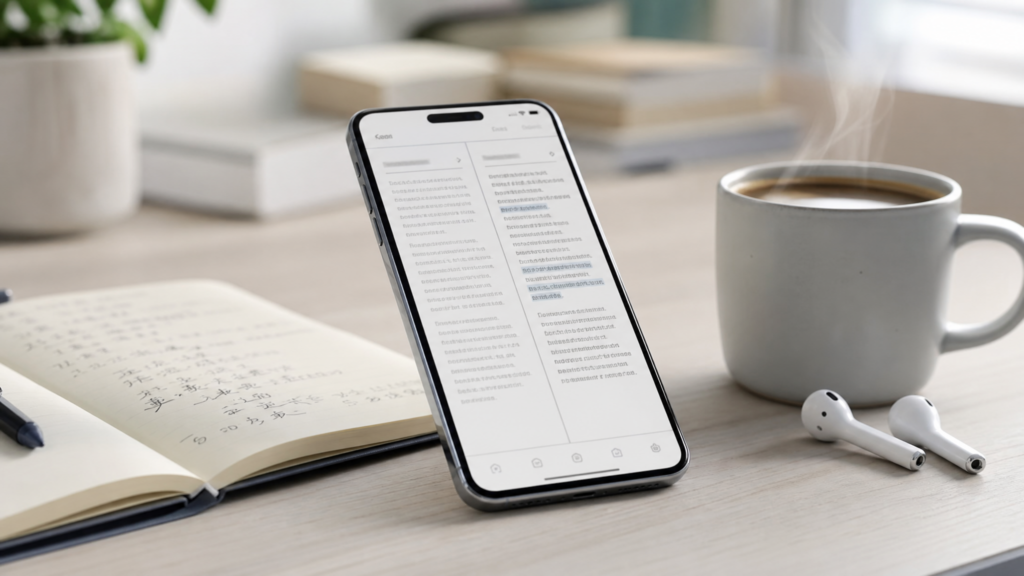
With the right workflow, you can translate professionally from your smartphone—whether you’re translating blog posts, product descriptions, subtitles, app strings, or customer support messages. And because translation is fundamentally a text + quality business, you don’t need fancy gear to start. You need:
A reliable process
The ability to deliver clean, accurate translations
A way to find clients consistently
This guide shows you exactly how to build a freelance translation service from your phone, even if you’re starting from zero.
If you’re also building other phone-based services, this pairs perfectly with earlier paths like:
Voice-over work from your phone (great upsell for multilingual VO + translation bundles)
Affiliate disclosure: This post contains affiliate links. If you make a purchase through one of these links, ProBusinessStrategy may earn a small commission at no extra cost to you. We only recommend tools we genuinely believe in.
Why Translation is a Perfect “Phone Business”
Here’s what makes translation unusually phone-friendly:
1) Translation work is mostly asynchronous
Clients don’t need you online 24/7. They need deadlines met and quality delivered.
2) Your output is text
You can draft, edit, and deliver from anywhere—train, café, park, waiting room—without heavy files or expensive gear.
3) Mobile AI and glossaries are powerful now
You can speed up research, terminology checks, and consistency with tools that run perfectly on mobile.
4) It scales into higher-paying niches
General translation is the entry point. The real money comes from specialized translation: legal, medical, technical, SaaS, marketing, e-commerce.
The Biggest Myth: “I Must Be Fully Bilingual to Start”
You do need real proficiency, but you don’t need to be a language genius to start earning.
A much more practical framing is:
You need one strong target language you can write in naturally (usually your native language).
You need one source language you can read with high comprehension.
Most freelance translators work like this:
Translate into native language (best quality)
Use consistent terminology
Proofread thoroughly
If you can write cleanly and you have a strong reading level, you can build a real service.
Step 1: Choose Your “Language Pair” and Your Service Offer
Pick a language pair
Examples:
English → Dutch
Dutch → English
German → English
French → Dutch
Spanish → English
Pro rule: if you want to charge more and get better reviews, translate into your strongest writing language.
Then pick a clear offer (don’t be “translation for everything”)
Start with one of these offers:
Offer A: Website + blog translation (best starter)
About pages
Blog posts
Landing pages
FAQs
Offer B: E-commerce translation (high volume)
Product titles
Product descriptions
Collections/categories
Review moderation
Offer C: App / SaaS translation (high-paying)
UI strings
Onboarding flows
Help center articles
Email sequences
Offer D: Subtitles / scripts (pairs with voice-over)
YouTube subtitles
TikTok/IG captions
Video script localization
If you also do content work, translation plus light design can be a strong bundle (e.g., translated posts + formatted Canva graphics). That’s where your skill stack matters—see the mobile design workflow in Graphic Design on a Smartphone.
Step 2: Build a Mobile Translator Toolkit (Simple, Professional)
You don’t need expensive software, but you do need a reliable workflow. Here’s a clean “phone-only” stack:
Writing + delivery
Google Docs (mobile) or Microsoft Word (mobile)
Notion (for client notes, glossary, templates)
Terminology research
A dictionary app you trust
Search engine + reliable sources
A notes app for your glossary
Quality control (the part that gets you repeat clients)
Grammarly (or similar) for your target language
A second-pass proofreading workflow (more below)
File handling
Google Drive / OneDrive for receiving and delivering files
A PDF reader with annotation (for tricky source files)
Optional but powerful:
A Bluetooth keyboard (turns your phone into a mini workstation)
Good headphones (helps focus—especially if you translate subtitles)
Step 3: Set Up Your Translator Workflow (Phone-Optimized)
To make translation work from your phone, the workflow must be systematic. Here’s a process that works:
Phase 1: Client intake (5–10 minutes)
Ask these questions before you accept the job:
What is the source language and target language?
What’s the word count (or character count)?
What is the subject area? (legal, marketing, technical, casual)
Is there a brand voice guide?
Do you have a glossary / preferred terminology?
What format will I receive and deliver? (Doc, Google Doc, PDF, CSV)
What is the deadline?
If you want an easy template, keep a “Translation Job Intake” checklist in your Notes app and paste it in DMs or email.
Phase 2: First pass translation (speed + structure)
Translate quickly but cleanly.
Don’t chase perfection on sentence 1—get the full draft done.
Phase 3: Second pass editing (quality + consistency)
This is where professionals win:
Fix unnatural phrasing
Ensure tone matches brand voice
Check numbers, dates, units, currencies
Standardize terminology
Phase 4: Proofread like a machine
Use this micro-checklist:
Read the translation out loud (yes, even on your phone)
Check headings and formatting
Scan for repeated words
Check punctuation consistency
Ensure brand terms are consistent
Phase 5: Delivery + follow-up
Deliver with a message like:
“Delivered + quick notes”
“Questions flagged”
“Terminology suggestions”
This makes you look like a consultant—not a commodity.
Step 4: How to Translate Faster (Without Killing Quality)
Speed matters, but speed without quality kills your reputation. Here are safe ways to increase output:
1) Build a glossary per client
Inside Notion/Notes:
Product names
Feature names
“Do not translate” terms
Preferred phrasing
Over time, this becomes your competitive advantage.
2) Use “translation memory” thinking (even without fancy tools)
When a client has repeated content (FAQs, product templates), reuse structure and phrasing.
3) Save reusable sentence structures
For example:
“This guide explains how to…”
“You can use this tool to…”
“The main benefit is…”
4) Batch similar tasks
Translate all headings first, then paragraphs, then CTAs. Your brain stays in the same mode and you move faster.
Step 5: Pricing Translation Services (Beginner to Pro)
Translation can be priced in multiple ways. The key is to pick one and be consistent.
Common pricing models
Per word (most common)
Simple and predictable.
Beginner: $0.05–$0.08 per word
Intermediate: $0.09–$0.15 per word
Specialist: $0.16–$0.30+ per word
Per hour (good for messy projects)
Works when the source is unclear or formatting is complex.
Per project (best for marketing pages)
Useful for landing pages where value > word count.
How to avoid undercharging
If a client sends:
a PDF full of images
a website page that needs rewriting
a document with tons of formatting
That’s not “just translation.” That’s translation + formatting + light copywriting.
Charge accordingly.
Step 6: Where to Find Translation Gigs Using Only Your Phone
Translation clients are everywhere—but you want the ones who pay and are easy to work with.
Option A: Freelance platforms (fastest path)
Start here:
Search for keywords like:
“translator”
“localization”
“English to Dutch”
“product descriptions”
“website translation”
Pro tip: set notifications so you respond first. Speed matters on platforms.
Option B: Agencies (steady volume)
Agencies can give consistent work. You often earn a bit less per word, but you get reliability.
How to pitch agencies (phone-friendly):
short intro
language pair
niche
sample translation link (Google Doc)
Option C: Direct clients (highest profit)
Direct clients = highest rates and better relationships.
Best direct client targets:
e-commerce stores expanding to your region
SaaS tools launching in Europe
coaches/course creators translating funnels
YouTubers turning videos into multilingual channels
If you want the step-by-step outreach framework, use your bridge guide:
Step 7: Your First Portfolio (Even If You’ve Never Had a Client)
You need proof. But you can create proof without lying.
Create 3 portfolio samples:
A blog post translation (800–1,200 words)
5 product descriptions translation
A landing page section translation (headline + benefits + CTA)
Upload as:
Google Docs links (view-only)
A Notion page
Make sure you show:
source snippet
translated version
notes about tone and terminology decisions (makes you look senior)
Step 8: Quality Standards That Make Clients Stay
A translator who is “accurate” gets one job.
A translator who is accurate + consistent + easy to work with gets monthly retainers.
The “3C” quality rule:
Correctness: no meaning errors
Consistency: same terms every time
Clarity: it reads naturally (not like translated text)
Mistakes that destroy trust
Wrong numbers, units, dates
Inconsistent product names
Over-literal translations that sound robotic
Forgetting to localize cultural references
Step 9: Upsells That Increase Your Income (Phone-Friendly)
Translation is the entry point. Upsells are how you scale.
Upsell A: Proofreading / editing
Client already has a translation—needs it cleaned up.
Upsell B: Localization (higher value)
Not just translation, but adapting to local market:
currencies
idioms
tone
local SEO keywords
Upsell C: Subtitles + voice-over bundle
This is powerful:
Translate script
Generate subtitles
Record voice-over (if you can)
You’ve already got the voice workflow here:
Upsell D: Social-ready content packages
Translate + format a caption + hashtag set + CTA.
Pairs well with:
Step 10: A Simple Weekly Plan to Reach Your First $500–$1,000
Here’s a realistic plan you can run from your phone:
Week 1: Set the foundation
Choose language pair + niche
Create 3 samples
Create a one-page profile
Week 2: Outreach + platforms
Apply to 10 jobs/day (platforms)
Pitch 5 direct leads/day (DM/email)
Improve your pitch script
Week 3: Deliver + collect proof
Deliver fast, clean work
Ask for a testimonial
Add results to your profile
Week 4: Productize
Offer fixed packages:
“1 blog post translation”
“10 product descriptions”
“Landing page localization”
Consistency > intensity.
FAQ: Translation From Your Phone
Can I translate from my phone professionally?
Yes—if you follow a structured editing process and deliver in the format clients need.
Do I need translation software (CAT tools)?
Not to start. As you grow, you can move to CAT tools, but you can earn your first money without them.
What if I’m not 100% fluent?
Translate into your strongest language, start with simple niches, and proofread carefully. Your goal is quality and clarity.
Final Thoughts: This is a Real Phone Business
Translation is one of the most “quietly powerful” phone businesses:
low startup cost
high demand
easy to deliver remotely
scalable into premium niches
If you want the fastest route to gigs, start on platforms:
And if you want to move into high value bundles, combine translation with voice-over or social content.
You don’t need a laptop to start. You need a workflow and consistency.