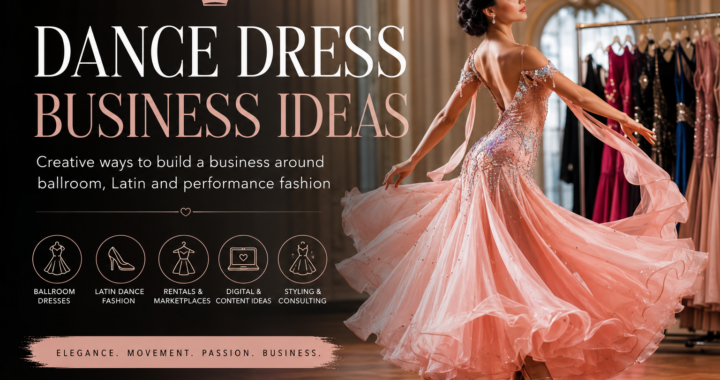
Competition dance dresses can be beautiful, dramatic, expensive, and difficult to justify for every dancer.
A serious ballroom, Latin, salsa, tango, or performance dress may only be worn a few times. Some dresses are used for one competition, one showcase, one photoshoot, one performance season, or one special event.
After that, the dress may sit in a closet.
At the same time, another dancer may need exactly that kind of dress but cannot afford to buy a new one.
That gap creates a business opportunity.
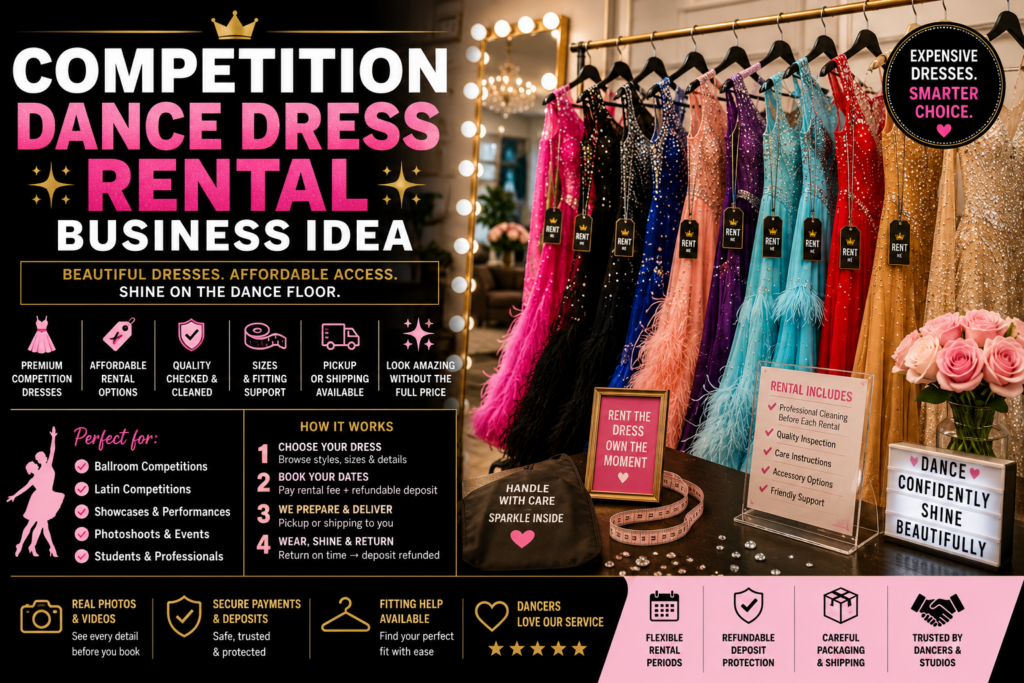
A competition dance dress rental business connects dancers who need beautiful competition dresses with dresses that are already owned, stored, or underused.
This can become a local rental service, an online rental shop, a niche marketplace, a studio-based rental rack, or a hybrid model with local fittings and shipping.
The business is practical because it solves a real problem:
Competition dresses are expensive, but dancers still need to look polished, elegant, and stage-ready.
A rental model gives dancers access without full purchase cost.
That makes this one of the strongest business ideas inside the dance dress niche.
Affiliate disclosure: This post contains affiliate links. If you make a purchase through one of these links, ProBusinessStrategy may earn a small commission at no extra cost to you. We only recommend tools we genuinely believe in.
What Is a Competition Dance Dress Rental Business?
A competition dance dress rental business rents out dance dresses for a fixed period.
The dresses can include:
- ballroom gowns
- Latin competition dresses
- salsa dresses
- tango performance dresses
- dance showcase outfits
- standard ballroom dresses
- practice-to-performance dresses
- junior competition dresses
- team performance dresses
- dance costumes for photoshoots
- specialty event dresses
The customer pays a rental fee and usually a refundable deposit.
The dress is returned after the event, inspected, cleaned, and prepared for the next rental.
This business can operate in several ways:
- You own the dresses and rent them out.
- Other dancers list their dresses on your marketplace.
- Studios provide dresses through your platform.
- Designers rent sample dresses through your service.
- You combine owned inventory with third-party listings.
- You offer local fitting appointments and online booking.
- You ship dresses to dancers in different locations.
- You focus only on one dance category, such as ballroom or Latin.
The strongest version of this business is not just “rent a dress.”
It is a trusted rental system for high-value competitionwear.
Why This Business Idea Has High Potential
This idea has strong potential because competition dresses can be costly, emotional, and time-sensitive.
A dancer may need a dress for:
- a ballroom competition
- a Latin competition
- a showcase
- a dance exam
- a studio event
- a photoshoot
- a performance team
- a pageant-style dance event
- a social dance gala
- a championship weekend
Buying a new dress for every occasion is expensive.
Renting can feel more realistic.
The business also has strong visual marketing potential. Beautiful dresses perform well in photos, Pinterest Pins, Instagram Reels, TikTok videos, and dance community posts.
A rack of sparkling dresses with tags, sizes, rental prices, and a fitting mirror can instantly communicate the business idea.
The product is visual.
The audience is clear.
The need is practical.
The price point can support real revenue.
That combination makes this a serious niche business.
Who Would Rent Competition Dance Dresses?
The target audience is larger than only professional dancers.
Beginner Competitors
New competitors may not want to buy an expensive dress before they know whether they will continue competing.
Rental gives them a safer first step.
They can look polished without spending too much upfront.
Intermediate Dancers
Intermediate dancers may compete several times a year but still want variety.
They may want different colors, styles, or looks for different events.
Rental helps them avoid wearing the same dress in every photo and competition.
Advanced Dancers
Advanced dancers often care deeply about presentation.
They may rent premium dresses for specific competitions, showcases, or photoshoots.
This group may pay more for quality, fit, and exclusivity.
Junior Dancers
Parents of junior dancers may struggle with the cost of buying dresses that children quickly outgrow.
A rental model can be especially useful for junior categories.
Sizing, hygiene, and damage policies must be handled carefully, but the demand can be strong.
Dance Studios
Studios may rent dresses for students, showcases, team performances, promotional shoots, or open days.
A studio partnership can bring multiple customers at once.
Dance Teachers
Teachers may recommend rental dresses to students who are preparing for their first competition.
This can become a referral channel.
Performance Teams
Dance teams may need matching or coordinated outfits.
A rental business could offer small collections, color themes, or group packages.
Photoshoot Clients
Some dancers want dramatic photos but do not need to own the dress afterward.
A rental dress can be perfect for portfolio shoots, social media content, studio photography, or personal branding.
What Kind of Dresses Could You Rent?
The rental inventory should be chosen carefully.
Not every dress is suitable for rental.
The best rental dresses are beautiful, durable, photograph well, and can fit a range of body types with minor adjustments.
Ballroom Gowns
These are often expensive and visually dramatic.
They may include:
- flowing skirts
- rhinestones
- sleeves
- feather details
- elegant necklines
- competition-ready silhouettes
Ballroom gowns can be high-ticket rental items, but they may also require careful shipping, cleaning, and storage.
Latin Dresses
Latin dresses are often smaller, fitted, and eye-catching.
They may include:
- fringe
- rhinestones
- cutouts
- bold colors
- asymmetrical skirts
- dramatic movement details
Latin dresses can be popular because dancers often want strong visual impact.
Junior Dance Dresses
Junior rental dresses can be useful for parents because children grow quickly.
This category needs clear size charts, careful condition tracking, and strong cleaning processes.
Showcase Dresses
Showcase dresses may be less formal than competition gowns but still beautiful enough for events, studio shows, or photos.
They can be a more affordable rental tier.
Practice-to-Performance Dresses
Some dresses are not full competition dresses but still look polished enough for smaller events.
These can be entry-level rental items.
Specialty Dance Costumes
Depending on the market, the business could include costumes for salsa, tango, bachata, jazz, lyrical, contemporary, or cultural dance performances.
However, starting too broad can make the business difficult.
It is better to begin with one clear dance category.
The Best Starting Niche
A new rental business should not start with every possible dress type.
A stronger starting niche could be:
- ballroom competition dress rental
- Latin competition dress rental
- junior ballroom dress rental
- local dance studio rental rack
- high-end showcase dress rental
- photoshoot dance dress rental
- dance dress rental for first-time competitors
For example:
“Ballroom and Latin competition dress rental for beginner and intermediate dancers.”
That is much clearer than:
“Dance costumes for everyone.”
A clear niche helps with SEO, Pinterest, partnerships, and customer trust.
How the Rental Model Works
A dance dress rental business needs a clear process.
The dress is valuable, so the customer must understand the steps before booking.
Step 1: Browse Dresses
The customer browses dresses online or in person.
Each dress listing should include:
- dress name or number
- dance style
- size range
- measurements
- rental price
- deposit amount
- replacement value
- rental period
- available dates
- color
- condition notes
- included accessories
- pickup or shipping options
- photos and video
- fit guidance
Good listings reduce customer questions and misunderstandings.
Step 2: Choose Rental Dates
The customer selects the rental period.
Possible rental windows:
- 3 days
- 5 days
- 7 days
- competition weekend
- 10 days with shipping
- custom event rental
For shipping, the rental window should include delivery time and return time.
Step 3: Pay Rental Fee and Deposit
The customer pays the rental fee upfront.
A refundable security deposit is held to protect against damage, late returns, missing accessories, or cleaning issues.
The deposit amount depends on the dress value.
High-end competition dresses may need larger deposits.
Step 4: Sign Rental Agreement
A rental agreement protects both sides.
It should explain:
- rental period
- late fees
- deposit rules
- damage policy
- cleaning policy
- allowed alterations
- prohibited alterations
- return condition
- shipping responsibility
- lost item policy
- cancellation policy
- replacement value
- photo permission if relevant
For a professional-looking rental agreement, a business owner could use a freelancer on Fiverr to help design the document, terms sheet, rental checklist, or customer-facing PDF.
Step 5: Fitting or Fit Confirmation
If local, the customer can try the dress on.
If online, the customer confirms measurements.
Important fit details include:
- bust
- waist
- hips
- height
- shoulder width
- sleeve length
- skirt length
- body length
- shoe heel height
- stretch level
- cup support
- closure type
Dance dresses are more sensitive than normal dresses because movement matters.
A dress must not only fit while standing still.
It must work while dancing.
Step 6: Pickup or Shipping
Local pickup is simpler and safer at the beginning.
Shipping can expand the market but adds risk.
Options include:
- studio pickup
- home studio appointment
- dance event pickup
- local courier delivery
- insured shipping
- tracked return shipping
- prepaid return label
The business should decide which model is realistic.
Step 7: Return and Inspection
After return, the dress is inspected.
Check:
- rhinestones
- seams
- straps
- zippers
- hooks
- closures
- feathers
- fringe
- stains
- odors
- tears
- missing accessories
- late return
- packaging condition
The inspection process must be documented.
Photos before and after rental can help prevent disputes.
Step 8: Cleaning and Preparation
The dress must be cleaned properly before the next rental.
Competition dresses may require delicate care.
Some may need hand-cleaning, spot cleaning, steaming, or specialist care.
The cleaning process should be built into the rental price.
Why Photos and Video Matter
Photos are one of the most important parts of this business.
A dress rental listing needs more than one front-facing photo.
The customer wants to know how the dress looks, moves, and fits.
Each listing should include:
- front photo
- back photo
- side photo
- close-up of details
- rhinestone detail photo
- skirt movement photo
- video clip
- dress on mannequin
- dress on dancer
- photo in natural light
- photo under stage lighting if possible
A short video can be powerful because dance dresses are made for movement.
Show the skirt moving.
Show the sparkle.
Show the fit.
Show how the dress looks during turns.
This can increase trust and bookings.
Sizing Is the Biggest Challenge
Sizing can make or break the rental business.
A normal clothing rental is already sensitive.
A dance dress rental is even more complex.
Dancers move, stretch, turn, bend, and perform.
The dress must feel secure.
To reduce problems, every dress listing should include detailed measurements.
Do not rely only on “small,” “medium,” or “large.”
Use actual measurements.
Also include notes like:
- best for height range
- stretch level
- fitted waist
- adjustable straps
- built-in cups
- open back
- long torso fit
- short torso fit
- suitable for high heels
- skirt length
- tight around hips
- generous bust area
- not suitable for major alterations
The more honest the listing, the fewer returns and complaints.
Deposits, Damage, and Insurance
Because competition dresses can be expensive, the business must handle risk carefully.
Security Deposits
A deposit protects the business.
The deposit should be clearly stated before booking.
For example:
Rental fee: $150
Refundable deposit: $300
Replacement value: $1,200
This helps customers understand the value of the dress.
Damage Policy
The rental agreement should explain what counts as damage.
Examples:
- missing rhinestones
- broken straps
- torn fabric
- damaged zipper
- stains
- strong odor
- lost accessories
- unauthorized alterations
- late return causing lost booking
Some minor wear may be expected, but serious damage should be charged.
Insurance
For higher-value inventory, insurance may be important.
This depends on country, business structure, and shipping model.
A rental business should research local business insurance, shipping insurance, product liability, and loss coverage.
Pre-Rental and Post-Rental Photos
Photograph the dress before sending it out.
Photograph it after return.
This protects both the business and the customer.
Rental Agreement Design
The agreement should be clear, professional, and easy to understand.
It should not feel scary, but it must be serious.
A simple checklist-style agreement can work well.
Include:
- customer details
- dress ID
- rental dates
- return date
- rental fee
- deposit
- condition before rental
- included accessories
- cleaning rules
- damage rules
- late fees
- signature
A polished agreement increases trust.
Local Pickup vs Shipping
There are two main fulfillment models.
Local Pickup Model
This is best for beginners.
Advantages:
- easier fitting
- lower shipping risk
- less damage risk
- easier returns
- stronger local relationships
- easier partnerships with studios
The business could offer fitting appointments at a home studio, dance studio, boutique space, or event booth.
Shipping Model
Shipping expands the market but adds complexity.
Challenges:
- shipping delays
- wrong size
- return delays
- lost packages
- damage in transit
- higher insurance needs
- cleaning turnaround
- customer disputes
If using shipping, the business should require:
- tracked shipping
- insured shipping
- prepaid return label
- earlier delivery window
- clear return deadline
- stronger deposit rules
- packaging instructions
A smart strategy is to begin local, then add shipping after the process is proven.
How to Build the Online Rental System
The online system does not need to be complicated at first, but it should be professional.
The business needs:
- product pages
- booking calendar
- payment system
- deposit handling
- rental agreement
- size information
- photos and video
- customer contact form
- pickup or shipping options
- FAQ page
- policies
A simple website can be built with WordPress or Shopify.
For a rental-focused model, Shopify can be useful if the business wants an ecommerce-style product catalog, payments, and product pages. For a content-heavy rental brand with blog posts, SEO pages, and educational guides, WordPress Website Builder can also be useful.
The best choice depends on whether the business is more like an online shop or a content-driven rental marketplace.
Marketplace Model vs Owned Inventory
There are two major business models.
Owned Inventory Model
The business buys or collects dresses and rents them out.
Advantages:
- full control over quality
- easier condition tracking
- consistent photos
- easier pricing
- simpler customer experience
Disadvantages:
- higher upfront cost
- inventory risk
- storage required
- cleaning and repair responsibility
Marketplace Model
Other dancers list their dresses on your platform.
You take a commission from each rental.
Advantages:
- lower inventory cost
- more dress variety
- easier to scale
- dancers can earn from unused dresses
Disadvantages:
- harder quality control
- more trust issues
- more complex agreements
- inconsistent photos
- more disputes
- more logistics
A smart approach may be hybrid:
Start with owned or carefully controlled inventory.
Then invite selected dancers or studios to list dresses after the process is proven.
How to Get the First Dresses
A dance dress rental business needs inventory.
Possible sources:
1. Your Own Dresses
If you or your network already has dresses, start there.
2. Local Dancers
Some dancers have expensive dresses they no longer wear.
Offer a consignment rental model.
3. Dance Studios
Studios may have performance dresses, old showcase outfits, or connections to dancers.
4. Designers
Designers may have sample dresses, older collections, or showroom pieces.
5. Second-Hand Dress Purchases
Buy used dresses and prepare them for rental.
6. Closing Sales or Clearance Items
Some boutiques may sell old inventory at lower prices.
7. Custom Rental Collection
Over time, create a small collection specifically designed for rental durability.
The goal is not to start with 100 dresses.
Even 10 to 20 carefully chosen dresses can be enough to test the business.
Marketing Ideas for a Dance Dress Rental Business
This business has strong visual marketing potential.
1. Pinterest
Pinterest is perfect for dress inspiration.
Pin ideas:
- Ballroom Dress Rental Ideas
- Competition Dance Dress Rental
- Latin Dance Dress Rental Looks
- Dance Competition Outfit Ideas
- Rent a Ballroom Dress Instead of Buying
- Competition Dress Looks for Less
Each Pin can lead to a dress listing, rental guide, or blog post.
2. Instagram Reels
Show:
- dress rack tours
- try-on videos
- before-and-after fitting
- sparkle close-ups
- dress movement
- rental day packing
- new arrivals
- “which dress would you choose?”
3. TikTok
TikTok can work well with fast visual hooks.
Video ideas:
- “Competition dresses are expensive. Here is the rental alternative.”
- “Would you rent this ballroom dress?”
- “3 dresses for your first dance competition”
- “How our dance dress rental process works”
- “What happens after a dress is returned?”
4. Dance Studios
Studios are one of the best marketing channels.
Offer:
- referral commission
- fitting day at the studio
- student discount
- rental rack partnership
- competition weekend package
5. Dance Competitions
Set up a booth, sponsor a small event, or create flyers for local competitions.
Dancers are already in the right mindset.
6. Facebook Groups
Many dance communities use Facebook groups for buying and selling dresses.
A rental business can participate carefully by offering useful advice and clear rental options.
7. SEO Blog Content
Create articles like:
- Should You Rent or Buy a Ballroom Competition Dress?
- How to Choose Your First Competition Dance Dress
- Ballroom Dress Rental Guide for Beginners
- How Much Should You Spend on a Dance Competition Dress?
- Dance Dress Sizing Guide for Competition Rentals
These articles can attract search traffic and support trust.
Pricing Strategy
Pricing depends on dress value, demand, condition, and rental duration.
Possible pricing models:
Standard Rental Fee
A fixed rental price for a set period.
Example:
$120 for a 5-day rental.
Premium Rental Fee
Higher price for luxury, high-value, or designer dresses.
Deposit
Refundable deposit based on replacement value.
Cleaning Fee
Included in rental price or charged separately.
Including it may feel simpler.
Late Return Fee
Needed because late returns can affect the next customer.
Local Pickup Discount
Customers who pick up locally may pay less than shipped rentals.
Shipping Fee
If shipping is offered, charge separately or build it into the rental price.
Insurance or Damage Waiver
Some rental businesses may offer an optional damage waiver for minor damage.
This needs careful legal and financial planning.
Example Rental Packages
Beginner Competition Package
Includes:
- entry-level competition dress
- fitting appointment
- 5-day rental
- basic cleaning
- photo checklist
Premium Ballroom Package
Includes:
- high-end ballroom gown
- fitting appointment
- 7-day rental
- accessory option
- insured handling
Latin Competition Package
Includes:
- Latin dress
- movement test
- 5-day rental
- return inspection
- cleaning
Photoshoot Package
Includes:
- dress rental
- shorter rental period
- optional accessory bundle
- social media photo permission terms
Studio Student Package
Includes:
- rental dresses for multiple students
- group fitting day
- studio pickup
- referral agreement
Common Mistakes to Avoid
The first mistake is not having clear measurements.
A dress rental business cannot rely only on visual beauty.
Fit matters.
The second mistake is not charging deposits.
Without deposits, the risk can become too high.
The third mistake is weak photos.
Beautiful dresses need beautiful presentation.
The fourth mistake is ignoring cleaning and repair time.
A dress may not be ready for the next rental immediately.
The fifth mistake is renting out dresses that are too fragile.
Some dresses are stunning but not suitable for repeated rental.
The sixth mistake is vague agreements.
High-value rental needs clear terms.
The seventh mistake is starting too broad.
Focus on one dance style or audience first.
How This Business Could Grow
A competition dance dress rental business can grow in several directions.
1. Local Rental Boutique
A local fitting-based rental service for dancers in one city or region.
2. Online Rental Shop
An ecommerce-style rental store with shipping.
3. Dance Dress Marketplace
A marketplace where dancers list their own dresses for rental.
4. Studio Partnership Network
Rental racks placed in dance studios.
5. Competition Pop-Up Shop
Temporary rental or fitting booths at competitions.
6. Junior Dress Rental Service
A specialist rental service for parents of young dancers.
7. Designer Sample Rental
Partner with designers to rent out sample or previous-season dresses.
8. Full Dancewear Rental Platform
Expand into accessories, shoes, practicewear, costumes, and performance outfits.
Why This Fits the Dance Dress Business Hub
This idea fits the dance dress business hub perfectly because it is practical, visual, and commercially strong.
Many dance dress ideas are about design, inspiration, styling, or content.
This one is directly connected to a real transaction.
A dancer needs a dress.
A dress owner has unused inventory.
A rental platform connects the two.
The business solves a cost problem, a wardrobe problem, and a presentation problem.
It can also create income from dresses that would otherwise sit unused.
That makes it a high-potential dance dress business idea.
Final Thoughts
A competition dance dress rental business can be a beautiful and practical niche business.
It helps dancers look competition-ready without buying every dress.
It helps dress owners earn from unused garments.
It gives studios another way to support students.
It creates a marketplace around a product category that is expensive, emotional, visual, and highly specific.
The key is trust.
Dancers need accurate sizing.
Dress owners need protection.
Customers need clear photos.
The business needs deposits, agreements, cleaning policies, damage rules, and reliable delivery or pickup.
Start small.
Choose one dance category.
Build a carefully selected rental rack.
Photograph every dress properly.
Create a clear booking and deposit system.
Partner with local studios.
Then grow from there.
If done well, a dance dress rental business can turn expensive competition fashion into a flexible, profitable, and highly useful rental marketplace.
Related Articles