Music Sample Packs: How to Monetize Your Sound Design in 2026
The music industry has changed. In 2026, millions of bedroom producers, YouTubers, and content creators are all looking for the “perfect drum loop” or that one “unique synth shot” to make their project stand out.
They don’t want to spend years learning complex synthesis; they want high-quality, ready-to-use sounds. This is where Music Sample Packs come in. If you have an ear for rhythm or sound design, you can package your audio into digital products that sell while you sleep.
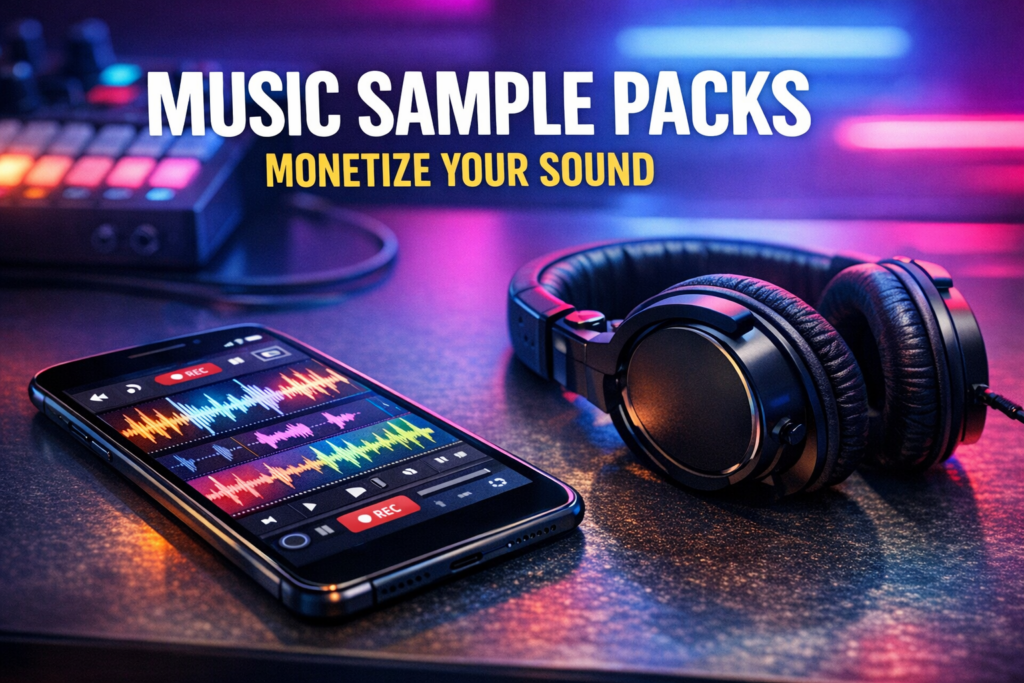
And yes, with modern mobile DAWs (Digital Audio Workstations), you can record, process, and package these sounds entirely from your phone. Here is how to build your audio brand this year.
1) What is a Music Sample Pack?
A sample pack is a curated collection of audio files used by other creators. These usually include:
- Drum Kits: Kicks, snares, hats, and percussion loops.
- Melodic Loops: Synth lines, guitar riffs, or piano melodies.
- One-Shots: Single hits of an instrument or sound effect.
- FX Packs: Risers, sweeps, textures, and foley (natural sounds).
- Vocal Chops: Short, processed vocal snips.
The value isn’t just in the “noise,” but in the curation and quality.
2) The Business of Audio: Why People Buy Samples
In a world of subscription services (like Splice), why would a producer buy your pack?
- Unique Signature Sound: They want to sound like you, not everyone else.
- Workflow Speed: A “Reggaeton Drum Kit” saves a producer 3 hours of sound design.
- Genre Specificity: A pack dedicated to “2026 Cyberpunk Techno” is highly valuable to producers in that niche.
To see how this stacks up against other digital models, check our E-commerce Hub.
3) Mobile-First Audio Production Tools
You don’t need a $10,000 studio to start.
- DAWs (The Workstation): Use FL Studio Mobile, BandLab, or Koala Sampler on your phone. These are powerful enough to create professional-grade loops.
- Recording: Use your phone’s microphone with a simple pop-filter (even a sock works!) to record “Foley” sounds around your house—dropping keys, tapping glass, or rain.
- Processors: Use mobile effect plugins to add reverb, delay, and saturation.
- Organization: Keep your files organized in folders on your phone or in Notion (See Notion Dashboards Idea #05).
4) Designing Your First Pack
Start small. A “1,000 sound mega-pack” is overwhelming. Instead, try a “Signature Mini-Pack.”
Structure of a solid pack:
- 10-15 Drum Loops (labeled with BPM, e.g., “TRAP_LOOP_140BPM”).
- 20 Drum One-Shots (Kicks, snares, claps).
- 10 Melodic Stems (The raw melody + the version with effects).
- 5 FX / Textures.
Pro Tip: Always label your files correctly with Key and BPM. If a producer can’t easily find the key of a sample, they won’t use it.
5) Licensing: Royalties vs. Royalty-Free
Most sample packs are sold as Royalty-Free. This means the buyer pays a one-time fee and can use the sounds in their music—even big hits—without paying you anything else.
Why do this? Because it attracts more buyers. The goal is volume.
- Note: If you include full vocal songs, you can offer a “Royalty-Split” where you get a percentage of the streaming revenue (using tools like DistroKid or Tracklib).
6) Packaging & Visual Branding
Musicians are visual creatures. If the pack looks like it sounds good, it will sell.
- Cover Art: Use Canva (See Canva Templates Idea #02) to create 1:1 square artwork. Think high-contrast, bold fonts, and vibey imagery.
- Demo Track: This is non-negotiable. You MUST create a 60-second song using ONLY the sounds from the pack so people can hear the potential.
7) Where to Sell Your Sounds
specialized Marketplaces (Loopmasters, ADSR, Splice)
Pros: Targeted audience of producers.
Cons: High commission and strict quality control.
Gumroad / Shopify
Pros: You keep almost all the profit and own the email list. (Check our Dropshipping Guide for Shopify basics).
Your Own “Sound Store”
Build an SEO-driven site. Write guides like “The Best Techno Drum Kits for 2026” (See Niche Buying Guides Idea #29).
8) Marketing Your Sound Design
- YouTube/TikTok Tutorials: “How I made this drum loop with a stapler and a phone.” Show the process.
- Free “Teaser” Packs: Give away 5 sounds for free in exchange for an email. (See How to Build an Email List).
- Discord Communities: Join producer discords, be helpful, and share your work.
For more automation to handle your social media posts, check 10 Business Automation Apps.
9) The 2026 Edge: AI-Assisted Sound Design
In 2026, you can use AI to help refine your samples. Use AI to clean up noise, generate variations of a drum pattern, or even “reverse-engineer” a sound to see how it was made. (Check AI Prompt Packs Idea #03 for inspiration).
10) FAQs
Do I need to play an instrument?
No. Many top sound designers only use their ears and software to manipulate sounds.
Is the market too saturated?
Generic packs are saturated. Niche packs (e.g., “Lo-fi Jazz Guitar for Brazilian Producers”) are wide open.
How do I price a pack?
- Intro Packs: $9 – $19.
- Genre Master Bundles: $47 – $97.
Conclusion
Music sample packs allow you to turn your creative hobby into a scalable digital asset. Every sound you record today could be part of a chart-topping hit tomorrow.
Take your phone out, find a unique sound in your environment, and start building your library.
Ready for more? Move on to Idea #08: Printable Educational Kits or explore the Main Guide.