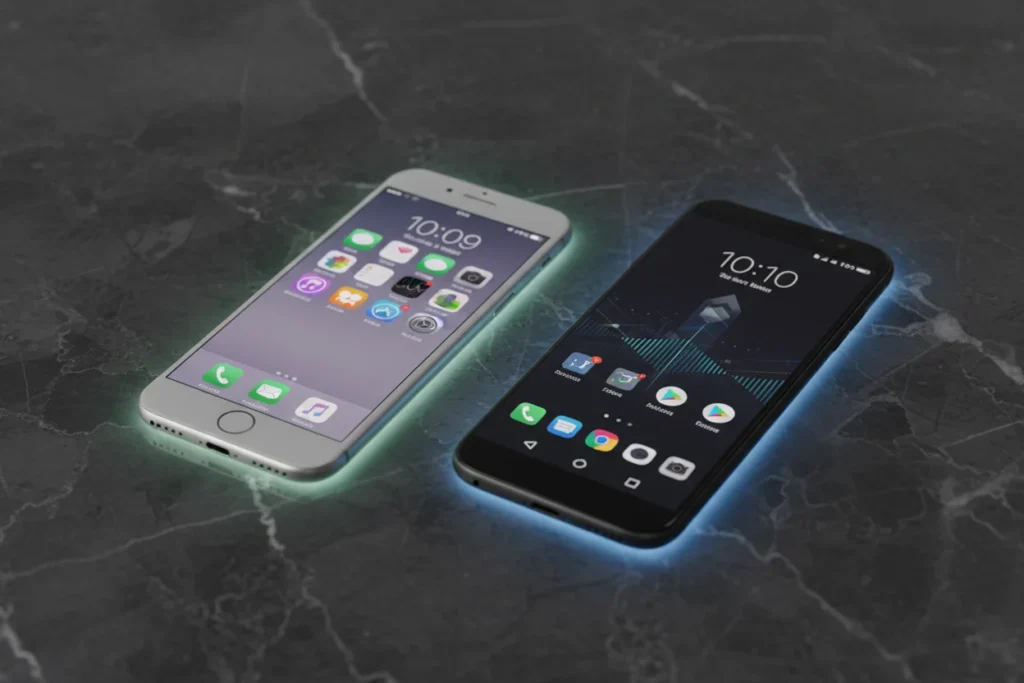
It is the oldest debate in the tech world: iOS or Android?
For the average user, the choice often comes down to habit or what their friends use. But for the mobile entrepreneur, this choice is a business decision. Your smartphone is your primary workstation, your communication hub, and your content creation studio. In 2026, picking the wrong platform could mean hours of lost productivity or limited access to the best Business Automation Apps.
In this guide, we dive deep into the pros and cons of both ecosystems from a purely professional perspective.
Affiliate disclosure: This post contains affiliate links. If you make a purchase through one of these links, ProBusinessStrategy may earn a small commission at no extra cost to you. We only recommend tools we genuinely believe in.
1. The Power of the Ecosystem (iPhone’s Edge)
If you already use a Mac or an iPad, the iPhone is almost unbeatable. The “Continuity” features in 2026 have made mobile business incredibly seamless.
Why Entrepreneurs Love iPhone:
- AirDrop & iCloud: Moving files between your phone and your computer is instantaneous and reliable.
- Copy-Paste Across Devices: You can copy a lead’s email address on your Mac and hit “Paste” directly into a WhatsApp message on your iPhone.
- Apple Pay for Business: The deepest integration for mobile payments, essential if you run a Mobile E-commerce Store.
2. Freedom and Customization (Android’s Edge)
For the “power user” who wants their phone to act exactly like a computer, Android (specifically the Samsung S-series and Google Pixel) is often the superior choice.
Why Entrepreneurs Love Android:
- True Multitasking: Android allows you to run two apps in split-screen mode. You can watch a tutorial on YouTube while taking notes or managing your Lead Generation Database.
- File Management: Android works like a desktop. You can plug in a USB-C drive, move files around folders, and download resources exactly like you would on a PC.
- DeX Mode (Samsung): Transform your phone into a desktop environment just by plugging it into a monitor—a game-changer for those who travel light.
3. App Quality and Early Access
While most major apps are available on both, there is still a slight “pro-app” bias towards iOS in 2026.
Many high-end video editing tools, creative suites, and exclusive beta versions of new AI-focused business tools still launch on the App Store first. If you are an early adopter who needs the cutting edge of tech, the iPhone often has the first seat at the table. However, Android has caught up significantly, offering deeper integration for Google-based businesses (Google Workspace/Drive).
4. Security and Privacy (A Tie in 2026?)
Security used to be a win for Apple, but in 2026, things are more balanced.
Apple’s “Walled Garden” remains incredibly secure for the average user. However, high-end Androids now feature Knox Security or specialized Titan M-chips that provide enterprise-grade protection. Regardless of your choice, you must ensure you have a professional setup for Protecting Your Business Data.
5. Resale Value: The Hidden ROI
From a financial standpoint, iPhones are better business assets. An iPhone typically retains 40-50% of its value after two years, whereas many Android flagships drop to 20-30%. If you plan to upgrade every 12-24 months as part of your business strategy, the iPhone will cost you less in the long run.
Note: If you’re on a tight budget, read our guide on The Best Budget Smartphones for Business.
The Verdict: Which Should You Choose?
Choose iPhone if:
- You already use Apple products.
- You want a phone that “just works” with zero setup.
- You are focused on high-end content creation (Instagram/TikTok).
Choose Android if:
- You want maximum customization and split-screen multitasking.
- You rely heavily on Google Workspace and local file management.
- You want the best possible hardware specs (zoom cameras, foldables, etc.).
Conclusion: It’s All About Execution
At the end of the day, as we state in our Reality Check Guide, your phone is just a tool. Whether it’s an iPhone or a Samsung, what matters is how many leads you contact and how well you manage your brand.
Are you Team iPhone or Team Android? Let us know in the comments below!