LinkedIn has a reputation problem.
For many professionals and aspiring entrepreneurs, the platform has become synonymous with “influencer culture.” We see the same viral “bro-etry” posts, over-the-top personal stories, and people constantly chasing vanity metrics like likes and comments. This creates a massive barrier for serious business owners: they feel that if they don’t want to become a public “influencer,” LinkedIn isn’t for them.
This couldn’t be further from the truth.
In 2026, the most profitable businesses on LinkedIn are not run by influencers. They are run by authority figures and system operators.
An influencer chases attention; a business owner chases outcomes. One wants to be famous; the other wants to be relevant to a very specific group of people. If you want to build a LinkedIn business that generates leads, sales, and authority without the pressure of constant personal exposure, you need to shift from a “creator” mindset to a “B2B infrastructure” mindset.
This guide will show you how to build a LinkedIn business that works for you, focusing on strategic positioning, automated funnels, and high-value lead generation—all manageable from your smartphone and your cornerstone blog.
Affiliate disclosure: This post contains affiliate links. If you make a purchase through one of these links, ProBusinessStrategy may earn a small commission at no extra cost to you. We only recommend tools we genuinely believe in.
The Strategy Shift: Authority vs. Influence
To succeed on LinkedIn without becoming an influencer, you must first understand the difference between attention and intent.
On TikTok or Instagram, attention is the currency. On LinkedIn, trust is the currency.
You do not need 50,000 followers to build a six-figure LinkedIn business. You need 500 of the right people who see you as the go-to resource for a specific problem. Influencers need volume; you need precision. When you focus on precision, the “influencer pressure” disappears. You no longer have to post five times a day or share your most personal life lessons to “stay relevant.” You only need to be consistently useful.
What a “Non-Influencer” LinkedIn Business Actually Looks Like
A sustainable, faceless (or low-exposure) LinkedIn business is built on three pillars:
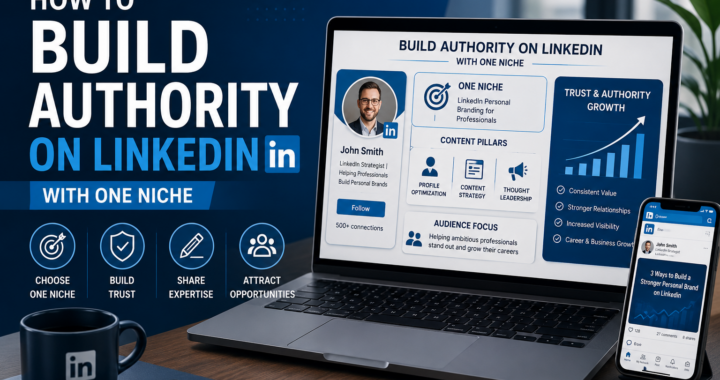
Professional Positioning: Your profile acts as a landing page, not a resume.
Targeted Outreach & Connection: You proactively find your ideal clients or partners.
Content as a Bridge: Your posts don’t exist for likes; they exist to drive people to your website or your offers.
This model is perfect for solopreneurs, consultants, and affiliate marketers who want to use LinkedIn as a professional lead engine rather than a social Playground.
Step 1: Turning Your Profile into a High-Conversion Landing Page
In a non-influencer model, your profile is your most important asset. It does the heavy lifting so you don’t have to.
Instead of listing your job history, your profile should answer three questions for a visitor in under five seconds:
What problem do you solve?
Who do you solve it for?
What is the next logical step they should take?
Your “Featured” section should not link to your latest post; it should link to your cornerstone articles, your lead magnets, or your affiliate resources. For example, if you are teaching people how to start a business from their phone, your profile should lead them directly to your guide on How to Start a Business Using Only Your Smartphone in 2026.
Step 2: Building the “Hub and Spoke” System
LinkedIn should never be the “home” of your business. It is a “spoke” that drives people to your “hub”—your website.
If you are serious about building authority, you need a professional platform you control. Social media algorithms can change, but your website is an asset you own. I always recommend building your hub on WordPress and hosting it with Bluehost. This setup allows you to create deep-dive articles that rank in Google while also serving as the destination for your LinkedIn traffic.
When you post on LinkedIn, you are simply “teasing” the value that lives on your site. This keeps your LinkedIn production time low while increasing the value of your website.
Step 3: Content That Converts (Without the Fluff)
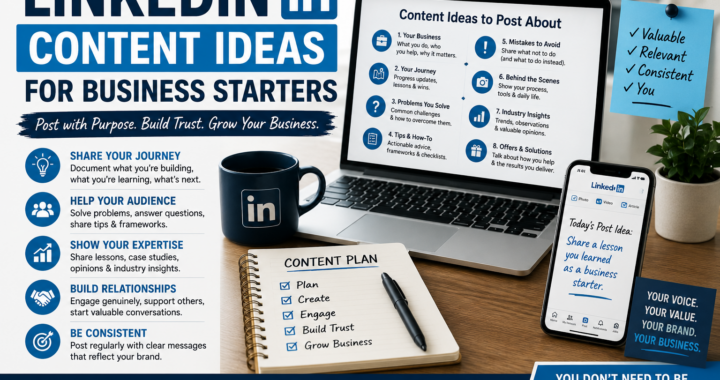
You don’t need to post every day to win on LinkedIn. You need a content hierarchy.
1. The Authority Pillar (1x per week)
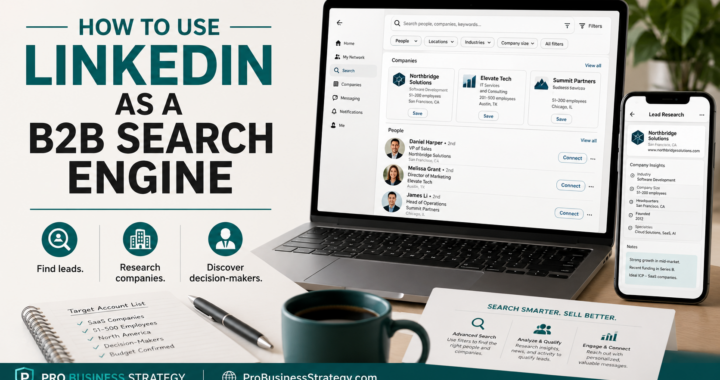
Share a deep insight, a case study, or a “how-to” that solves a specific business problem. This shows you know your stuff. This post should always lead to a deeper article on your site, like your guide on How to Use LinkedIn as a B2B Search Engine.
2. The Relationship Builder (1x per week)
Comment on trends in your industry or ask a high-level question. This isn’t about being an influencer; it’s about being part of the professional conversation.
3. The Direct Bridge (1x per week)
Directly offer a resource. “I wrote a complete blueprint on X, you can read it here.”
This 3-post-per-week system is manageable even if you have a full-time job. It’s about quality and direction, not volume.
Step 4: Monetizing Your LinkedIn Presence Naturally
Because LinkedIn is a professional environment, monetization should feel like a solution, not a pitch.
If you are documenting a business experiment (like we discussed in the YouTube Cornerstone), your LinkedIn audience will naturally want to know what tools you used.
When you share your workflow, you can naturally recommend:
Bluehost for those wanting to start their own authority site.
WordPress as the professional standard for business growth.
Shopify for anyone looking to build an e-commerce leg of their business.
Fiverr for outsourcing technical tasks like logo design or SEO audits.
By framing these as “the infrastructure I use to get results,” you are helping your audience rather than selling to them.
Step 5: Managing Everything from Your Smartphone
The beauty of a modern LinkedIn business is that it is 100% mobile-friendly.
Content Creation: Use your notes app to draft posts during your commute.
Engagement: Spend 15 minutes a day replying to comments and connecting with people from your phone.
Analytics: Check which posts are driving profile views and clicks from the LinkedIn mobile app.
Outreach: Send personalized connection requests to potential partners or clients while you have a few spare minutes.
If you find yourself overwhelmed by the technical side of content production—like creating professional visuals or specialized PDF carousels—platforms like Fiverr are perfect for finding specialists who can handle the “heavy lifting” while you stay focused on the strategy from your smartphone.
The Power of the “Quiet Expert”
There is a massive opportunity right now for the “Quiet Expert.”
While everyone else is screaming for attention, the person who quietly provides consistent, high-value solutions becomes the most trusted person in the room. You don’t need a massive personal brand. You need a reliable business system.
By combining your LinkedIn activity with a strong website foundation (on Bluehost and WordPress), you create a professional presence that commands respect and drives revenue without demanding your soul.
Final Thoughts
LinkedIn is the most powerful platform for B2B growth and authority, but only if you play a different game than the influencers.
Focus on your website as the hub. Use LinkedIn as the high-precision outreach tool. Provide value that solves real business problems. When you do this, you stop chasing followers and start building a business.
Stay focused, stay professional, and remember: you don’t need to be an influencer to be a success.
Related articles to link internally: