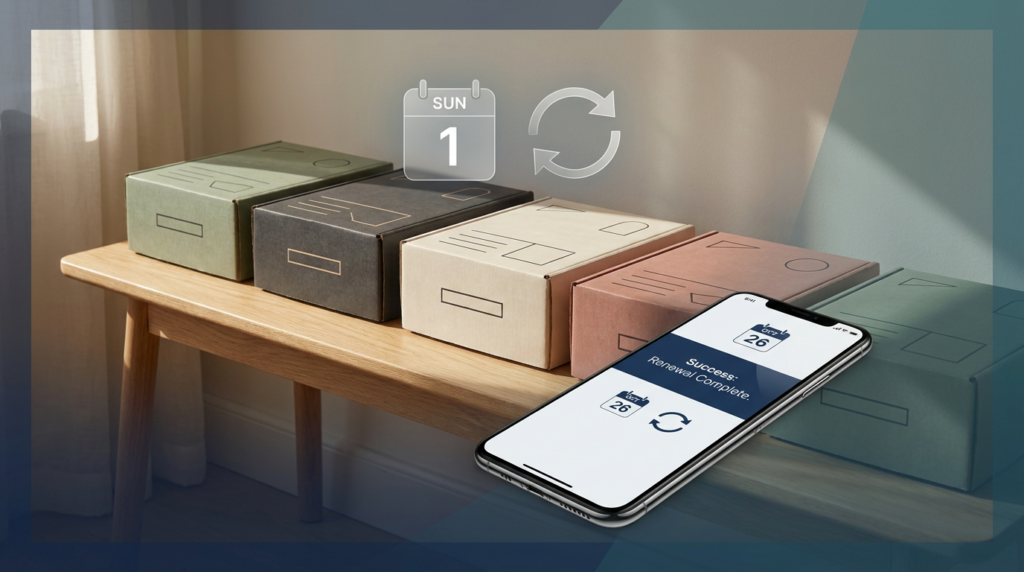
Subscription Box E-Commerce Guide: How to Build Recurring Revenue in 2026
Traditional e-commerce is often a rollercoaster. One month sales are high; the next month they are low. You are constantly hunting for new customers to survive.
The Subscription Box model changes the game.
By focusing on a subscription-based business, you trade the “one-off” sale for a long-term relationship. Instead of selling a product once, you sell a recurring experience that delivers value to your customers every month (or quarter). This provides your business with predictable cash flow, higher customer lifetime value (LTV), and a more stable foundation for growth.
In 2026, the successful subscription boxes aren’t just sending “stuff”; they are sending curation, convenience, and community. Whether it’s specialty coffee, organic pet treats, or niche hobby kits, people are willing to pay for the expertise of someone who can curate the best experiences for them.
Affiliate disclosure: This post contains affiliate links. If you make a purchase through one of these links, ProBusinessStrategy may earn a small commission at no extra cost to you. We only recommend tools we genuinely believe in.
How the Subscription Box Model Works
The subscription model is built on consistency and logistics.
The step-by-step flow:
- Curation: You identify a niche and source a selection of products that fit a specific theme or solve a specific problem.
- Subscription Signup: Customers sign up for a recurring plan (Monthly, Quarterly, or Yearly).
- Billing: Payments are automatically charged on a set date each month.
- Assembly & Shipping: You (or a fulfillment center) pack all the boxes at once and ship them in one big batch.
- Retention: You focus on keeping your current subscribers happy so they continue their subscription for as long as possible.
Why Subscription Boxes are Massive in 2026
1. Predictable Revenue
Knowing exactly how much money is coming in next month allows you to plan your inventory, staffing, and growth with much more confidence than traditional retail.
2. Convenience for Customers
Modern consumers are busy. They love “set-it-and-forget-it” solutions—whether it’s an E-Commerce Specialty Coffee/Tea Guide delivery or essential Eco-Friendly Household Kits.
3. High Customer Lifetime Value (LTV)
It is much cheaper to keep an existing customer than to acquire a new one. A subscriber who stays for 12 months is significantly more profitable than a customer who makes one $30 purchase and never returns.
4. Bulk Shipping & Logistics
Because you ship all your boxes at once, you can optimize your packing process and negotiate better rates with shipping carriers based on volume.
Who is the Subscription Model Best For?
The subscription model is a great fit for:
- The Curator: People with great taste who can find unique products others haven’t seen.
- Makers of “Consumables”: If you sell things that run out (soap, snacks, vitamins, art supplies), a subscription is a natural fit.
- Niche Community Leaders: People who already have an audience (e.g., a specific hobby, fitness group, or professional niche).
- Convenience Providers: Entrepreneurs who want to simplify their customers’ lives by automating their recurring needs.
The Pros and Cons of Subscription Boxes
The Pros:
- Predictable Cash Flow: You know your “floor” for revenue each month.
- Easier Inventory Management: Since you know how many subscribers you have, you know exactly how much stock to order.
- Stronger Brand Loyalty: Monthly deliveries create a deeper emotional connection with your brand.
- Higher Sale Valuation: Recurring revenue businesses are typically worth much more when it comes time to sell your company.
The Cons:
- Churn is the Enemy: If you lose subscribers faster than you gain them, the business collapses. You must constantly fight “churn.”
- Pressure for Variety: You have to come up with new, exciting themes every month to keep people from getting bored.
- Complex Logistics: Managing thousands of recurring billing cycles and synchronized shipments requires specialized software.
- Lower Initial Margin: You often spend more on customer acquisition upfront, banking on the long-term profit.
The Costs of Starting a Subscription Box
- Platform Fees: $30–$100/month (Shopify with a subscription app like Recharge, or dedicated platforms like Subbly).
- Initial Inventory for Samples: $100–$500.
- Custom Packaging: $1.00–$3.00 per box.
- Shipping Software: $10–$30/month (e.g., ShipStation or Pirate Ship).
- Marketing (Ads): Subscription boxes usually require a “push” through social media ads to gain initial traction.
Choosing Your Niche in 2026
Curated boxes that solve specific problems are the winners.
Profitable subscription niches:
- Consumable Niche Snacks: International treats, keto boxes, or “clean label” snacks.
- Hobby & Craft Kits: High-quality supplies for knitting, woodworking, or painting.
- The “Eco-Home” Refill: Monthly delivery of biodegradable soaps, detergents, and toothbrushes. (Pairs well with Eco-Friendly Household Kits).
- Pet Custom Boxes: Specialized diets or toys for specific breeds/sizes. (See our Pet Subscription Box Ideas).
- Self-Care & Wellness: Curated supplements, journals, and ritual items for busy professionals.
Essential Tools for Subscription Businesses
- Subbly or Shopify + Recharge: For managing recurring billing and customer portals.
- ShipStation: To handle the high-volume shipping batches.
- Canva: For designing the “unboxing experience” materials (thank you notes, insert cards).
- Packhelp / Arka: For designing and ordering custom-branded shipping boxes.
- Klaviyo: For email automation (this is critical for reducing churn and re-engaging old subscribers).
Step-by-Step Launch Plan
Step 1: Validate Your Idea (The Pre-Launch)
Don’t buy 500 boxes yet! Create a landing page with an “Early Bird” offer. If 100 people give you their email address, you have a business.
Step 2: Source Your Curation
Contact vendors. Many brands will give you wholesale pricing or even free samples if you feature them in your box, as it acts as marketing for them.
Step 3: Design the “Unboxing Experience”
In this model, the box itself is the product. Focus on high-quality packaging, nice tissue paper, and a personalized note. It must be “Instagrammable.”
Step 4: Setup Recurring Billing
Make sure it is incredibly easy for customers to join, pause, or update their subscription. Difficult cancellation processes lead to chargebacks and bad reviews.
Step 5: The “Batch” Launch
Pick a shipping date (e.g., the 15th of the month). Promote your “cutoff date” to create urgency for new signups.
Step 6: Focus on Retention
Ask for feedback. If people are canceling, find out why. Add a “surprise” item once in a while to keep the excitement alive.
Subscription Boxes vs. Other Models
- Subscription Box vs. Dropshipping: Dropshipping has no inventory but no recurring revenue. Subscription boxes have inventory but high loyalty.
- Subscription Box vs. Inventory-Based: Traditional inventory is selling one-by-one; Subscription is selling in bulk batches.
- Subscription Box vs. Digital Products: Digital products have 100% margin, but subscription boxes have a higher “perceived value” because of the physical delivery.
Final Verdict: Is a Subscription Box Right for You?
The subscription box model is perfect for entrepreneurs who love community building, curation, and the security of recurring income. It requires more operational planning and a higher focus on retention than other models, but the long-term stability and business valuation make it incredibly rewarding.
If you want to build a brand that people look forward to seeing on their doorstep every month, start your subscription box journey today.