Inventory-Based E-Commerce Guide: How to Build a Real Online Store in 2026
At some point, many e-commerce businesses hit the same realization:
“If I want full control, better margins, and a real brand… I need to own my inventory.”
This is where inventory-based e-commerce comes in.
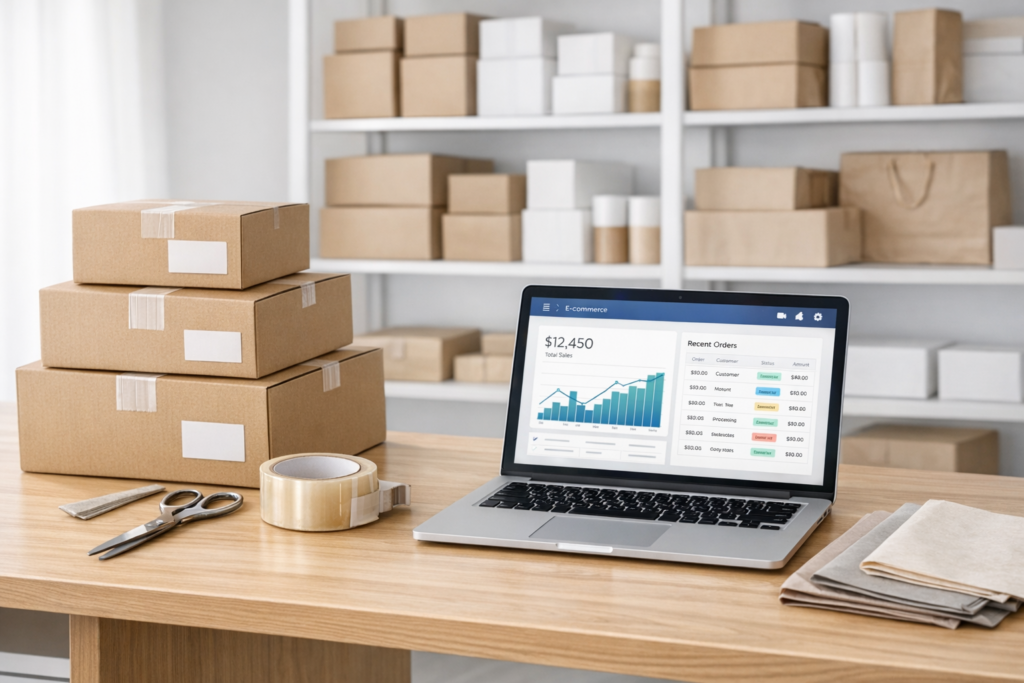
Unlike dropshipping or affiliate marketing, you buy products upfront, store them, and ship them directly to your customers. You control everything—from product quality and packaging to shipping speed and customer experience.
This is the model behind most serious and scalable e-commerce brands.
In 2026, inventory-based businesses are not just “online shops”—they are brands.
If you want higher profits, faster delivery, and full ownership of your customer experience, this is the path.
Affiliate disclosure: This guide may contain affiliate links. If you purchase through them, ProBusinessStrategy may earn a commission at no extra cost to you. We only recommend tools we believe are genuinely useful for beginners and serious builders.
What Is Inventory-Based E-Commerce?
Inventory-based e-commerce means:
- you purchase products before selling them
- you store those products yourself or in a warehouse
- you fulfill orders directly (or via a fulfillment partner)
The basic flow:
- You buy inventory from a supplier or manufacturer
- You store it (home, warehouse, or fulfillment center)
- A customer orders from your website
- You pack and ship the product
- You keep the full margin (minus costs)
This is the opposite of models like:
Why This Model Still Dominates in 2026
1. Full Control Over Your Brand
You control:
- packaging
- shipping speed
- product quality
- customer experience
- branding
That’s how real brands are built.
2. Higher Profit Margins
When you buy in bulk, your cost per unit drops.
Example:
- Buy product for $5
- Sell for $25
- Much higher margin than dropshipping or affiliate
3. Faster Shipping = Higher Conversions
Customers expect fast delivery.
With your own inventory:
- you can ship same-day or next-day
- you compete with Amazon-level expectations
4. Stronger Customer Loyalty
You can create:
- branded packaging
- inserts
- upsells
- repeat purchase flows
This is much harder with dropshipping.
Who Is This Model Best For?
Inventory-based e-commerce is ideal for:
- Serious brand builders
- People with some starting capital
- Entrepreneurs who want control
- Long-term business thinkers
- People who want to scale to 6–7 figures
Not ideal for:
- people with zero budget
- people who want “quick wins”
- people who don’t want logistics
The Pros and Cons
✅ Pros
- higher margins
- full brand control
- faster delivery
- better customer experience
- long-term scalability
- stronger business valuation
❌ Cons
- upfront investment
- risk of unsold inventory
- storage needed
- logistics complexity
- returns handling
- more responsibility
Startup Costs (Realistic)
This is where this model differs most.
Typical starting range:
- Inventory: $500 – $5,000+
- Website: $20 – $50/month
- Packaging: $50 – $300
- Shipping materials: $50 – $200
- Marketing: $100 – $1,000
👉 You can start small, but not at zero.
Best Inventory-Based Business Types
1. Private Label Brand
You create your own brand on existing products.
Examples:
- skincare
- supplements
- kitchen tools
- fitness gear
2. Niche Product Store
Focused on one category:
- home office gear
- pet products
- eco-friendly items
- hobby tools
3. Wholesale Reseller
You buy branded products and resell them.
4. Hybrid Model
Combine with:
- Affiliate Store
- digital products
- subscriptions
Where to Source Products
Options:
- Alibaba (manufacturers)
- Faire (wholesale marketplace)
- local suppliers
- trade shows
- direct brand partnerships
Key tip:
👉 Always order samples first.
Storage & Fulfillment Options
1. Home-based (beginner)
- cheapest option
- good for small scale
2. Third-party logistics (3PL)
- warehouse stores + ships
- scalable
- more expensive
3. Hybrid
- start at home → move to 3PL later
Essential Tools
- Shopify / WooCommerce
- ShipStation / Sendcloud
- Inventory tracking software
- Canva (branding)
- Klaviyo (email marketing)
Step-by-Step Launch Plan
Step 1: Choose Product & Niche
Look for:
- demand
- margin potential
- low competition angle
Step 2: Validate Before Buying Big
- test with small batch
- pre-sell if possible
- use audience feedback
Step 3: Order Inventory
Start small:
- test quantity
- improve based on feedback
Step 4: Build Your Store
Focus on:
- trust
- clean design
- clear product pages
Step 5: Setup Shipping
- define shipping rates
- packaging
- delivery times
Step 6: Launch & Market
Use:
- SEO
- TikTok / Instagram
- influencers
Step 7: Optimize & Scale
- reorder winning products
- improve margins
- expand product line
- consider 3PL
Common Mistakes
1. Ordering too much inventory
Start small → validate first.
2. Ignoring branding
This is what separates you from Amazon sellers.
3. Bad supplier choice
Quality issues kill your brand fast.
4. Poor cash flow management
Inventory ties up money.
5. No demand validation
Never guess—test first.
Inventory vs Other Models
vs Dropshipping
- more control
- higher margins
- more risk
vs Affiliate
- you own the sale
- but also the responsibility
vs Subscription
- one-time vs recurring
- but can be combined
vs Recommerce
- new vs second-hand
- scalable vs unique items
Final Verdict: Is Inventory-Based E-Commerce Right for You?
If you want to build a real brand with long-term value, this is the model.
It requires:
- more money
- more responsibility
- more planning
But it gives you:
- control
- profit
- scalability
- brand equity
👉 Many successful entrepreneurs start with:
- dropshipping
- affiliate
…and then move into inventory once they know what sells.
If you’re ready to build something serious, this is your path.