In 2026, the most profitable companies on earth aren’t the ones with the most employees. They are the ones with the best systems.
We are living in the age of the “Indie-CEO”—the entrepreneur who manages a €10,000/month business with zero employees, zero office space, and just one pocket-sized device.
But here is the truth: Being a “One-Person Business” doesn’t mean you do everything manually. It means you use your smartphone to orchestrate a symphony of AI, automation, and outsourced freelancers.
If you feel like you are “running in circles” with your freelancing or content creation , you don’t need to work harder. You need an Operating System (OS).
Affiliate disclosure: This post contains affiliate links. If you make a purchase through one of these links, ProBusinessStrategy may earn a small commission at no extra cost to you. We only recommend tools we genuinely believe in.
1. The 3 Pillars of the Solo Empire
To survive as a one-person business, you must divide your identity into three distinct roles:
- The Visionary (CEO): Decides what to build and high-level strategy (1 hour/week).
- The Manager (COO): Organizes tasks, schedules, and systems (30 mins/day).
- The Creator (Worker): Does the actual writing, filming, and coding (4 hours/day).
On a smartphone, you switch between these roles by switching between your specific business apps.
2. Building Your “Mobile Headquarters”
Your phone’s home screen is your “Office.” If it’s cluttered with games and distracting notifications, your system will fail.
- The Command Center: Use Notion or Trello to host your “Master Project Board.” Every idea, client, and digital product must live here.
- The Archive: Use Google Drive or iCloud for all your assets. Never store business files in your personal photo gallery.
- The Filter: Use “Focus Modes” on iOS or Android to silence everything except business-critical apps (WhatsApp Business/Email) during work hours.
3. The “Infinite Fast-Track” Workflow
A one-person business cannot afford to waste time. You need a “Low-Friction” workflow:
- Capture: Use voice notes to capture ideas while walking (The Visionary).
- Batch: One day for filming all UGC clips , one day for all copywriting. (The Creator).
- Automate: Use Zapier or Buffer to handle the repetitive posting and lead sorting (The Manager).
4. Leveraging “Invisible Employees” (AI & Outsourcing)
You are a one-person business, but you shouldn’t be alone.
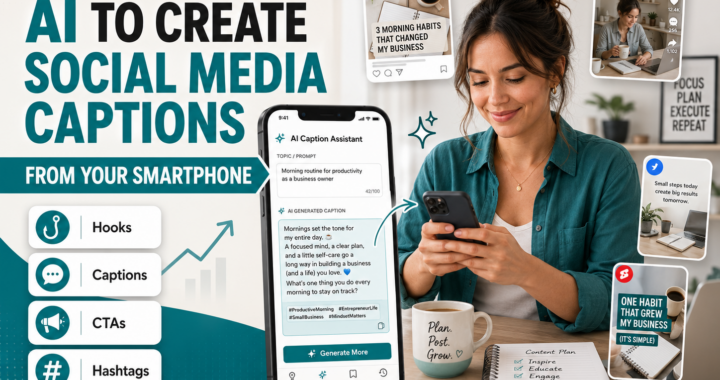
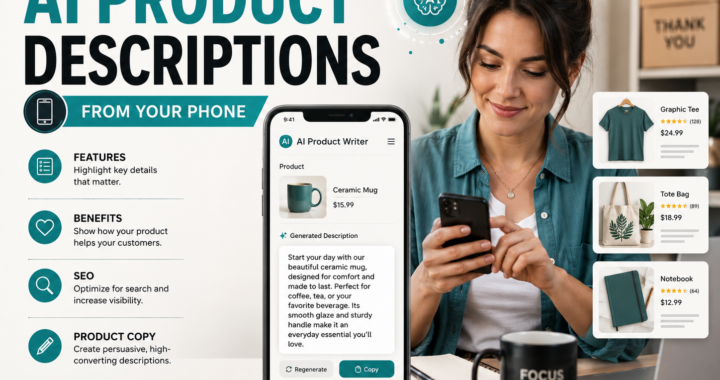
- AI Assistants: Use mobile AI tools to summarize long meetings,
- draft email newsletters or brainstorm SEO titles.
- Micro-Outsourcing: When a task is too manual (e.g., data entry), hire
- a Virtual Assistant for 2 hours via Upwork to handle it. You manage the result from your phone; they do the labor.
5. Managing Your “Mental Bandwidth”
The biggest risk to a solo entrepreneur isn’t a lack of money—it’s burnout.
- The “No-Work” Zones: Use your mobile productivity hacks to set hard boundaries. After 7 PM, the “Office” is closed.
- Health Tracking: Your body is the engine of the business. Use health apps to ensure you are sleeping and moving.
- The Weekly Review: Every Sunday, look at your Notion board. What worked? What didn’t? Where did you waste time?
6. The Scaling Trap
Most solo entrepreneurs make the mistake of thinking Scaling = Hiring People.
In 2026, Scaling = Better Systems.
Instead of hiring a person to do sales, build a High-Conversion Affiliate System. Instead of trading hours for coaching, launch a recurring digital product.
Conclusion: Become the CEO of Your Life
The “One-Person Business” is the ultimate expression of the Mobile Entrepreneur Lifestyle. It gives you the income of a corporation with the freedom of a freelancer.
Stop acting like an employee of your phone. Start acting like the owner of the system that lives inside it.
Next Steps:
- Organize your “Headquarters”: Review of the best organizational apps.
- Set up your automations: How to scale without a team.
- Secure your empire: The entrepreneur’s guide to mobile security.